

Turn Basswood Scraps Into Sellable Parts: 3-Step System (2026)
Measure, label, and inventory basswood offcuts bigger than a couple square inches instead of binning them, then design small parts specifically sized to what’s already sitting in that scrap pile – a 3-step system that cuts material costs and gives you a genuinely specific sustainability story instead of a vague one. This article walks through the system and how to describe it honestly on an Etsy listing.
By Mike Dolan ·
Quick Answer: Measure and label offcuts bigger than roughly 2×2 inches (material, thickness, dimensions), keep them in a remnant inventory, then design small parts to fit what’s already on hand. On Etsy, use specific sustainability attributes (recycled content, upcycled) rather than a vague “eco-friendly” claim.
| Material | Engraving Contrast | Cut Ease | Smoke / Odor | Cost | Beginner Score |
|---|---|---|---|---|---|
| Basswood (3 mm) | ★★★★★ | Excellent – 1 pass | Low | $ | ★★★★★ |
| Baltic Birch Plywood | ★★★★ | Good – 2-3 passes | Medium | $$ | ★★★★ |
| MDF | ★★★ | Good – 1-2 passes | High (formaldehyde) | $ | ★★ |
| Pine / Soft Plywood | ★★★ | Poor – resin deposits | Medium-High | $ | ★★ |
The Scrap Pile Problem Even Good Nesting Doesn’t Solve
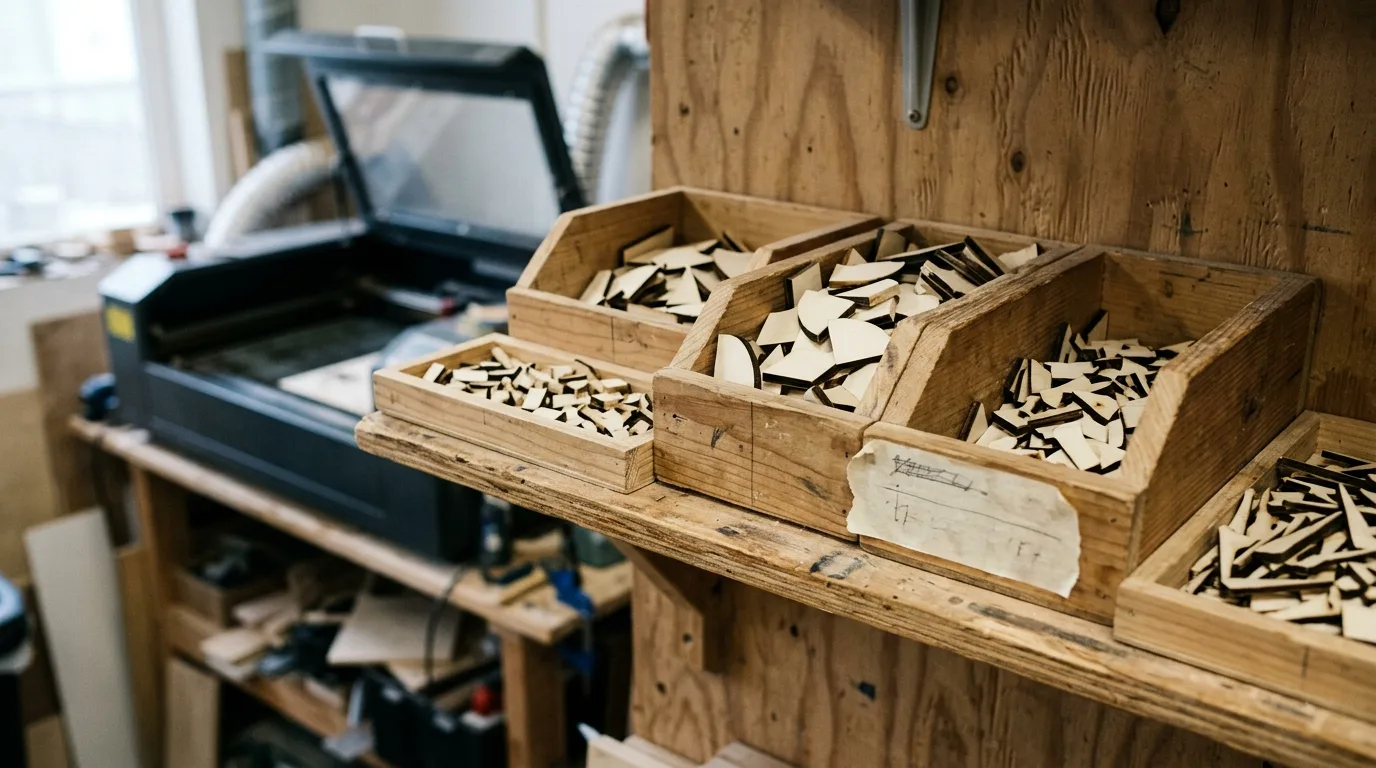
I got genuinely good at nesting parts tight on a sheet, and I still ended up with a growing box of irregular basswood offcuts every week – odd L-shapes and slivers that didn’t fit anywhere in the next layout. For months I just tossed them once the box got full.
That’s the gap that efficient nesting alone doesn’t close. Our nesting guide covers how to minimize waste on a fresh sheet before you cut – rotating parts, filling gaps, tightening spacing. But even a well-nested sheet leaves irregular leftover shapes, because real designs rarely tile a rectangle perfectly. The question this article answers is different: what do you actually do with what’s left over.
Basswood’s consistent 12×12 inch sheet size makes this easier than it sounds, because offcuts from the same source material end up in predictable size ranges you can plan around instead of a random grab-bag of unknown material.
- Low resin – offcuts stay stable in storage without getting tacky or degrading
- Consistent density – a labeled scrap piece cuts the same as it did the first time, months later
- Minimal char – clean edges even on small reused pieces
- Light, workable surface – easy to sand, paint, or stain, including on repurposed scraps
- No toxic fumes – unlike MDF or treated plywood, safe for indoor use with basic ventilation
According to USDA Forest Products Laboratory data, basswood’s stable, low-density structure means it doesn’t warp or degrade in storage the way some hardwoods do, which is exactly what makes it practical to keep as inventory rather than scrap.
Step 1: Measure and Label Instead of Binning
The habit that actually changes this is simple: before an offcut goes in the scrap box, measure it and write the dimensions and thickness on it with a pencil or a small sticker. A piece with no label is functionally scrap even if it’s usable, because nobody’s going to dig through an unmarked pile to find out what’s there.
Set a size floor. Anything smaller than roughly 2×2 inches genuinely isn’t worth tracking for most small-parts work – that’s true scrap. Anything bigger goes into a sorted bin by size range, so when you’re designing a new small product you can check what’s already on hand before cutting into a fresh sheet.
Step 2: Design Small Parts to Fit What You Already Have
Once you’ve got a real inventory instead of a mystery pile, the workflow flips: instead of designing a product and then cutting a fresh sheet for it, check your offcut bins first for anything that already fits. Keychains, small tags, jewelry blanks, and other compact items are the easiest fit for irregular leftover shapes.
This isn’t about redesigning your whole product line around scraps – it’s about having a specific “offcut collection” or a rotating small-batch product that intentionally uses remnant material, which gives you both a cost saving and something concrete to point to when you talk about waste reduction.

Step 3: List It Honestly, Not Vaguely
Etsy has specific sustainability attributes for a reason – recycled content, upcycled, reusable, plastic-free – and using the ones that genuinely apply does more for a buyer’s trust than a generic “eco-friendly” badge with no explanation behind it. If a product is made from offcuts, say exactly that: what it’s made from, and that it’s material that would otherwise have been scrapped.
Vague environmental claims without specifics are the fastest way to lose credibility with buyers who are actually paying attention to this category. Specific, checkable claims – “made from reclaimed offcuts of our 3mm basswood sheets” – hold up to scrutiny in a way that “eco-conscious” alone doesn’t.
Where to Buy Basswood That Makes This System Easy
Crafteker 3mm basswood sheets come in a consistent 12×12 inch format, which means offcuts from batch to batch land in predictable size ranges you can actually plan small products around instead of guessing.
At $24.99 for 12 sheets ($2.08/sheet), it’s the most cost-effective option for basswood sheets – and every sheet you nest well leaves offcuts worth keeping instead of scrap worth binning.
Ready to cut? Get sheets that leave usable offcuts:
→ Buy Crafteker 12-Pack Basswood Sheets on Amazon – $24.99
Also available: 5-pack ($15.97) · 3-pack ($12.99)
Frequently Asked Questions
What should I do with basswood offcuts instead of throwing them out?
Measure and label anything bigger than a few square inches – material, thickness, and dimensions – then add it to a remnant inventory you can pull from for small parts, test cuts, or entirely new products sized to fit what you already have on hand.
How is this different from nesting parts efficiently on a sheet?
Nesting is about minimizing waste on a fresh sheet before you cut – we cover that in our dedicated nesting guide. This is about what to do with the scraps that are left over even after good nesting, since irregular offcuts always happen and most sellers just bin them instead of tracking and reusing them.
Can I honestly call my Etsy listing eco-friendly if I use offcuts?
Yes, if you’re specific. Etsy has real sustainability attributes for recycled content, upcycled, and reusable materials – use the ones that actually apply and describe exactly what makes the product low-waste, rather than a vague “eco-friendly” label with nothing backing it up.
How small does an offcut need to be before it’s not worth keeping?
If a piece can’t fit a design you’d realistically cut – roughly smaller than 2×2 inches for most small parts – it’s reasonable to treat it as true scrap rather than inventory. Anything bigger is worth at least a quick measure-and-label before deciding.
Where can I buy basswood that nests efficiently and leaves usable offcuts?
Crafteker on Amazon: 3-pack $12.99, 5-pack $15.97, 12-pack $24.99 ($2.08/sheet best value) – consistent 12×12 inch sheets that make offcut dimensions predictable batch after batch.
About the author: Mike Dolan is a laser maker and wood materials specialist with 8+ years cutting basswood, birch, and MDF on diode and CO₂ machines. He tests every Crafteker basswood batch before listing.
Started labeling offcuts by size instead of dumping them in one bin and it completely changed how I plan small-batch keychains – I check the scrap bins before cutting a fresh sheet now, saves real material every week.