

More Air Assist Isn’t Better: 10-20 PSI for Basswood (2026)
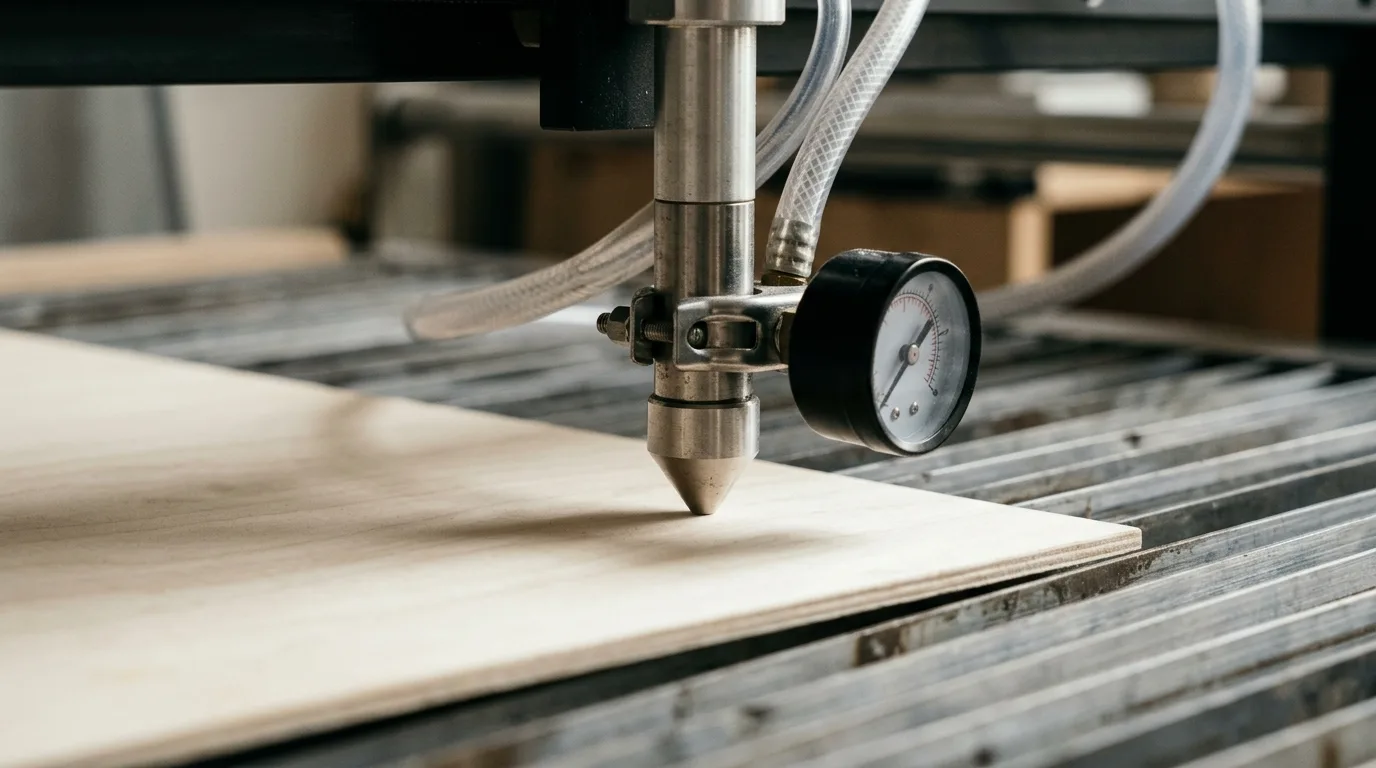
Cranking air assist pressure past what basswood actually needs doesn’t fix sooty or uneven edges – it can overcool the kerf, disturb thin parts, and blow soot sideways instead of clearing it, where 10-20 PSI measured at the laser head is the practical range for 3mm stock. This article covers what’s really happening when more air makes things worse, and how to check whether pressure is even your real problem.
By Mike Dolan ·
Quick Answer: Use 10-20 PSI at the laser head for 3mm basswood (25-30 PSI for 5-6mm stock) – the lowest steady airflow that clears smoke without moving the material. If edges are still sooty above that range, check nozzle alignment and hose condition before adding more pressure.
| Material | Engraving Contrast | Cut Ease | Smoke / Odor | Cost | Beginner Score |
|---|---|---|---|---|---|
| Basswood (3 mm) | ★★★★★ | Excellent – 1 pass | Low | $ | ★★★★★ |
| Baltic Birch Plywood | ★★★★ | Good – 2-3 passes | Medium | $$ | ★★★★ |
| MDF | ★★★ | Good – 1-2 passes | High (formaldehyde) | $ | ★★ |
| Pine / Soft Plywood | ★★★ | Poor – resin deposits | Medium-High | $ | ★★ |
I Kept Turning Up the Pressure and the Edges Got Worse, Not Better
My first instinct when cuts came out sooty was to crank the air pump higher, on the logic that more airflow clears more smoke. Instead the edges got patchier, a couple of small parts shifted mid-cut, and soot ended up smeared across the surface instead of blown cleanly away.
Air assist does real work – it clears smoke and molten debris, suppresses flare-ups, and protects the lens from contamination. But past a certain point, more isn’t better. Excessive airflow can overcool the kerf, which sounds harmless but actually works against clean cutting, and it can physically disturb thin material or small cut pieces before they’ve fully separated.
The fix wasn’t more air. It was figuring out that pressure wasn’t even my actual problem.
- Low resin – doesn’t need aggressive airflow to clear sticky residue the way resin-heavy softwoods do
- Consistent density – predictable airflow needs sheet after sheet, no guessing per batch
- Minimal char – clean edges at moderate air assist, not maximum
- Light, workable surface – soot shows clearly, which actually helps you diagnose airflow problems faster
- No toxic fumes – unlike MDF or treated plywood, safe for indoor use with basic ventilation
According to USDA Forest Products Laboratory data, basswood’s low density and minimal resin content mean it doesn’t generate the sticky combustion byproducts that force some materials to need much higher airflow just to keep the kerf clear.
The Right PSI Range for Basswood (and Why More Doesn’t Help)
For 3mm basswood or plywood, 10-20 PSI measured at the laser head is the practical starting range. Thicker 5-6mm stock may need 25-30 PSI. That “at the head” qualifier matters – your compressor gauge and the actual pressure reaching the nozzle can differ meaningfully, especially with long hose runs or a partially restricted line.
The correct setting is the lowest steady airflow that clears smoke and controls flames without moving the material, disturbing small details, or spraying soot sideways onto the workpiece. Going beyond that doesn’t buy you cleaner cuts – it just adds turbulence that can blow debris across the surface instead of straight down through the kerf, and cools the cut zone enough to work against the laser rather than with it.
Check the Nozzle Before You Touch the Pressure
A dirty, damaged, or off-center nozzle distorts the air cone and pushes debris into one side of the kerf, which looks exactly like a pressure problem but isn’t. Run a low-power tape test: fire a brief low-power pulse through a piece of tape stretched over the nozzle opening and check whether the resulting mark is centered. An off-center mark means the beam isn’t aligned with the air cone, and no amount of pressure adjustment fixes that.

If It’s Not Pressure or Nozzle Alignment, Check These
Uneven or charred edges can come from several places that mimic an air-pressure problem: kinked hoses, small leaks, condensate pooling in the airline, a clogged inline filter, unstable pressure that fluctuates mid-cut, incorrect nozzle stand-off distance from the material, weak exhaust pulling smoke back into the cut path, warped material lifting out of focus, or – specific to plywood – resin pockets and internal voids the beam wasn’t expecting.
Work through these before assuming the fix is simply more air. Published PSI recommendations vary widely across laser types, nozzle designs, material thickness, and where the pressure is measured, which is exactly why trial-and-error on pressure alone gets expensive and frustrating fast.
Where to Buy Basswood That Doesn’t Fight Your Air Assist Settings
Crafteker 3mm basswood sheets are consistent enough that 10-20 PSI genuinely does the job – no resin pockets or internal voids forcing you to compensate with more airflow than the material should need.
At $24.99 for 12 sheets ($2.08/sheet), it’s the most cost-effective option for basswood sheets that behave the same way sheet to sheet, so your air assist settings stay dialed in instead of needing readjustment every batch.
Ready to cut? Get wood that doesn’t need max pressure:
→ Buy Crafteker 12-Pack Basswood Sheets on Amazon – $24.99
Also available: 5-pack ($15.97) · 3-pack ($12.99)
Frequently Asked Questions
What PSI should air assist be for cutting 3mm basswood?
10-20 PSI measured at the laser head is the practical starting range for 3mm basswood and plywood – thicker 5-6mm stock may need 25-30 PSI. Compressor gauge readings can differ from actual pressure at the nozzle, so measure close to the head if you can.
Why does more air assist pressure make my cuts worse?
Excessive airflow can overcool the kerf, which paradoxically makes cutting less efficient, and it can physically disturb thin basswood parts or small details, plus blow soot sideways across the surface instead of straight down through the cut.
How do I check if my laser’s nozzle is misaligned?
Run a low-power tape test: fire a brief low-power pulse through a piece of tape over the nozzle opening and check whether the resulting mark is centered. An off-center burn mark means the air cone is distorted and pushing debris to one side of the kerf.
What else besides air pressure causes uneven or charred edges?
Kinked hoses, leaks, condensate in the airline, clogged filters, unstable pressure, wrong nozzle stand-off distance, weak exhaust, warped material, and plywood resin or voids can all produce the same symptoms as a pressure problem – which is why isolating the actual cause matters before cranking the pressure higher.
Where can I buy basswood that doesn’t need aggressive air assist to cut clean?
Crafteker on Amazon: 3-pack $12.99, 5-pack $15.97, 12-pack $24.99 ($2.08/sheet best value) – low resin and consistent density mean 10-20 PSI is genuinely enough, without fighting voids or resin pockets.
About the author: Mike Dolan is a laser maker and wood materials specialist with 8+ years cutting basswood, birch, and MDF on diode and CO₂ machines. He tests every Crafteker basswood batch before listing.
Spent a week cranking my air pump higher trying to fix sooty edges before someone told me to do the tape test on the nozzle – turned out it was slightly off-center the whole time, dropped pressure back down to normal and the edges cleaned right up.