

Stop Hiding Defects: 4-Shot Honest Photo Checklist (2026)
Flattering, evenly-lit photos that hide burn marks, warp, or glue lines don’t prevent returns – they just move the disappointment from before the sale to after it, where it becomes a dispute instead of a pass. A 4-shot checklist using raking light for true condition, a scale reference, an edge/back view, and an honest hero shot heads this off before it starts.
By Mike Dolan ·
Quick Answer: Shoot 4 photos minimum: a true-to-life hero shot, a raking-light detail shot (side/low-angle light reveals texture, warp, and glue lines flat lighting hides), a scale reference, and an edge or back view. Skip heavy flash and heavy editing – both can hide the same defects buyers will see at unboxing.
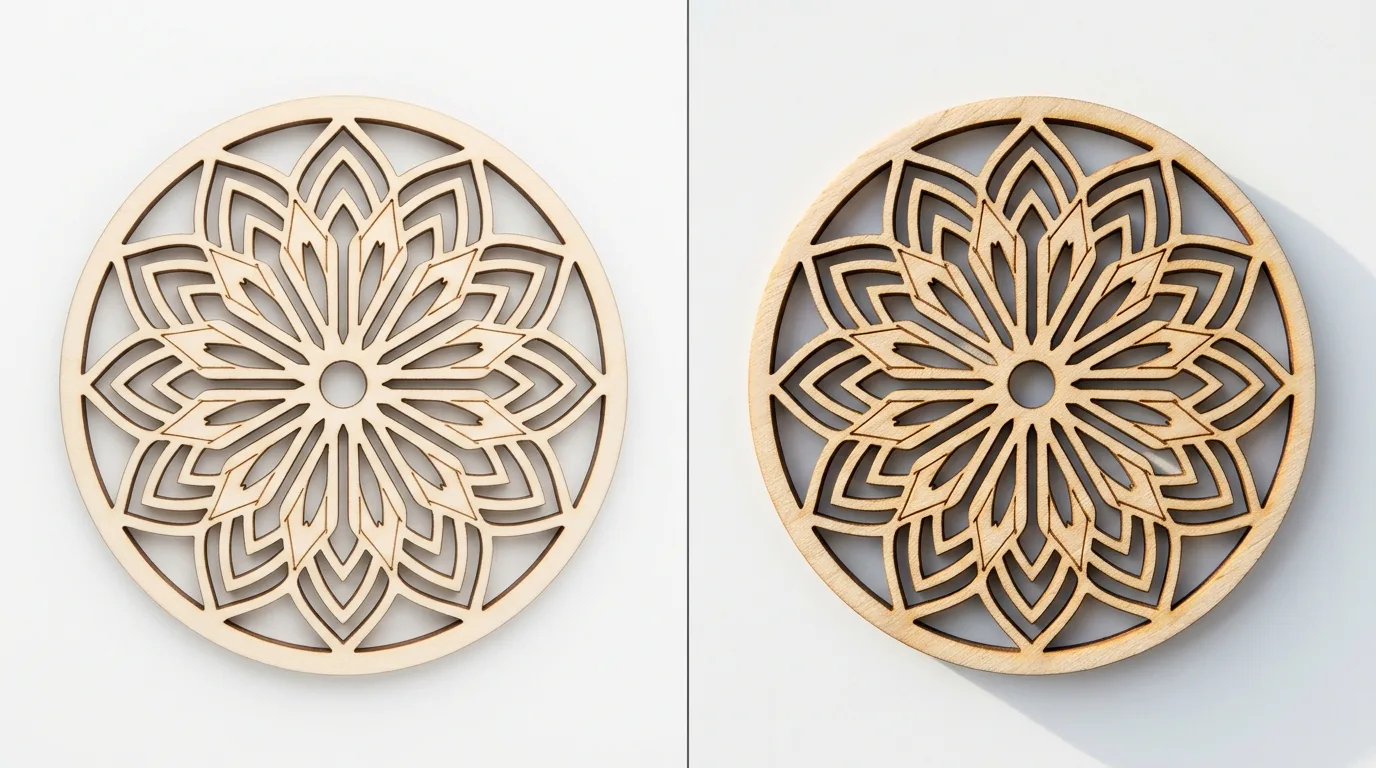
| Material | Engraving Contrast | Cut Ease | Smoke / Odor | Cost | Beginner Score |
|---|---|---|---|---|---|
| Basswood (3 mm) | ★★★★★ | Excellent – 1 pass | Low | $ | ★★★★★ |
| Baltic Birch Plywood | ★★★★ | Good – 2-3 passes | Medium | $$ | ★★★★ |
| MDF | ★★★ | Good – 1-2 passes | High (formaldehyde) | $ | ★★ |
| Pine / Soft Plywood | ★★★ | Poor – resin deposits | Medium-High | $ | ★★ |
The Listing Photo Looked Perfect. The Package That Arrived Didn’t Match.
I shot a batch of coasters under soft, even light that made every piece look flawless – smooth, uniform, no visible texture anywhere. A buyer messaged two days after delivery asking why their coasters had “lines” on them that weren’t in the photos. The lines were normal wood grain and a faint edge mark from the laser, completely typical for the material. They just hadn’t been visible in photos lit to hide exactly that kind of detail.
That wasn’t dishonesty on my part – it was a lighting choice that happened to flatten the same texture a buyer would see in hand. The fix wasn’t photoshopping anything or admitting to a flaw that didn’t exist. It was lighting the product so what the camera saw matched what the box would contain.
This is a different problem from making honest claims in your listing text – that’s about word choice. This is about what the camera itself does or doesn’t reveal, regardless of what you write.
- Low resin – photographs consistently without sticky sheen variations between pieces
- Consistent density – predictable surface appearance sheet after sheet, batch after batch
- Minimal char – less unexpected dark marking to worry about hiding or revealing
- Light, workable surface – pale color shows true wood grain clearly under any lighting
- No toxic fumes – unlike MDF or treated plywood, safe for indoor use with basic ventilation
According to USDA Forest Products Laboratory data, basswood’s fine, uniform grain is part of why it photographs predictably – there’s less natural variation to accidentally over- or under-represent compared to a coarser-grained wood.
Why Raking Light Shows What Flat Light Hides
Direct flash and soft, even diffused light both flatten a surface visually – they’re great for making a product look clean, and bad for showing a buyer what they’re actually getting. Warp, raised glue lines, and surface texture all depend on shadow to be visible at all, and flat lighting eliminates shadow by design.
Side or low-angle raking light does the opposite: it casts long shadows across any texture or irregularity, making warp, grain, and edge condition immediately visible. This isn’t about making your product look worse – it’s about making sure the photo and the physical object tell the same story. A buyer who sees texture in the photo and feels the same texture in hand has no grounds for surprise.
The 4-Shot Checklist
Etsy allows up to 20 photos and a short video, but you don’t need anywhere near that many to be honest – you need the right four, at minimum:
- True-to-life hero shot: Attractive, but lit in a way that doesn’t erase real texture or color. This is still your main selling image – it just isn’t lit to deceive.
- Raking-light detail shot: Side or low-angle light specifically to reveal surface condition, grain, and any edge marks – the shot that answers “what does this actually look like up close.”
- Scale reference: A coin, ruler, or hand (if you choose to show one) so buyers can judge size accurately without guessing from a cropped hero shot.
- Edge or back view: Wherever condition issues are most likely to hide – cut edges, the underside, or anywhere the hero angle doesn’t reach.

Editing: Color Correction Is Fine, Flattening Shadows Isn’t
Light color correction – fixing a color cast from bad white balance, for example – doesn’t change what’s visible in the photo. Brightness and contrast adjustments that smooth out shadow detail can, even when that’s not the intent. If an edit makes texture or a mark less visible than it was in the original shot, it’s doing the same job that flat flash lighting does, just after the fact instead of during the shoot.
A simple test: look at your edited photo and ask whether a buyer who received exactly what the photo shows would have any grounds for surprise. If the answer is yes, the edit went too far.
Where to Buy Basswood That Photographs Consistently
Crafteker 3mm basswood sheets hold consistent color and surface quality from sheet to sheet, which means your listing photos stay accurate across restocks instead of needing a reshoot every time a new batch looks slightly different.
At $24.99 for 12 sheets ($2.08/sheet), it’s the most cost-effective option for basswood sheets with a predictable look buyers can trust photo to delivery.
Ready to shoot your listing? Get wood that photographs true:
→ Buy Crafteker 12-Pack Basswood Sheets on Amazon – $24.99
Also available: 5-pack ($15.97) · 3-pack ($12.99)
Frequently Asked Questions
Why would I want to show defects in my Etsy product photos?
Because a buyer who sees true condition before ordering doesn’t dispute it after delivery. Flattering photos that hide burn marks, warp, or glue lines create a gap between what was promised and what arrives – that gap is where returns, bad reviews, and disputes come from, not from the defect itself.
What kind of lighting reveals wood surface defects best?
Side or low-angle raking light, not direct flash or diffused front lighting. Light coming in at a shallow angle casts long shadows across texture, warp, and raised glue lines that flat, even lighting washes out completely.
How many photos should an Etsy wood listing have?
Etsy allows up to 20 photos and a short video. You don’t need all 20, but a hero shot alone isn’t enough – at minimum, add a raking-light detail shot, a scale reference, and a shot of the edge or back where condition issues are most likely to show.
Does heavy photo editing hide product defects?
It can, even unintentionally – brightness and contrast adjustments that make a photo look cleaner can also wash out the same texture and shadow detail that would reveal a defect. Light color correction is fine; avoid edits that flatten shadows or blur surface detail.
Where can I buy basswood that photographs consistently?
Crafteker on Amazon: 3-pack $12.99, 5-pack $15.97, 12-pack $24.99 ($2.08/sheet best value) – consistent color and surface mean your listing photos stay accurate from batch to batch.
About the author: Mike Dolan is a laser maker and wood materials specialist with 8+ years cutting basswood, birch, and MDF on diode and CO₂ machines. He tests every Crafteker basswood batch before listing.
Started adding a raking-light close-up shot to every listing after one too many ‘this looks different than the photo’ messages – disputes basically stopped, and honestly a few buyers mentioned in reviews that they appreciated seeing the real texture upfront.