

6 Design Moves for Handmade Laser-Cut Wood (2026)
Handmade laser cut wood designs stand out when you build 6 visible human decisions into the product and its presentation. This guide covers distinctive motifs, material character, meaningful customization, and listing details that make your work feel like yours.
By Mike Dolan ·
Quick Answer: Handmade laser cut wood designs need 6 visible signals of maker intent, from imperfect linework and layered wood to real process photos and a recognizable shop style.
| Material | Engraving Contrast | Cut Ease | Smoke / Odor | Cost | Beginner Score |
|---|---|---|---|---|---|
| Basswood (3 mm) | ★★★★★ | Excellent — 1 pass | Low | $ | ★★★★★ |
| Baltic Birch Plywood | ★★★★ | Good — 2–3 passes | Medium | $$ | ★★★★ |
| MDF | ★★★ | Good — 1–2 passes | High (formaldehyde) | $ | ★★ |
| Pine / Soft Plywood | ★★★ | Poor — resin deposits | Medium-High | $ | ★★ |
Why Basswood Is a Natural Fit for Handmade-Looking Designs
Low-resin, consistently dense 3mm basswood takes engraving texture cleanly while still showing warm veneer faces and natural grain variation. At $2.08 per sheet in the 12-pack, it gives you room to let dark cut edges, grain, and hand-finished details become part of the design rather than something to hide.
- Low resin — clean engraving texture without resin bleed muddying fine detail
- Consistent density — reliable results so the character you see is grain, not inconsistency
- Visible warm grain — a natural surface that reads as real wood, not plastic or print
- Minimal char — crisp, deliberate-looking lines instead of ragged scorch marks
- No toxic fumes — safe to cut and finish indoors as you refine your own style
Why Handmade Laser Cut Wood Designs Need a Human Mark
Handmade laser cut wood designs need a human mark because buyers can spot a file left on autopilot. Hand-drawn botanical shapes, asymmetrical borders, controlled imperfect linework, layered silhouettes, and a recurring maker motif show that somebody made decisions instead of simply pressing start on an unchanged stock SVG.
I once listed a generic floral design that sat unnoticed like a polite guest at a loud party. After I redrew the leaves, offset the border, and added my own layered stem detail, it started getting attention. Buyers could recognize the decision-making behind it, which is also what separates the best laser cut items to sell on Etsy from copy-and-paste decor.
Let Basswood Show Its Work
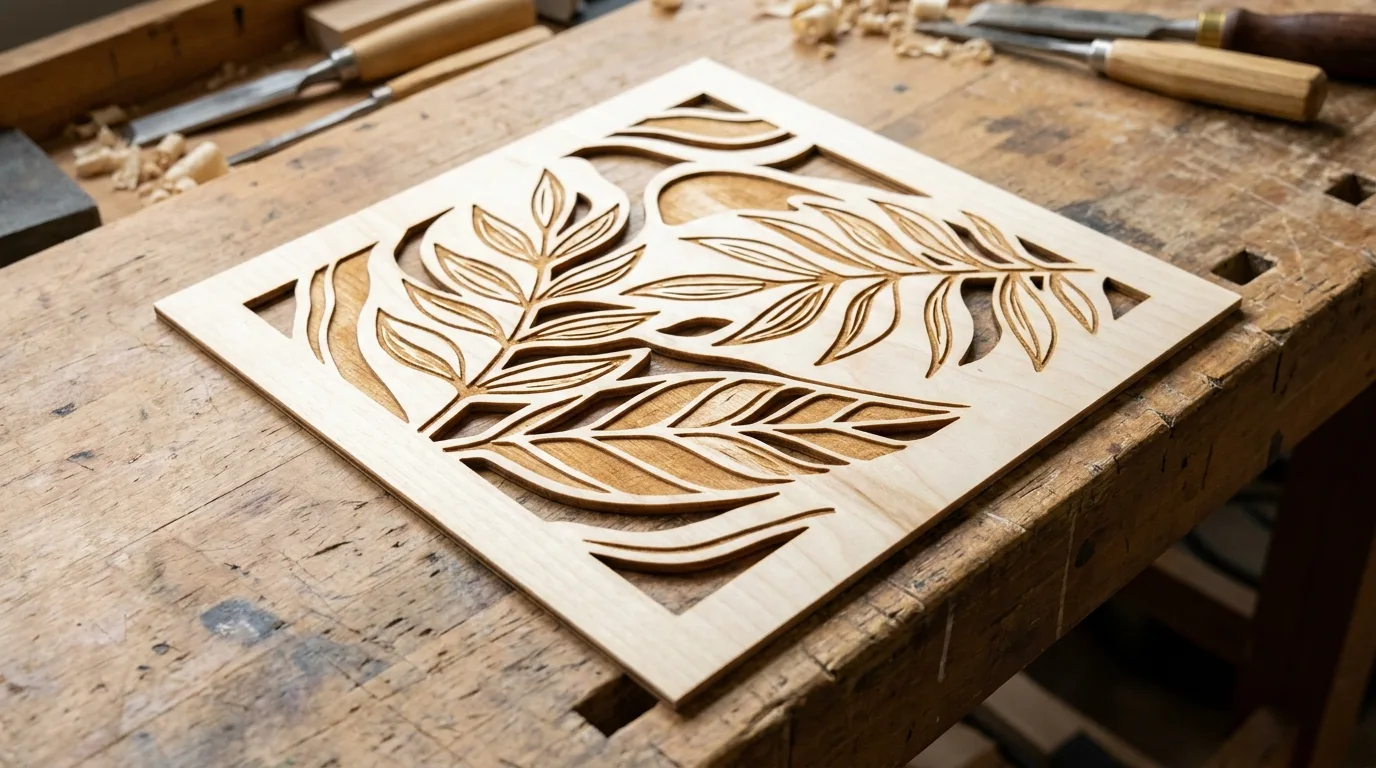
Basswood should remain visible in the composition because its pale face, grain shifts, and dark cut edges add character no flat graphic can supply. Combine shallow engraving, cut-through openings, and layered relief so the material creates depth alongside the artwork rather than serving as a blank background.
I like to leave a generous field of warm veneer around an engraved design instead of covering every inch with detail. Small grain differences and darkened cut edges then read as intentional contrast, not defects. That tactile evidence gives a piece a visual advantage over perfectly uniform products made to look identical.
Choose laser engraving wood blanks with a clean face, then let your design make room for that face to be seen. A cut-out window can frame the wall behind it, while a shallow engraved line can hold the eye on the wood itself.

6 Ways to Make Customization Feel Personal
Customization feels personal when it gives a buyer a real connection to the piece, not merely a name in a different font. These six personalization directions create room for stories while leaving room for your own visual language. Show a prepared variation beside the base design so shoppers can picture the result.
- Local landmarks: Turn a recognizable bridge, skyline, mountain, or neighborhood building into a simplified silhouette.
- Family symbols: Build around a house shape, heirloom object, crest-inspired mark, or shared hobby.
- Pet silhouettes: Use the distinct ears, profile, posture, or tail that makes one animal instantly familiar.
- Birth-flower combinations: Arrange meaningful blooms into a composition with more personality than a single generic bouquet.
- Meaningful phrases: Pair a short saying with typography that supports its mood instead of fighting for attention.
- Layered arrangements: Give separate elements their own depth so the story reads from more than one viewing angle.
I sketch the chosen elements beside the original motif before I cut anything, then photograph that planning stage. Add real inventory photos, close-ups of the wood face and edge detail, and process images or video of designing, cutting, sanding, finishing, and packaging. A menu alone feels abstract; prepared examples make choices believable.
State the wood construction, motif origin, and natural variation plainly in the listing. Buyers do not need a dramatic origin story, but they do want to know whether a landmark began as your drawing, how layers sit together, and why one grain line may differ from the next.
What Makes Handmade Wood Crafts Look Generic
Handmade wood crafts look generic when every visible choice could belong to any shop. Repeating unchanged stock SVGs across listings, relying only on flat digital mockups, and saying nothing about the material, process, or motif origin removes the evidence that a real maker shaped the result.
I learned this after photographing several unrelated designs on the same white background and realizing they looked like they came from three different shops. A limited palette, recurring cut patterns, distinctive typography, and named design stories give signs, wall art, ornaments, and decor a family resemblance shoppers can recognize.
Build a collection around a few repeatable visual decisions rather than chasing every trend. A scalloped edge, a particular layered shadow, or a recognizable lettering style can carry across product types without making them feel cloned. That recognizable thread supports the kind of work featured in most profitable laser cutting projects.
Where to Get Basswood That Shows Its Character
Crafteker 3mm basswood sheets are 12×12 inch, laser-grade, void-free, and pre-sanded – consistent enough to engrave cleanly while still showing the warm grain that makes each piece look made, not manufactured. At $24.99 for 12 sheets ($2.08/sheet), it’s an easy material to build a recognizable shop style around.
Ready to design something only you would make?
→ Buy Crafteker 12-Pack Basswood Sheets on Amazon – $24.99
Also available: 5-pack ($15.97) · 3-pack ($12.99)
Frequently Asked Questions
What makes a laser-cut wood product look handmade?
Visible maker decisions make the difference: original linework, intentional asymmetry, wood grain, layered construction, hand-applied finishing, and photos of the real piece rather than only a digital preview.
Can laser-cut products still feel distinctive if the design starts digitally?
Yes. Digital design is only the starting point. Add your own motif, composition, typography, material choices, and finishing details so the final object carries a style buyers can recognize.
How can I personalize laser-cut wood decor without only adding names?
Offer details with actual meaning, such as a place, pet silhouette, family symbol, birth flower, phrase, or arrangement that reflects the buyer’s story. Show examples so the options feel considered rather than generic.
Should I show dark laser-cut edges in listing photos?
Usually, yes. Darkened edges can signal real wood and real cutting, especially when they suit the design. Photograph them honestly alongside the warm veneer face and engraved texture.
Why is basswood a good choice for handmade laser-cut designs?
Basswood has low resin and consistent density, so engraving reads clearly while its warm face and subtle grain still give each piece natural variation. It is a good material for designs that should feel clean but not factory-flat.
About the author: Mike Dolan is a laser maker and wood materials specialist with 8+ years cutting basswood, birch, and MDF on diode and CO₂ machines. He tests every Crafteker basswood batch before listing.
I stopped hiding the dark edges on my 3mm basswood pieces and started photographing them close up. The listings felt more honest once buyers could see the grain and layered construction.