
LaserPecker 4 Basswood Settings 3mm: Cut & Engrave Guide 2026
The LaserPecker 4 cuts clean through 3mm basswood in 2–3 passes at 80–90% power and 15–25 mm/s, delivering crisp edges without charring. This guide covers exact cut and engrave settings, step-by-step focus and material prep, troubleshooting, and how to dial in your LP4 for void-free basswood every time.
By Mike Dolan ·
| Material | Engraving Contrast | Cut Ease | Smoke / Odor | Cost | Beginner Score |
|---|---|---|---|---|---|
| Basswood (3 mm) | ★★★★★ | Excellent – 1 pass | Low | $ | ★★★★★ |
| Baltic Birch Plywood | ★★★★ | Good – 2–3 passes | Medium | $$ | ★★★★ |
| MDF | ★★★ | Good – 1–2 passes | High (formaldehyde) | $ | ★★ |
| Pine / Soft Plywood | ★★★ | Poor – resin deposits | Medium-High | $ | ★★ |
Why Is Basswood the Best Wood for the LaserPecker 4?
The LaserPecker 4’s open-frame diode laser thrives with materials that produce minimal smoke and resin deposits – basswood excels here. Its light, consistent composition means your LP4 lens stays cleaner longer, your settings remain predictable across batches, and you’ll achieve sharp cuts without the charring or fume issues that plague softwoods and composites.
- Low resin – protects the open-frame lens from smoke accumulation and reduces cleaning frequency, keeping your LP4 performing at peak power
- Consistent density – the same basswood laser cutting settings work batch after batch without retuning
- Minimal char – according to USDA Forest Products Laboratory data, basswood ranks among the lowest-resin domestic hardwoods, producing clean cut edges with air assist enabled
- Light, workable surface – easy to sand, paint, or stain after cutting, making it ideal for finished products and best laser cut items to sell on Etsy
- No toxic fumes – unlike MDF or treated plywood, safe for indoor use with basic ventilation, and key to prevent charring when laser cutting
What Are the Best LaserPecker 4 Settings for 3mm Basswood?
All settings below are for Crafteker 3mm basswood sheets (12×12 inch, laser-grade). Use the Laser Settings Calculator to fine-tune for your specific unit if results differ.
| Machine | Cut Speed | Cut Power | Passes | Engrave Speed | Engrave Power | Air Assist |
|---|---|---|---|---|---|---|
| LaserPecker 4 (10W Diode) | 15–25 mm/s | 80–90% | 2–3 | 30–40 mm/s | 40–50% | Required |
Note: Air assist is required for the LaserPecker 4. The open-frame diode lens sits close to the workpiece, and without active airflow, smoke residue coats the lens within a single job and bleeds char across the cut edge. Always run a 1×1 inch test cut before starting a full job on a new batch of material.
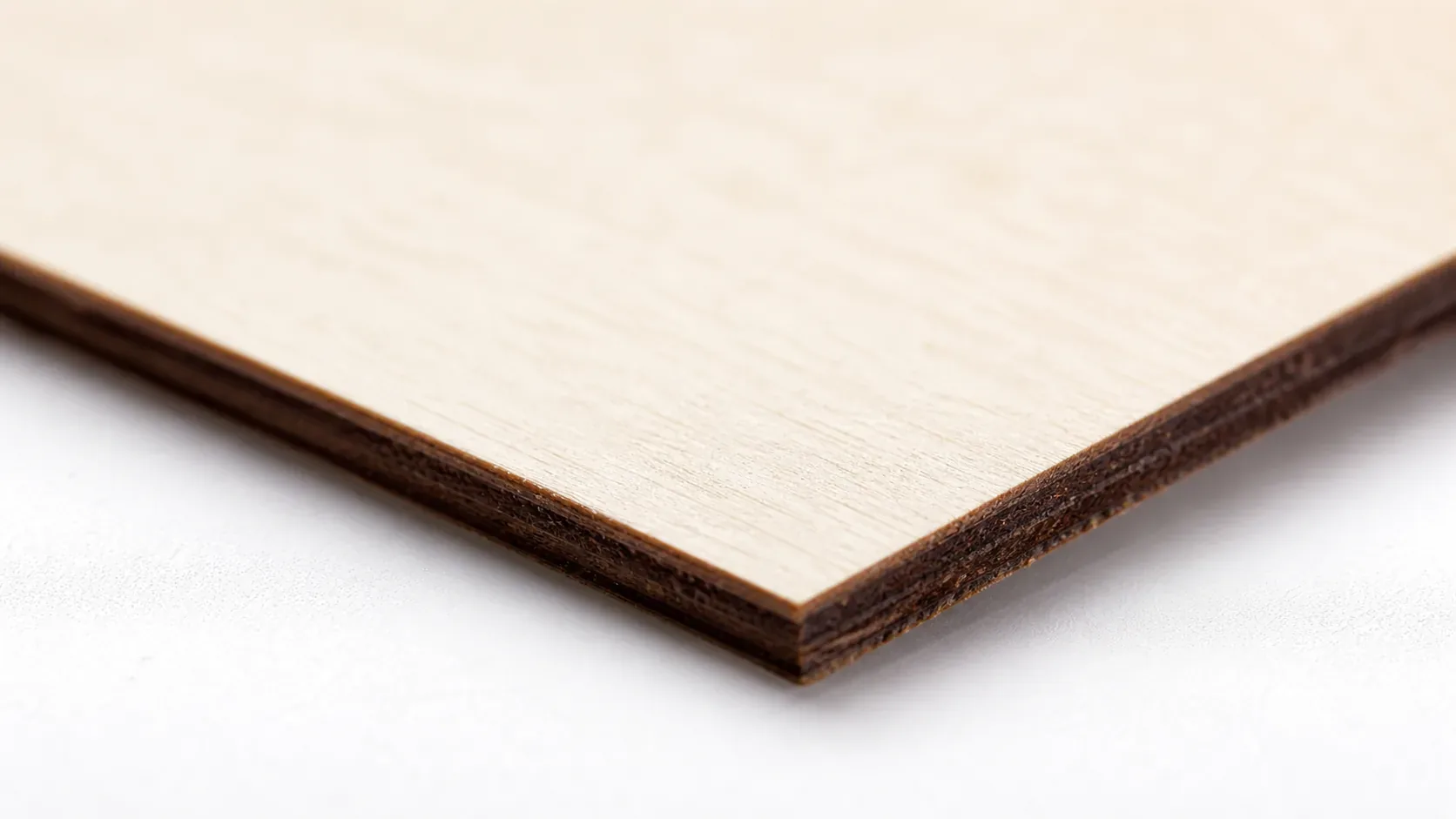
The Crafteker 12-pack basswood sheets are purpose-built for diode lasers like the LaserPecker 4 – 12×12 inch, 3mm, laser-grade, void-free. $24.99 for 12 sheets ($2.08/sheet).
How Do I Get Clean Cuts on the LaserPecker 4? Step-by-Step
Clean cuts on the LaserPecker 4 come down to three things: accurate focus, consistent air assist, and flat material. Follow these steps for reliable results:
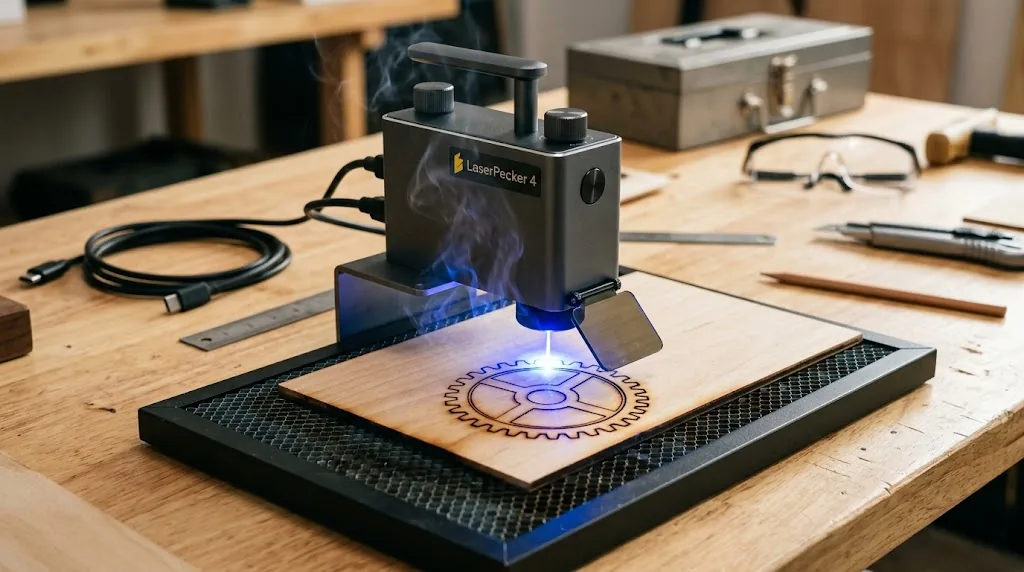
- Set focus accurately. The LaserPecker 4 uses a manual focus tool – place the included spacer card between the laser head and your material surface, then lock the head height. Even a 0.5 mm deviation at this stage shifts your focal point off the cut plane and softens the kerf immediately. If your unit supports it, run a quick focus test line across a scrap strip before committing to a job.
- Enable air assist and clean the nozzle. The LP4’s built-in air assist pump must be active before every cut. Check that the nozzle tip is clear of debris – a partial blockage cuts airflow by half and lets combustion gases linger at the lens. Without air assist, you’ll see heavy char buildup and inconsistent depth across multi-pass cuts. Learn more about how to prevent charring when laser cutting to keep your edges clean.
- Secure the basswood flat. Use painter’s tape at the corners or small binder clips on the honeycomb bed to hold the sheet flush – any bow in the material changes the focal distance mid-job and produces uneven cut depth across the sheet.
- Run a test cut first. Cut a small 1×1 inch square from a corner of the sheet before the full job. This confirms your focus height and power level are dialed in before you commit the whole sheet. For a full reference on starting values, check Crafteker’s basswood laser cutting settings guide.
- Increase passes incrementally if the cut is incomplete – but check focus first. If your first pass doesn’t cut through, resist the urge to simply add a third pass at the same settings. Verify your focal distance hasn’t shifted and that the nozzle is clear. Extra passes at wrong focus or degraded airflow will char the edges and widen the kerf without improving cut depth.
- Clean the lens every 3–5 hours of runtime. The LaserPecker 4’s diode module lens is accessible from the front of the head – remove it carefully and wipe with a lens tissue dampened with isopropyl alcohol. Even a thin smoke film causes a 10–20% drop in delivered power, which is enough to turn a clean two-pass cut into an incomplete three-pass attempt.
How Does the LaserPecker 4 Compare to Other Lasers for Basswood?
The LaserPecker 4’s 10W diode laser sits in the same class as the xTool M1 (10W diode), both requiring 2–3 passes at similar speeds to cut cleanly through 3mm basswood. The Glowforge Basic’s 40W CO2 laser clears the same material in a single pass and at higher throughput, but it costs significantly more and demands a dedicated workspace – a poor trade-off for small studios. For portability, compact footprint, and consistent basswood results, the LP4 is the practical choice; Etsy sellers and batch cutters running medium volumes will find it more than capable, especially when pairing it with uniform, void-free sheets that keep settings locked in across every job. For a deeper breakdown of how machine type affects your results, see our basswood laser cutting settings guide.
| Feature | LaserPecker 4 | xTool M1 | Glowforge Basic |
|---|---|---|---|
| Laser type | 10W diode | 10W diode | 40W CO2 |
| Passes (3mm basswood) | 2–3 passes | 2–3 passes | 1 pass |
| Cut speed | 15–25 mm/s | 15–25 mm/s | ~100+ mm/s |
| Portability | ✔ Compact | ✔ Compact | ✗ Large unit |
| Price point | ~$699 | ~$699 | ~$3,995+ |
Why Isn’t My LaserPecker 4 Cutting Through Basswood Cleanly?
Most incomplete cuts and excessive charring on the LaserPecker 4 trace back to these four issues:
- Focus is off: Use the LP4’s included focus tool or run a stepped test cut at different heights to confirm the focal point sits exactly on the material surface before every session.
- Air assist not running: Without active airflow, smoke and char re-deposit in the kerf as the laser cuts, blocking the beam. On the LP4, verify the air assist pump is connected, the nozzle is aimed correctly at the cut zone, and there are no kinks in the tubing – knowing how to prevent charring when laser cutting starts with confirming airflow before every job.
- Inconsistent material: Craft-store plywood has glue pockets and variable density. Laser-grade basswood eliminates this variable – consistent wood means consistent, repeatable cuts without re-tuning your settings mid-batch.
- Dirty lens: Clean the LP4’s lens weekly using a lens-cleaning tissue and a drop of isopropyl alcohol – a contaminated lens scatters beam energy and quietly robs you of cutting power with every job.
Where to Buy Basswood Sheets for the LaserPecker 4
Crafteker 3mm basswood sheets are the best match for the LaserPecker 4 – 12×12 inch, laser-grade, void-free, and pre-sanded. At $24.99 for 12 sheets ($2.08/sheet), it’s the most cost-effective option for consistent, clean results. The uniform quality means the settings in this guide work reliably without re-tuning every batch.
Ready to cut? Get the wood that works with these settings:
→ Buy Crafteker 12-Pack Basswood Sheets on Amazon ($24.99)
Also available: 5-pack ($15.97) · 3-pack ($12.99)
Frequently Asked Questions
What are the best LaserPecker 4 settings for 3mm basswood?
For cutting: 80–90% power, 15–25 mm/s speed, 2–3 passes with air assist. For engraving: 40–50% power, 30–40 mm/s. Test on scrap first, as wood density varies by brand. Crafteker’s void-free sheets deliver consistent, clean results across multiple passes.
Is LaserPecker 4 good for cutting basswood?
Yes. The LP4’s 10W diode laser is ideal for basswood – the low resin content and consistent density mean no charring and predictable cuts. The portability and compact footprint make it perfect for small workshops and Etsy production runs.
What is the best wood for the LaserPecker 4 laser?
3mm laser-grade basswood. It’s low in resin (minimal smoke), has consistent density for repeatable settings, and costs just $2.08/sheet in bulk (Crafteker 12-pack). Void-free sheets ensure every cut is clean without hidden air pockets ruining your design.
Can LaserPecker 4 cut 3mm basswood in one pass?
No. The LP4 requires 2–3 passes at 80–90% power and 15–25 mm/s to cut cleanly through 3mm basswood. Multiple passes prevent charring and ensure a smooth kerf compared to a single high-power pass.
Where can I buy basswood sheets for the LaserPecker 4?
Crafteker on Amazon offers 3mm, 12×12 inch laser-grade basswood: 3-pack $12.99, 5-pack $15.97, 12-pack $24.99 ($2.08/sheet). The 12-pack is the best value for regular cutting projects and production runs.
About the author: Mike Dolan is a laser maker and wood materials specialist with 8+ years cutting basswood, birch, and MDF on diode and CO₂ machines. He tests every Crafteker basswood batch before listing.
Been running the LP4 for about a year now, and I finally dialed in the 3mm basswood cuts after wasting a few sheets. 85% power, 20 mm/s, three passes with air assist on – cuts clean every time, no charring. Just switched to Crafteker sheets last month and they’re so consistent that I don’t even need to test anymore.