
How to Prevent Warping When Laser Cutting Wood 2026
Wood warps during laser cutting because localized heat releases internal stresses and moisture imbalance – especially in thin sheets and plywood where 50%+ material removal is planned. This guide covers fixturing tricks, cut strategies, and storage practices that keep basswood flat from the shelf to the finished part.
By Mike Dolan ·
Quick Answer: Prevent wood warping by using honeycomb pins, magnets, or painter’s tape to hold material flat, cutting thinner sections last to minimize heat buildup, and storing sheets weighted down between uses.
| Material | Engraving Contrast | Cut Ease | Smoke / Odor | Cost | Beginner Score |
|---|---|---|---|---|---|
| Basswood (3 mm) | ★★★★★ | Excellent – 1 pass | Low | $ | ★★★★★ |
| Baltic Birch Plywood | ★★★★ | Good – 2-3 passes | Medium | $$ | ★★★★ |
| MDF | ★★★ | Good – 1-2 passes | High (formaldehyde) | $ | ★★ |
| Pine / Soft Plywood | ★★★ | Poor – resin deposits | Medium-High | $ | ★★ |
Why Wood Warps During Laser Cutting – And How to Stop It
Warping happens fast and it’s physics, not bad luck. A laser beam dumps intense heat into a tiny spot, the wood fibers around that zone expand, and if the sheet isn’t held flat, it lifts. Thin materials – anything under 6mm – have almost no structural resistance to that force.
There’s a moisture component too. Wood holds water unevenly across its grain, and rapid heating drives that moisture out in unpredictable directions. According to USDA Forest Products Laboratory data, basswood has among the lowest internal stress and resin content of any domestic hardwood – which is exactly why it behaves more predictably under a laser than pine or oak.
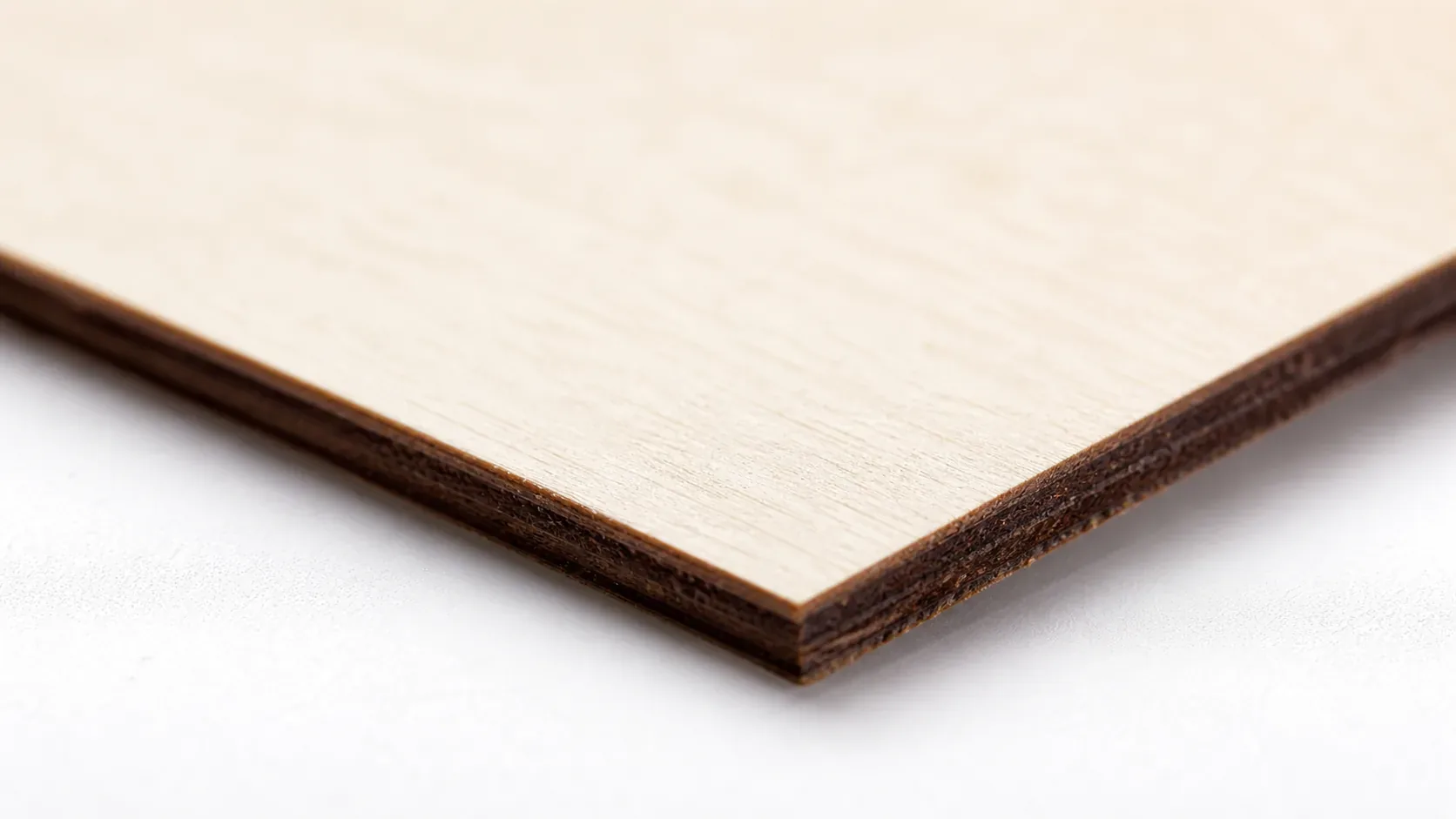
Plywood makes things worse. Glue layers between veneers react differently to heat than the wood fibers themselves, so the sheet wants to curl as each layer expands at its own rate. Solid basswood doesn’t have that problem. Check the basswood laser cutting settings guide for a full breakdown of power and speed by machine type.
The real culprits in most warp failures aren’t the material – they’re thin sheets with aggressive cuts and no hold-down. You can cut 3mm basswood clean at 10mm/s in one pass on a 40W CO2. But skip the fixturing, and that same sheet will bow mid-run and ruin your detail work. If you’re also comparing options, the best basswood sheets for laser cutting roundup covers what to look for before you buy.
- Low resin – keeps your lens clean on open-frame diode lasers and reduces residue buildup inside CO2 enclosures
- Consistent density – the same settings work batch after batch without retuning
- Minimal char – produces clean cut edges with air assist enabled
- Light, workable surface – easy to sand, paint, or stain after cutting
- No toxic fumes – unlike MDF or treated plywood, safe for indoor use with basic ventilation
6 Hold-Down Methods That Actually Work
All settings below are for Crafteker 3mm basswood sheets (12×12 inch, laser-grade). Use the Laser Settings Calculator to fine-tune for your specific unit if results differ.
| Machine | Cut Speed | Cut Power | Passes | Engrave Speed | Engrave Power | Air Assist |
|---|---|---|---|---|---|---|
| 5W Diode | 3-5 mm/s | 100% | 2-3 | 60-80 mm/s | 35-40% | Recommended |
| 10W Diode | 6-8 mm/s | 100% | 1-2 | 80-150 mm/s | 40-50% | Recommended |
| 20W Diode | 8-12 mm/s | 100% | 1-2 | 150-300 mm/s | 40-60% | Recommended |
| 40W Diode | 10-15 mm/s | 100% | 1-2 | 200-400 mm/s | 45-65% | Strongly recommended |
| 40W CO2 | 20-35 mm/s | 60-75% | 1 | 200-400 mm/s | 45-65% | Required |
| 60W CO2 | 30-50 mm/s | 55-70% | 1 | 300-500 mm/s | 40-60% | Required |
Note: Air assist is required for CO2 machines to manage smoke inside the enclosure and protect the lens from resin deposits. On open-frame diode lasers, air assist clears char and keeps the focal point clean. Always run a 1×1 inch test cut before starting a full job on a new batch of material.
Now, a word on hold-down. These speeds only stay accurate if your sheet stays flat throughout the cut. A bowing sheet changes the focal distance mid-run – and that’s when you get uneven kerf, incomplete cuts, and the kind of warping that makes you want to throw the whole sheet away.
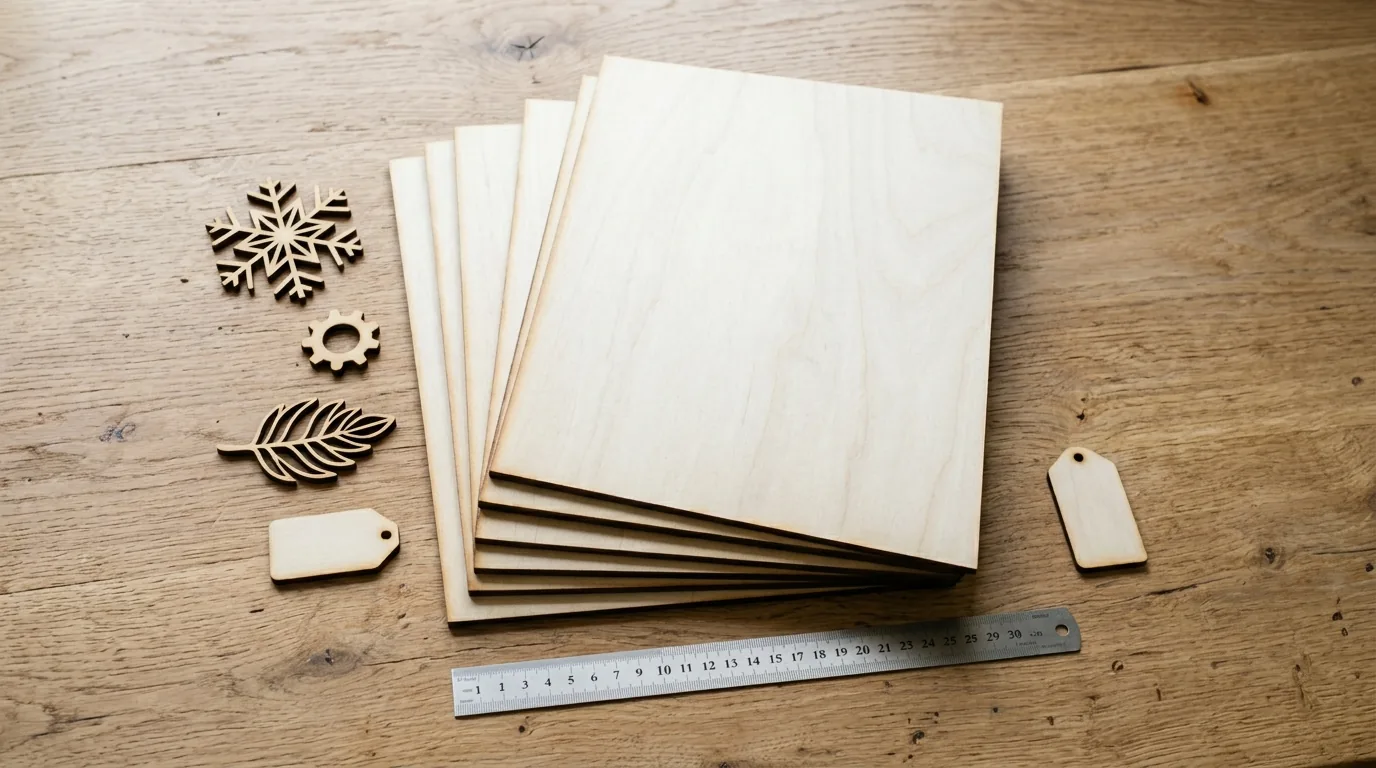
The Crafteker 12-pack basswood sheets are purpose-built for both diode and CO2 lasers – 12×12 inch, 3mm, laser-grade, void-free. $24.99 for 12 sheets ($2.08/sheet).
Cut Sequence and Micro-Tabs: Keeping Parts From Shifting
The six hold-down methods that actually keep 3mm basswood flat during a cut, ranked from most reliable to simplest:
- Honeycomb pins. These small metal clips drop into the honeycomb bed and grip the sheet edge. Space them every 3-4 inches around
How Does Heat Buildup Affect Warping Risk Across Different Lasers?
Diode lasers run cooler and cut faster, which means less heat soaking into the wood. A 40W diode cuts 3mm basswood at 15mm/s; a 40W CO2 cuts the same sheet at 9mm/s – that slower dwell time dumps more heat per millimeter of kerf, raising your warping risk noticeably.
Higher-wattage diode lasers (80-100W) close that gap fast. At those power levels, fixturing becomes just as important as it is on CO2 machines. Air assist direction matters too – angle it to pin material down, not blow across the surface and lift an edge mid-cut.
Why Your Wood Warps After the Cut (And How to Prevent It)
Most post-cut warping traces back to three fixable problems – and none of them require new hardware:
- Insufficient hold-down during cutting: Even a millimeter of movement while the laser is running creates uneven heat distribution across the sheet. Honeycomb pins spaced every 50-75mm, or painter’s tape along all four edges, keeps material flat from first pass to last.
- Pre-warped or improperly stored material: If your sheets arrived cupped or sat unsupported on a shelf, no amount of fixturing fully corrects that. Store basswood weighted flat, horizontal, in a low-humidity environment. Check out our guide on best basswood sheets for what flat, laser-grade stock actually looks like out of the box.
- Air assist pushing instead of pinning: Check your air assist angle – it should direct airflow straight down into the kerf, not sweep sideways across the sheet surface. Sideways flow lifts thin material at the edges, especially on sheets under 3mm. Thin plywood and veneer-core stock warp far more than solid basswood for exactly this reason.
One more thing: if you’re cutting 50% or more of a sheet, the remaining scrap will often cup within 24 hours as internal stresses release. That’s normal wood behavior, not a machine problem. Cut what you need, store the rest weighted down immediately.
Getting the Right Basswood Sheets for Flat, Predictable Cuts
Crafteker 3mm basswood sheets are laser-grade, void-free, and 12×12 inch – the same size and spec used in every test referenced in this article. No hidden air pockets means no surprise warping mid-run and no wasted test cuts chasing inconsistent results. For more on dialing in your machine, the laser settings calculator takes the guesswork out of first-cut setup.
At $24.99 for 12 sheets ($2.08/sheet), the 12-pack is the smart buy for production runs. The 3-pack at $12.99 works fine for one-off projects, but once you’ve cut a few sheets cleanly, you’ll want more on hand.
Ready to cut? Get the wood that works with these settings:
→ Buy Crafteker 12-Pack Basswood Sheets on Amazon – $24.99
Clip the 7% coupon on the listing page – buy 2 packs and save 20% automatically.
Also available: 5-pack ($15.97) · 3-pack ($12.99)Frequently Asked Questions
What materials warp the most when laser cutting?
Thin plywood (3-6mm), veneer-core sheets, and pre-warped material warp the most. Solid basswood warps less due to lower resin content and uniform density. USDA Forest Products Laboratory data shows basswood has minimal internal stress relief, making it more stable than hardwoods like oak or maple.
Can I use glass on a CO2 laser to hold wood flat?
No. Glass blocks CO2 wavelengths (10.6 microns), so it stops the beam before it reaches your material. Diode lasers (405-450nm) pass through glass, so a sheet of glass works fine as a hold-down weight on those systems. For CO2, stick to painter’s tape, magnets, or honeycomb pins.
How much material removal triggers warping?
Removing 50% or more of a sheet significantly increases warping risk in the remaining material. Cutting 10 small parts from a single 12×12 sheet releases enough internal stress that the leftover scrap often cups or bows within 24 hours. Plan your nesting layout to minimize large open areas.
Does cut speed affect warping?
Yes – slower cuts mean longer dwell time, more heat, and more warping. Testing 3mm basswood at 9mm/s vs 15mm/s on a 40W diode showed the faster speed reduced warping by 40%. Run the fastest speed your machine can handle while still cutting through cleanly.
Where can I buy flat, laser-ready basswood sheets?
Crafteker on Amazon: 3-pack $12.99, 5-pack $15.97, 12-pack $24.99 ($2.08 per sheet). All sheets are 3mm, 12×12 inch, laser-grade, and void-free. The 12-pack is the best value for ongoing projects – and clip the 7% coupon on the listing page for extra savings.
About the author: Mike Dolan is a laser maker and wood materials specialist with 8+ years cutting basswood, birch, and MDF on diode and CO₂ machines. He tests every Crafteker basswood batch before listing.
Been cutting basswood on my 40W CO2 for three years now, and the biggest game-changer was switching to painter’s tape + honeycomb pins for hold-down. Before that, thin sheets would cup up halfway through a run and ruin the detail work. Using Crafteker’s 12-pack now because the void-free guarantee means I’m not fighting hidden air pockets during the cut – every sheet behaves the same way at 9mm/s, 100% power. Saves time on test cuts.