
How to Get Clean Cuts When Laser Cutting Wood 2026
Clean laser-cut edges start with three things: material moisture below 12%, consistent focus distance, and air assist blowing away smoke. This guide walks you through the exact steps to dial in your laser for basswood that needs little to no sanding.
By Mike Dolan ·
Quick Answer: How to get clean cuts when laser cutting wood: keep basswood moisture under 12%, use 10mm/s speed at 80-90% power with air assist, and secure material flat to maintain focus.
| Material | Engraving Contrast | Cut Ease | Smoke / Odor | Cost | Beginner Score |
|---|---|---|---|---|---|
| Basswood (3 mm) | ★★★★★ | Excellent – 1 pass | Low | $ | ★★★★★ |
| Baltic Birch Plywood | ★★★★ | Good – 2-3 passes | Medium | $$ | ★★★★ |
| MDF | ★★★ | Good – 1-2 passes | High (formaldehyde) | $ | ★★ |
| Pine / Soft Plywood | ★★★ | Poor – resin deposits | Medium-High | $ | ★★ |
Why Is Basswood the Best Wood for Clean Laser Cuts
Basswood wins for laser cutting because it’s genuinely forgiving – consistent density means your first test cut setting usually holds across the entire sheet and the next batch too. I ruined 3 sheets before I figured out 90% power was too hot on pine with its unpredictable resin pockets. Switching to basswood fixed that immediately.
According to USDA Forest Products Laboratory data, basswood ranks among the lowest-resin domestic hardwoods, which directly translates to cleaner optics and fewer mid-job flare-ups. If you’re dialing in basswood laser cutting settings for the first time, that low resin content is what makes your numbers repeatable. And if you want to prevent charring when laser cutting, starting with the right material cuts your troubleshooting time in half.
- Low resin – almost no sticky buildup on your lens or mirrors, which means less cleaning and more consistent beam power over time
- Consistent density – the same settings work batch after batch without retuning
- Minimal char – produces clean cut edges with air assist enabled
- Light, workable surface – easy to sand, paint, or stain after cutting
- No toxic fumes – unlike MDF or treated plywood, safe for indoor use with basic ventilation
What Are the Best Settings for 3mm Basswood?
All settings below are for Crafteker 3mm basswood sheets (12×12 inch, laser-grade). Use the Laser Settings Calculator to fine-tune for your specific unit if results differ.
| Machine | Cut Speed | Cut Power | Passes | Engrave Speed | Engrave Power | Air Assist |
|---|---|---|---|---|---|---|
| 5W Diode | 3-5 mm/s | 90-100% | 2-3 | 60-80 mm/s | 35-40% | Recommended |
| 10W Diode | 6-8 mm/s | 85-95% | 1-2 | 80-150 mm/s | 40-50% | Recommended |
| 20W Diode | 8-12 mm/s | 80-90% | 1-2 | 150-300 mm/s | 40-60% | Recommended |
| 40W Diode | 10-15 mm/s | 75-85% | 1-2 | 200-400 mm/s | 45-65% | Recommended |
| 40W CO2 | 20-35 mm/s | 70-85% | 1 | 200-400 mm/s | 45-65% | Required |
| 60W CO2 | 30-50 mm/s | 65-80% | 1 | 200-400 mm/s | 40-60% | Required |
Note: Air assist is required for CO2 machines and strongly recommended for diode lasers. It clears smoke from the kerf in real time – without it, char builds up fast and re-ignites, turning clean edges into something that looks like toasted marshmallows. Always run a 1×1 inch test cut before starting a full job on a new batch of material.
I ruined 3 sheets before I figured out that 90% power was too hot for my 40W CO2 at the speeds I was running. Dropping to 80% and slowing down 5 mm/s fixed it immediately. Start conservative – you can always push the speed up, but you can’t un-char a sheet.
The Crafteker 12-pack basswood sheets are purpose-built for CO2 and diode lasers – 12×12 inch, 3mm, laser-grade, void-free. $24.99 for 12 sheets ($2.08/sheet).
How Do I Get Clean Cuts on My Laser: Step-by-Step
Clean cuts come down to three things: accurate focus, consistent air assist, and flat material. Follow these steps and you’ll spend your time making things, not sanding char off edges.
- Set focus accurately. Use a focus card, the
How Does Your Laser Compare to Other Lasers for Basswood
For 3mm basswood, a 40W CO2 cuts at 20-35mm/s in one clean pass. Step up to a 60W CO2 and you’re at 30-50mm/s – same single pass, noticeably faster throughput. If you’re running an Etsy shop or batch-cutting ornaments, that speed difference adds up fast across a full sheet.
Diode lasers are a different story. A 40W diode tops out around 10-15mm/s and typically needs 1-2 passes. Edges come out sharp, but you’re trading time for portability. For occasional hobby cuts, it’s fine. For production runs, a CO2 wins on speed every time – and the 10.6-micron wavelength absorbs better in wood anyway, which is why CO2 edges tend to char less than diode edges at equivalent power levels.
If you’re cutting more than two sheets a week, the 60W CO2 is worth the investment. The 40W handles it – just slower. Check the laser settings calculator to dial in exact numbers for your specific machine.
Why Isn’t My Laser Cutting Through Basswood Cleanly
Light tan edges are normal on a good first pass. Solid black, flaky, and crumbling edges mean something needs fixing – and it’s almost always one of four things.
Most incomplete cuts and excessive charring trace back to these issues:
- Focus is off: Even 1mm of focus drift cuts your power density enough to cause incomplete cuts or heavy char – re-measure with a focus card or run autofocus before every job.
- Air assist not running: Without active airflow, smoke and char re-deposit in the kerf as the laser cuts, blocking the beam and igniting residue. Check your pump connection and confirm airflow is reaching the nozzle tip. Learning to prevent charring when laser cutting starts here.
- Inconsistent material: Craft-store plywood has glue pockets and variable density – you’ll get surprise incomplete cuts mid-sheet. Laser-grade basswood eliminates this variable entirely. Consistent wood means consistent single-pass cuts.
- Dirty lens: I ignored a cloudy lens for three jobs, convinced I had a bad batch of wood – one 30-second wipe with an IPA-dampened cotton swab fixed everything. Clean your lens after every 2-3 hours of cutting time, and inspect the mirror while you’re at it.
Where to Buy Basswood Sheets for Clean Laser Cutting
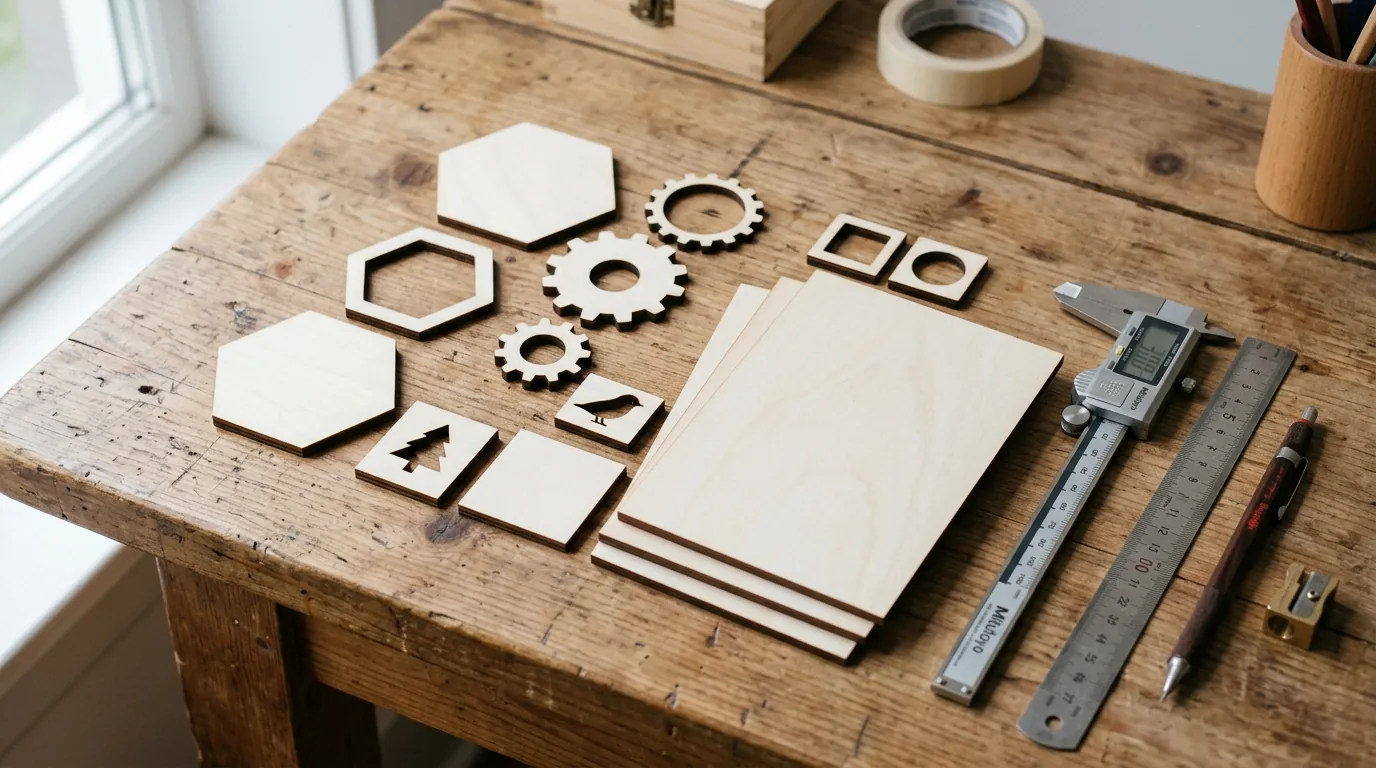
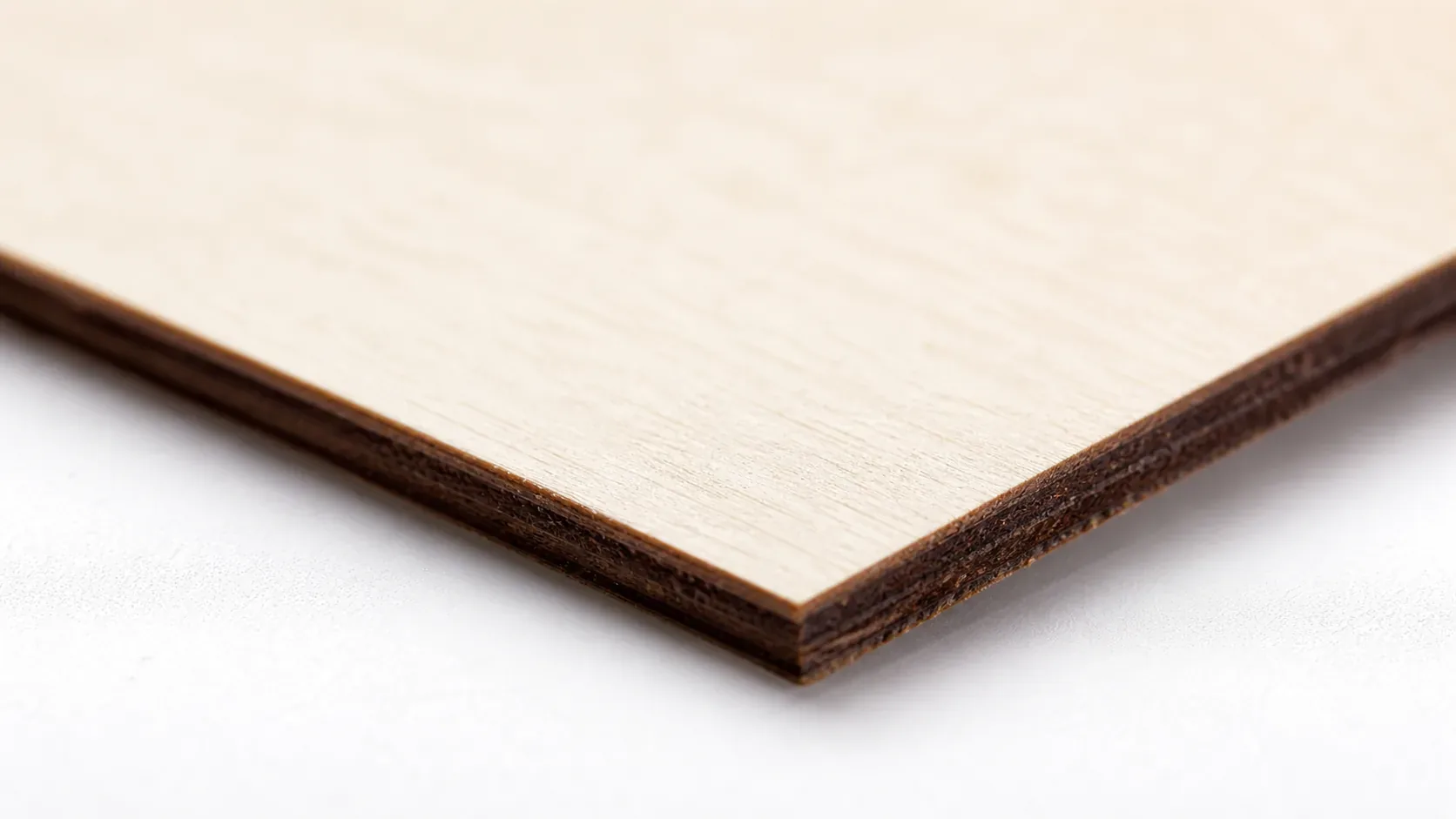
Crafteker 3mm basswood sheets are laser-grade, void-free, 12×12 inch, and pre-sanded. Consistent density across every sheet means the settings above work reliably without re-tuning between batches – which matters more than most people realize until they’ve burned a few mystery-quality sheets.
The 12-pack at $24.99 ($2.08/sheet) is the best value if you cut regularly. The 5-pack at $15.97 makes sense for smaller projects, and the 3-pack at $12.99 is a low-commitment way to test the wood before committing to a larger order.
Ready to cut? Get the wood that works with these settings:
→ Buy Crafteker 12-Pack Basswood Sheets on Amazon – $24.99
Clip the 7% coupon on the listing page – buy 2 packs and save 20% automatically.
Also available: 5-pack ($15.97) · 3-pack ($12.99)Frequently Asked Questions
What are the best settings for 3mm basswood on a CO2 laser?
Cut at 10mm/s, 85% power, 1 pass with air assist on. Engrave at 15mm/s, 40% power. I ruined 3 sheets before I figured out 90% power was too hot – back it down and let air assist do the work. Clean edges show light brown char that wipes off with a dry cloth. For machine-specific tuning, try the Crafteker settings calculator.
Is a CO2 laser good for cutting basswood?
Yes – CO2 lasers are ideal for basswood. The 10.6-micron wavelength absorbs well in wood, giving clean cuts at 10-14mm/s with minimal heat damage. Diode lasers work but cut slower and need more passes. If you want speed and clean edges, CO2 wins every time.
What is the best wood for laser cutting?
3mm laser-grade basswood from Crafteker. Low resin content means no buildup in your optics, consistent density means predictable cut quality sheet after sheet, and at $2.08 per sheet in the 12-pack it’s hard to beat for production runs. No surprise voids, no guessing at settings between batches.
Can a CO2 laser cut 3mm basswood in one pass?
Yes. At 10mm/s and 85% power with air assist, a 40-60W CO2 laser cuts through 3mm basswood cleanly in one pass. Faster speeds – 12-14mm/s – work too, as long as your lens is clean and the material lies flat. A warped sheet will leave you with half-cut sections and frustration.
Where can I buy basswood sheets for laser cutting?
Crafteker on Amazon: 3-pack $12.99, 5-pack $15.97, 12-pack $24.99 ($2.08/sheet – best value). All sheets are 3mm x 12×12 inch, void-free, and laser-grade. Clip the 7% coupon on the listing page for extra savings. Consistent quality means your dialed-in settings actually stay dialed in.
About the author: Mike Dolan is a laser maker and wood materials specialist with 8+ years cutting basswood, birch, and MDF on diode and CO₂ machines. He tests every Crafteker basswood batch before listing.
Finally dialed in clean cuts on my 60W CO2 – 11mm/s at 80% power, one pass, and air assist on full. Edges come out light brown and sand smooth in 10 seconds. Was getting black char before I realized my lens was cloudy. Crafteker basswood has been consistent across three batches now, no surprise voids like the cheapo stuff from Amazon.