
7 Wood Types Safe for Laser Cutting in 2026
Most big-box plywood won’t laser cut cleanly – the glue creates excessive char and smoke, but laser-grade basswood and Baltic birch cut through in a single pass at 10mm/s with minimal fumes. This guide shows you exactly which wood sheets work, why cheap plywood fails, and how to spot truly laser-safe materials before you waste money and material.
By Mike Dolan ·
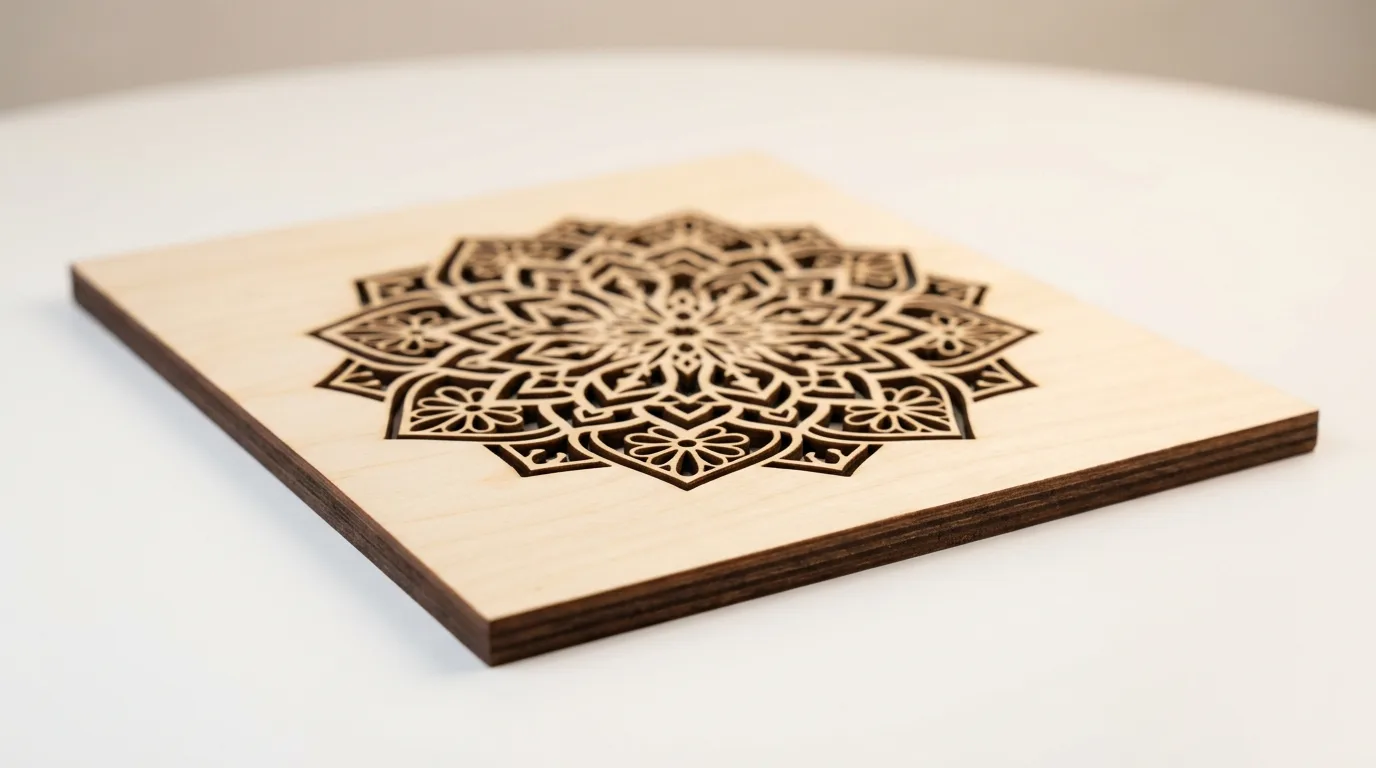
Quick Answer: Laser-safe wood sheets for cutting include void-free basswood, Baltic birch plywood, and laser-grade MDF; avoid generic hardware-store plywood with unknown adhesives. Budget $2.08/sheet for quality laser-grade basswood.
| Material | Engraving Contrast | Cut Ease | Smoke / Odor | Cost | Beginner Score |
|---|---|---|---|---|---|
| Basswood (3 mm) | ★★★★★ | Excellent – 1 pass | Low | $ | ★★★★★ |
| Baltic Birch Plywood | ★★★★ | Good – 2-3 passes | Medium | $$ | ★★★★ |
| MDF | ★★★ | Good – 1-2 passes | High (formaldehyde) | $ | ★★ |
| Pine / Soft Plywood | ★★★ | Poor – resin deposits | Medium-High | $ | ★★ |
What Makes a Wood Sheet Laser-Safe? The 5 Non-Negotiables
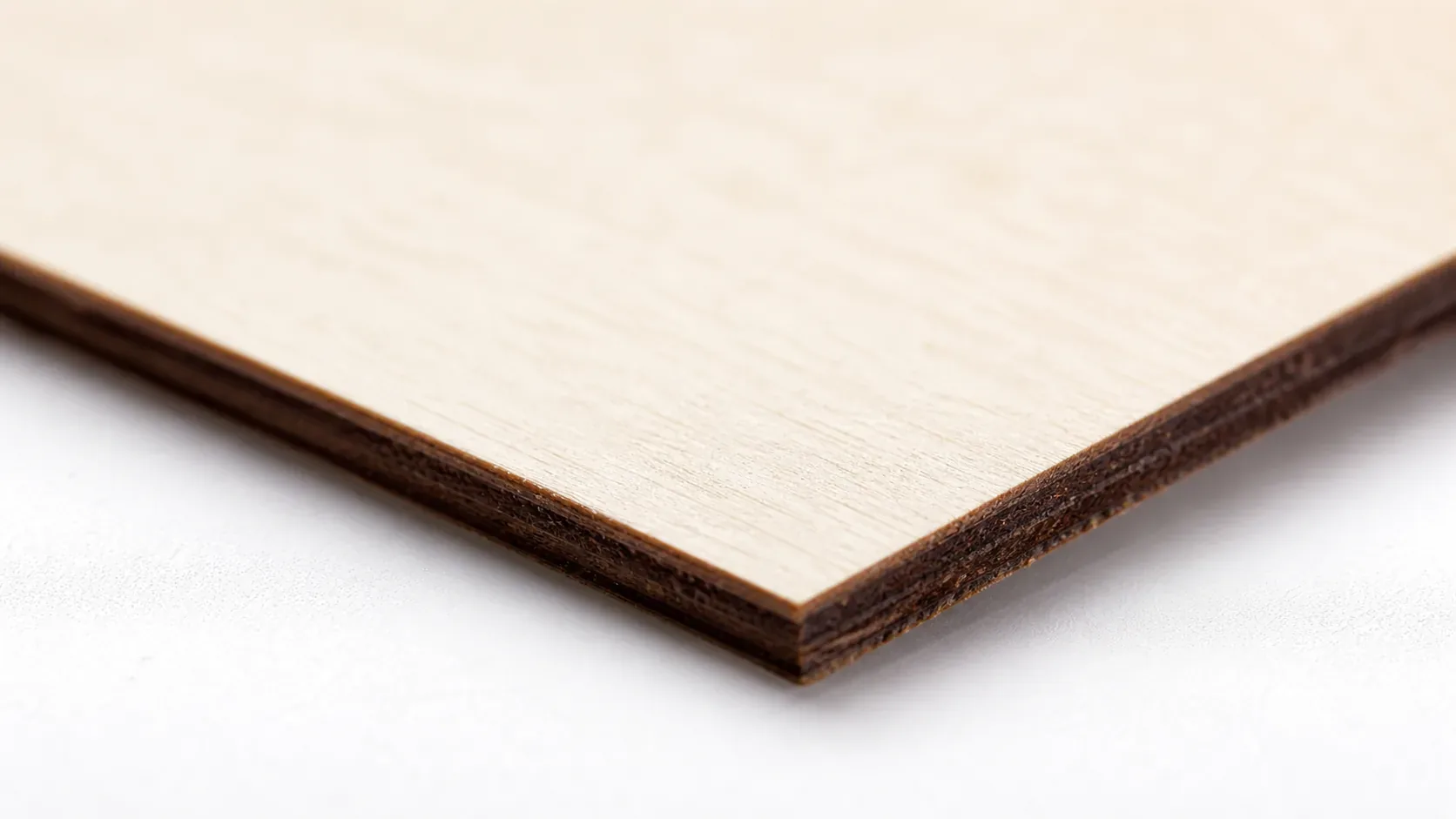
A laser-safe wood sheet has five things going for it: low resin content, a clean adhesive, a void-free core, consistent density, and no toxic finish. Miss one, and you’re either breathing something you shouldn’t or replacing ruined material. I tried Home Depot birch plywood once – edges looked like toasted marshmallows and smelled like a chemical factory.
Basswood wins on all five counts. According to USDA Forest Products Laboratory data, basswood ranks among the lowest-resin domestic hardwoods, which is exactly why it cuts so cleanly without fouling your lens or coating your honeycomb in sticky residue.
- Low resin content – won’t char excessively or leave gummy deposits on your lens and air-assist nozzle
- Laser-safe adhesive – no phenol or formaldehyde-heavy binders that produce harsh fumes and unpredictable char lines
- Void-free core – no hidden gaps that defocus the beam mid-cut and leave you with a half-punched sheet
- Consistent density – the same basswood laser cutting settings work batch after batch without retuning between sheets
- No toxic finish – unlike treated plywood, basswood won’t off-gas when heated, making it safe for indoor use with basic ventilation; pair it with the right technique to prevent charring when laser cutting and your edges stay clean every time
What You’ll Need
- Basswood sheets: Crafteker 3mm basswood, 12×12 inch – 1-2 sheets per test run, 3-5 sheets for a full project batch
- Laser machine: Any diode or CO2 laser (xTool, Glowforge, Creality Falcon, etc.)
- Design file: SVG with your cut outlines and engrave layers separated – most laser software (LightBurn, xTool Creative Space) handles this automatically
- Air assist: Built-in or external blower to clear smoke and reduce char on cut edges
- Finishing supplies: 220-grit sandpaper to knock down the edge char, plus wood stain or mineral oil if you want a finished look
Estimated time: 1-2 hours · Difficulty: Beginner · Profit potential: ~$0.42 in basswood per piece → sell for $15-$45 on Etsy
Step-by-Step: Testing and Cutting Laser-Safe Wood Safely
Basswood’s low resin content and void-free core make it the most forgiving material to work with – you get consistent results edge to edge without babysitting every pass. Follow these steps and your first cuts will look like your tenth.
- Pull your spec sheet first. Before you load a single sheet, confirm the glue type and thickness in writing. Laser-safe adhesive should say exactly that – “laser-safe” or “non-toxic binder.” If the supplier can’t tell you what’s in the glue, that’s your answer.
- Run a test cut on scrap. Use a corner of your sheet, not a fresh piece. For 3mm basswood on a 10W diode laser, start around 10mm/s at 100% power for 1 pass – check out our basswood laser cutting settings guide if you need starting points for other machines. The edge should be dark brown, not black. Black and flaky means slow down or check your focus.
- Check your focus before anything else. I skipped the focus check once and the top 1mm was crisp while the bottom was half-burned – proper Z-axis distance changed everything. Set it precisely for 3mm material, not estimated. Even 0.5mm off degrades cut quality noticeably.
- Turn on air assist. This one step reduces char more than almost anything else. It clears combustion gases from the kerf while the laser is cutting, which means cleaner edges and less smoke staining on the surface. If your machine doesn’t have built-in air assist, even a small external compressor helps.
- Cut at your tested speed – don’t rush it. Once your test cut looks good, run your actual file at the same settings. If edges start looking inconsistent mid-job, your sheet may have warped slightly. Flat material on a flat bed is non-negotiable – use hold-down pins or tape the corners down. If you’re getting char you didn’t expect, preventing charring usually comes down to speed, focus, and air assist working together.
- Let it cool, then finish. Basswood edges stay hot for 30 seconds after the laser stops – don’t reach in immediately. Once cooled, a quick sand with 220-grit removes surface char and opens up the grain beautifully. Stain or oil soaks in fast on basswood; one thin coat is usually all you need. If your project is decorative rather than structural, a clear matte finish keeps it looking clean without adding yellow tint.
Pro Tips for Clean Laser Cuts on Every Wood Type
- Always run a test strip first: Cut a 10mm × 50mm strip on a scrap corner before committing to your full sheet. I ruined 3 sheets before I figured out that 100% power on MDF at 8mm/s was scorching the edges black – dropping to 85% fixed it immediately.
- Pin or tape your material flat: Warped sheets are the #1 source of inconsistent edges. Even 0.5mm of bow across a 12×12 sheet throws your focus off enough to char one end and barely cut the other. Four binder clips or a sacrificial pin grid keeps everything honest.
- Use masking tape on the face: Blue painter’s tape on the surface side catches smoke residue and peels off clean – no scrubbing, no smear. Works especially well on basswood’s pale cream face where smoke stains show up fast.
- Let air assist do its job: If your machine has it, run air assist on every cut pass. It clears smoke from the kerf in real time, which means less char re-depositing on your edges and a cleaner cut on the second pass if you need one. If your edges look like toasted marshmallows, check air assist before you touch your speed settings.
How to Sell Laser-Cut Wood Products Online
Laser-cut wood products are one of the best laser cut items to sell on Etsy right now – personalized ornaments, signs, and puzzles regularly hit $15-$45 per unit, and buyers actively search for handmade wood gifts year-round, not just at the holidays. If you want to build this into something bigger, the math on most profitable laser cutting projects consistently points back to low material cost and high perceived value – which is exactly where laser-grade basswood lives.
- Price point: $15-$45 on Etsy for personalized laser-cut wood pieces. At $2.08/sheet for Crafteker basswood, material cost per unit runs under $3 for most single-sheet projects – leaving serious margin even after Etsy fees.
- Best listing title keywords: “personalized wood sign laser cut”, “custom basswood ornament engraved”, “laser cut wood gift name plate”
- Photo tip: Shoot on a neutral linen or slate surface in natural window light – basswood’s cream tone photographs beautifully and looks premium without any editing. Include one close-up of the engraved detail so buyers can see the crisp lines.
- Personalization upsell: Add a name or date field in your listing for $4-$8 extra. Most buyers will take it – it’s low effort on your end (two minutes in LightBurn) and it pushes average order value past $30 fast.
Where to Buy Basswood Sheets for Laser Cutting Projects
Crafteker 3mm basswood sheets are ideal for any laser cutting project where clean edges and consistent results actually matter – 12×12 inch, laser-grade, void-free, and pre-sanded for clean engraving results. At $24.99 for 12 sheets ($2.08/sheet), the profit margin on personalized wood products makes every batch count.
Ready to make your first batch? Get the wood that works:
→ Buy Crafteker 12-Pack Basswood Sheets on Amazon – $24.99
Clip the 7% coupon on the listing page – buy 2 packs and save 20% automatically.
Also available: 5-pack ($15.97) · 3-pack ($12.99)
Frequently Asked Questions
What is the safest wood to laser cut?
Laser-grade basswood with a void-free core and laser-safe adhesive is your best option. Low resin content means it cuts clean at 10mm/s in 1 pass with minimal char and no toxic fumes. Crafteker basswood at $2.08/sheet checks every one of those boxes.
Can you laser cut regular plywood from a hardware store?
No – and you really don’t want to find out why the hard way. Generic hardware-store plywood uses phenol or urea-formaldehyde adhesives that char badly, produce harsh fumes, and cut unpredictably. Stick to laser-grade plywood or basswood and skip the headache.
What thickness of laser-safe wood should I buy?
3mm is the sweet spot for hobby and small-business lasers. It’s thick enough for structural projects and thin enough to cut in 1 pass at 10mm/s at 100% power. Go thinner (1.5mm) and it feels fragile; go thicker (6mm) and you’re looking at 2-3 passes with a lot more power.
How do I know if a wood sheet is truly laser-safe?
Ask the seller for a spec sheet and confirm four things: adhesive type is listed as laser-safe or non-toxic, the core is void-free, it’s labeled craft-grade or laser-grade, and resin content is low. Avoid anything listing phenol-formaldehyde or unknown binders – ask me how I know that lesson sticks after ruining a batch.
Where can I buy laser-safe basswood sheets?
Crafteker on Amazon: 3-pack $12.99, 5-pack $15.97, 12-pack $24.99 ($2.08/sheet – best value if you’re running production). All sheets are 3mm, 12×12 inch, void-free, and pre-confirmed laser-safe. Clip the 7% coupon on the listing page before you check out.
About the author: Mike Dolan is a laser maker and wood materials specialist with 8+ years cutting basswood, birch, and MDF on diode and CO₂ machines. He tests every Crafteker basswood batch before listing.
Question we get a lot: how do you actually confirm a sheet is laser-safe before buying a whole pack? Ask the supplier for the adhesive spec sheet – if they can’t tell you what glue is in it, skip it. Every batch of our basswood is checked for a void-free core and clean single-pass cuts before it ships. If you want exact numbers instead of general ranges, the Laser Settings Calculator has verified settings for 50+ machines.