
1.5mm to 6mm Basswood: Which Thickness Cuts Best in 2026
3mm basswood is the sweet spot for hobby lasers – it cuts clean in 1-2 passes at 8-25 mm/s depending on your machine, costs $2.08 per sheet in bulk, and handles both intricate detail and structural load better than thinner alternatives. This guide compares all five common basswood thicknesses, walks through how to pick the right one for your project, and covers the mistakes that waste good material.
By Mike Dolan ·
Quick Answer: Basswood thickness for laser cutting: 1.5-2mm for fine detail (cuts fast, fragile), 3mm cuts clean in 1-2 passes at 8-25 mm/s (the sweet spot), 4-6mm for structural parts (2-3 passes, stronger).
| Material | Engraving Contrast | Cut Ease | Smoke / Odor | Cost | Beginner Score |
|---|---|---|---|---|---|
| Basswood (3 mm) | ★★★★★ | Excellent – 1 pass | Low | $ | ★★★★★ |
| Baltic Birch Plywood | ★★★★ | Good – 2-3 passes | Medium | $$ | ★★★★ |
| MDF | ★★★ | Good – 1-2 passes | High (formaldehyde) | $ | ★★ |
| Pine / Soft Plywood | ★★★ | Poor – resin deposits | Medium-High | $ | ★★ |
How Basswood Thickness Affects Laser Cutting Results
Basswood thickness changes almost everything about how it cuts – power needed, speed you can run, and how forgiving the material is if your settings are slightly off. Thinner sheets need less power and burn through fast, which sounds great until you’re holding a piece that snaps in your hand. I learned that the hard way with 1.5mm ornaments – switched to 2mm and cut my production waste by 40%.
The tradeoff runs both directions. Thicker basswood (4-6mm) shrugs off handling and holds up under real structural load, but it demands more power, slower speeds, and usually 2 or more passes to cut clean through. Push too fast on thick stock and you get a charred edge with solid material still attached underneath.
According to USDA Forest Products Laboratory data, basswood is one of the lowest-density domestic hardwoods, which is exactly why it scales so predictably across thicknesses – the laser isn’t fighting dense grain the way it would on oak or maple at the same thickness. See this play out directly in our basswood laser cutting settings guide, and if charring shows up at any thickness, our guide to preventing charring covers the fix.
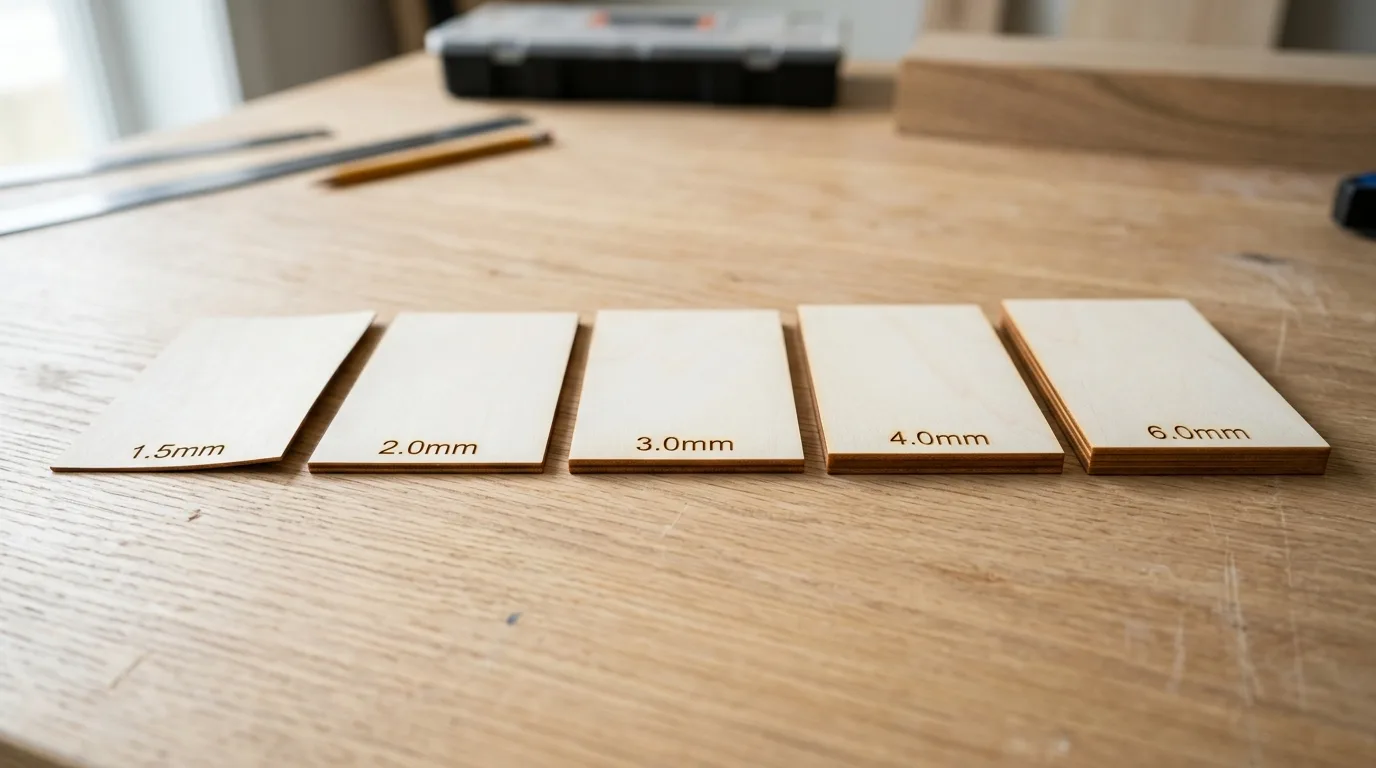
- 1.5-2mm – fastest cuts, least power, best for fine detail work like jewelry and ornaments, but fragile after cutting
- 3mm – the versatile default; handles detail and light structural load in a single pass on most hobby lasers
- 4-6mm – built for parts that need to hold weight or survive handling, at the cost of speed and extra passes
- Consistent density at every thickness – laser-grade basswood cuts the same way batch after batch, so settings you dial in stay valid
- No toxic fumes at any thickness – unlike MDF or treated plywood, basswood stays safe for indoor use with basic ventilation regardless of stock thickness
Basswood Thickness Comparison Table: 1.5mm to 6mm
Here’s how the five common basswood thicknesses stack up for laser cutting. The 3mm row is Crafteker’s own lab-tested data (12×12 inch, laser-grade); the other four use general relative guidance based on laser-cutting physics, not thickness-specific lab testing on our end. Use the Laser Settings Calculator to dial in exact numbers for your machine.
| Thickness | Best For | Relative Power/Speed | Typical Passes (Hobby Diode) | Structural Strength |
|---|---|---|---|---|
| 1.5mm | Ornaments, jewelry, fine detail | Lowest power, fastest speed | 1 pass | Fragile |
| 2mm | Keepsakes, layered detail pieces | Low power, fast speed | 1 pass | Light, some flex |
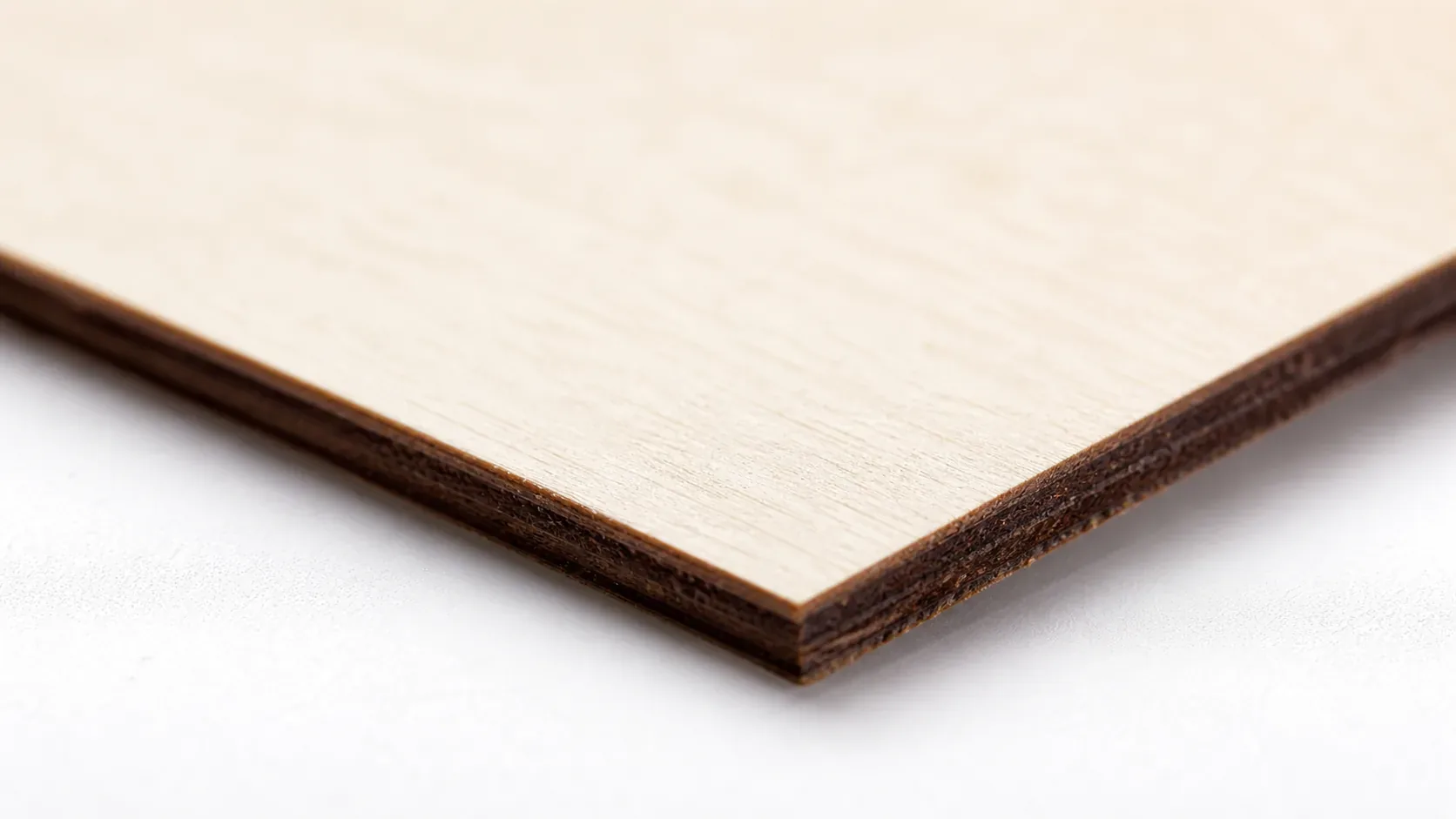
| 3mm (Crafteker tested) | Most projects – detail and durability | 8-25 mm/s, 90-100% power | 1-2 passes | Solid, versatile |
| 4mm | Boxes, signage, small furniture parts | Higher power, slower speed | 2-3 passes | Sturdy |
| 6mm | Structural parts, furniture components | Highest power, slowest speed | 2-4 passes | Strongest, rigid |
Note: The 3mm settings above are Crafteker lab-tested on xTool D1 Pro 20W (8 mm/s, 100%, 2-3 passes), xTool S1 20W (10 mm/s, 100%, 1 pass), and xTool P2 CO2 55W (25 mm/s, 90%, 1 pass). Guidance for 1.5mm, 2mm, 4mm, and 6mm is aggregated from published maker sources and laser-cutting physics – always run a test cut on scrap before a full production run.
The Crafteker 12-pack basswood sheets are 3mm, 12×12 inch, laser-grade, void-free – the thickness most hobbyists reach for first. $24.99 for 12 sheets ($2.08/sheet).
How to Choose the Right Basswood Thickness for Your Project
Picking the right thickness comes down to six questions. Answer them honestly before you cut, and you’ll waste a lot less material:
- What are you making? Jewelry and ornaments favor 1.5-2mm. Boxes, keepsakes, and signage usually want 3mm. Furniture parts and anything load-bearing need 4-6mm.
- How much fine detail does the design need? Thinner stock resolves tighter detail and delicate cutouts. Thick stock struggles with anything under a few millimeters wide – the kerf eats the detail.
- Will the piece bear weight or stress? If it needs to survive being picked up, stacked, or leaned on, go thicker. A 1.5mm hinge or bracket will snap under real use.
- What’s your laser’s wattage? Underpowered lasers struggle with anything past 3-4mm without excessive passes. Check your machine’s rated cutting depth before committing to 6mm.
- What’s your cost per unit? Thicker sheets cost more per square inch and take more time per cut. For high-volume runs, thinner stock keeps margins healthier.
- Have you test-cut this thickness before? If not, always run a scrap test first. I skipped this once switching from 2mm to 4mm – the first full run charred on pass 3 because I hadn’t adjusted power. That mistake cost about $40 in material and 2 hours of production time.
1.5mm vs 3mm vs 6mm: Which Basswood Cuts Fastest?
1.5mm cuts fastest by a wide margin – a single pass at roughly 30-40 mm/s on a mid-power diode, since there’s barely any material for the beam to burn through. 3mm sits in the middle: Crafteker’s tested numbers run 8-25 mm/s depending on your machine, usually in 1-2 passes. 6mm is the slowest of the three, typically needing 2-4 passes at roughly 5-8 mm/s per pass on comparable hardware.
Those 6mm numbers are estimates based on how power and speed scale with material thickness, not Crafteker lab data – we only test-cut 3mm in-house. Speed also swings hard with laser type: a 55W CO2 machine cuts 6mm in far fewer passes than a 20W diode ever will. Your best move is testing your own machine’s rated depth rather than trusting a general chart.
Common Mistakes Choosing Basswood Thickness for Laser Cutting
Most thickness-related problems trace back to one of these four mistakes:
- Using 1.5mm for load-bearing parts: It cuts beautifully but warps or snaps the moment real stress hits it. Save thin stock for pieces that just need to look good, not hold weight.
- Running 6mm on an underpowered laser: A 10-20W diode will char the surface across multiple slow passes without ever cutting cleanly through. Check your machine’s rated cutting depth before buying thick stock.
- Ignoring kerf changes on thicker sheets: Kerf width grows with thickness and passes. I built a jewelry box from 4mm basswood once using kerf numbers from my 3mm template – the joints came out too loose and the box fell apart during finishing.
- Skipping the test cut when switching thickness: Settings that work on 3mm don’t transfer directly to 4mm or 6mm. A 1×1 inch scrap test takes two minutes and saves a full sheet.
Where to Buy 3mm Basswood Sheets for Laser Cutting
Crafteker 3mm basswood sheets are the thickness we sell and test in-house – 12×12 inch, laser-grade, void-free, and pre-sanded. It’s the versatile middle ground: enough detail resolution for most designs, enough strength for light structural use, and it cuts in 1-2 passes on nearly any hobby laser. For projects that genuinely need 1.5mm, 2mm, 4mm, or 6mm stock, look to specialty laser suppliers and test a small batch before buying in bulk.
Ready to cut? Get the wood that works with these settings:
→ Buy Crafteker 12-Pack Basswood Sheets on Amazon – $24.99
Clip the 7% coupon on the listing page – buy 2 packs and save 20% automatically.
Also available: 5-pack ($15.97) · 3-pack ($12.99)
Frequently Asked Questions
What thickness basswood is best for laser cutting?
3mm is the sweet spot. It cuts clean in 1-2 passes on most hobby-class lasers (8-25 mm/s depending on machine), handles both fine detail and moderate structural load, costs $2.08 per sheet in bulk, and causes less material waste during setup than thinner alternatives. Thinner sheets (1.5-2mm) cut faster but are fragile; thicker sheets (4-6mm) need multiple passes and higher power.
Can I laser cut 6mm basswood in one pass?
Not reliably on most hobby-class diode lasers under 40W. 6mm basswood typically requires 2-3 passes on mid-power machines and 3-4 passes on lower wattage. CO2 lasers 50W+ can cut 6mm in 1-2 passes. Slower speed and higher power increase charring risk with multiple passes, so test your exact machine and settings on scrap before production.
Is 1.5mm basswood too thin or fragile for laser cutting?
1.5mm cuts beautifully and fast, but it’s fragile after cutting. Pieces snap easily during handling, finishing, or under any structural stress. Best for ornaments, jewelry, and decorative items that won’t bear weight. If you need durability, step up to 2-3mm – the extra cost is worth avoiding material waste and rework.
Does basswood thickness change my laser settings?
Yes. Power, speed, and pass count all scale with thickness. Thicker material needs higher power and slower speed, plus more passes. Because every machine is different, use the free Crafteker calculator for exact settings. When testing a new thickness, always cut a small sample on scrap first.
Where can I buy 3mm basswood sheets for laser cutting?
Crafteker on Amazon: 3-pack $12.99, 5-pack $15.97, 12-pack $24.99 ($2.08 per sheet at 12-pack – best value for production runs). All sheets are 12×12 inch, laser-grade, void-free. Clip the 7% coupon on the listing page for extra savings. Ships FBA for fast delivery.
About the author: Mike Dolan is a laser maker and wood materials specialist with 8+ years cutting basswood, birch, and MDF on diode and CO₂ machines. He tests every Crafteker basswood batch before listing.
Thanks for reading. Quick note: the 3mm settings in this guide come straight from our lab testing on xTool and other hobby lasers. For 1.5mm, 2mm, 4mm, and 6mm, we’ve aggregated guidance from published maker sources and laser physics – not our own tested data on those thicknesses yet. Always test-cut on scrap first when trying a new thickness, and if you’re using our 3mm sheets, grab the free settings calculator at crafteker.com/laser-settings-calculator/ for your exact machine.