
2 Coats, 7-Day Cure: Basswood Finish Guide 2026
Non-toxic sealing and finishing methods for laser-cut basswood projects usually come down to mineral oil, shellac, or water-based polyurethane once fully cured, with heavy-use pieces waiting 7 days before use. This guide shows how to choose a food-safe finish, seal charred edges without blotches, judge dry versus cured, and pick void-free Crafteker sheets for coasters, cutting boards, toys, and Etsy products.
By Mike Dolan ·
Quick Answer: Non-toxic sealing and finishing methods for laser-cut basswood projects: choose mineral oil, shellac, or water-based polyurethane, apply thin coats, and allow 7 days to fully cure.
| Material | Engraving Contrast | Cut Ease | Smoke / Odor | Cost | Beginner Score |
|---|---|---|---|---|---|
| Basswood (3 mm) | ★★★★★ | Excellent – 1 pass | Low | $ | ★★★★★ |
| Baltic Birch Plywood | ★★★★ | Good – 2-3 passes | Medium | $$ | ★★★★ |
| MDF | ★★★ | Good – 1-2 passes | High (formaldehyde) | $ | ★★ |
| Pine / Soft Plywood | ★★★ | Poor – resin deposits | Medium-High | $ | ★★ |
Which Wood Finishes Are Actually Non-Toxic for Laser-Cut Basswood?
Mineral oil, shellac, and water-based polyurethane are widely considered non-toxic or food-safe once fully cured. Oil-based polyurethane, lacquer, and some spray sealers call for heavier ventilation and are poor picks for food-contact pieces or items headed to small hands. Read the finish label, then match the product to the project.
Basswood helps because it is low-resin and fine-grained, so a properly sanded face takes finish evenly rather than fighting you with blotches. USDA Forest Products Laboratory data supports its reputation as a light, low-resin hardwood. For maker stock, see the best basswood sheets for laser cutting.
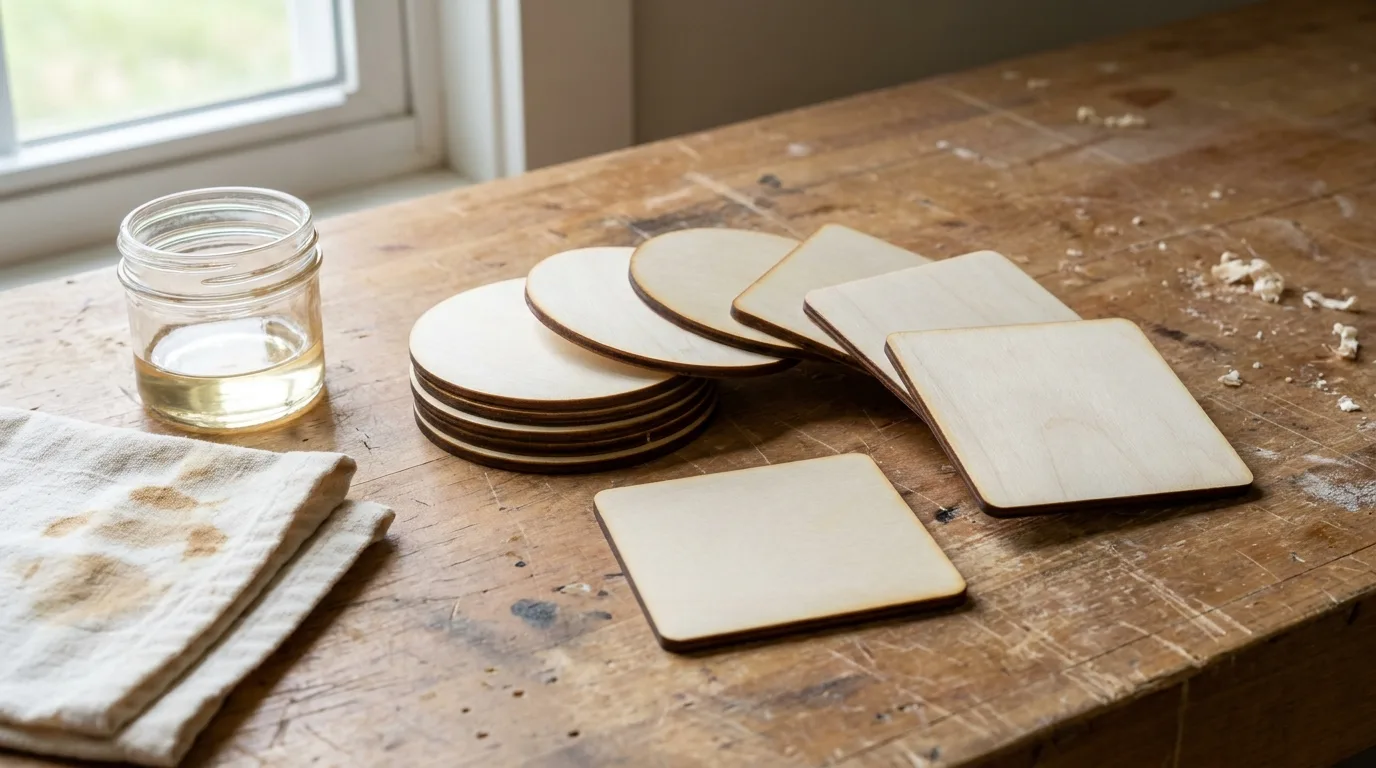
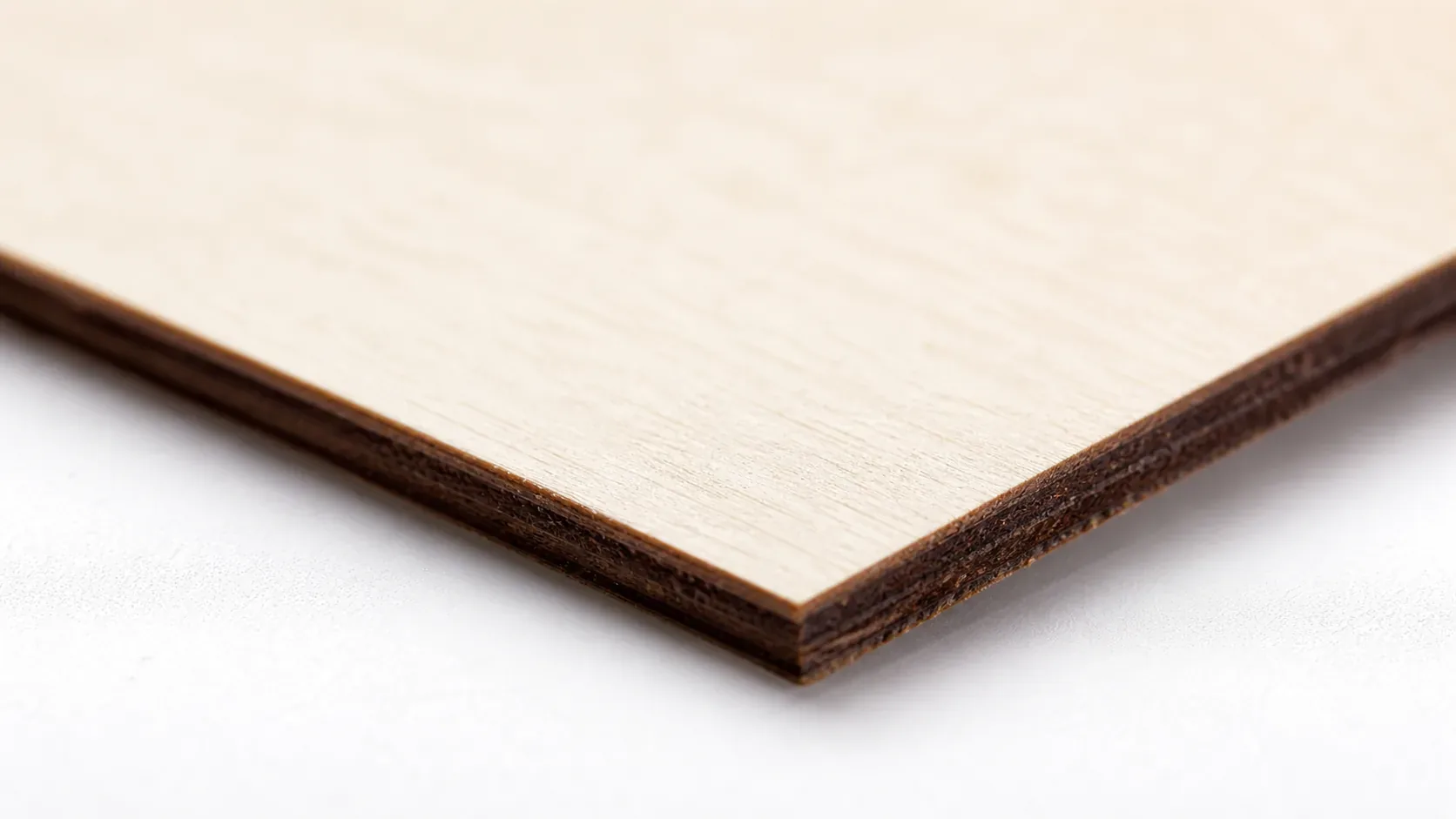
Laser-charred edges are different from fresh sanded wood: they can drink in finish quickly, while loose soot can smear into the pale face. Wipe first, apply a thin test coat on scrap, and let the finish cure fully. A finish that feels dry can still carry odor or transfer residue under real use.
I sealed a batch of coasters with an oil-based poly I had lying around, then had to toss the whole batch when I remembered they were going to touch food. Annoying? Very. Better than sending a material mismatch to a customer? Also very.
These recommendations reflect general woodworking-community practices and manufacturer guidance, not Crafteker’s own lab testing on laser-charred basswood specifically. Your finish maker’s label remains the final word for cure time, food-contact suitability, application conditions, and ventilation. Keep that label in the shop instead of trusting a half-remembered forum comment.
- Low resin – takes finish evenly and does not gum up brushes or cloths.
- Consistent density – absorption stays predictable across a sheet, without surprise dark or light patches.
- Minimal internal voids – fewer hidden gaps where finish can pool or sink in.
- Light, workable surface – sands and preps easily before finishing.
- No toxic fumes from the wood itself – the material is not the concern; the finish product you choose is.
Food-Safe vs Just Non-Toxic: What’s the Difference?
Food-safe means a finish is suitable for contact with food after it has fully cured; non-toxic only describes a safer product once application fumes and wet-film hazards are gone. For laser-cut basswood, the label and cure guidance matter more than a finish’s friendly-sounding name.
| Finish | Food-Safe Once Cured? | Notes |
|---|---|---|
| Mineral oil | Yes | Non-drying, needs reapplying over time |
| Beeswax/carnauba blend | Yes | Good for light-use items, low durability |
| Water-based polyurethane | Yes (once cured) | Durable film finish, low odor |
| Shellac | Yes (once cured) | Fast-drying, good for laser-cut edges |
| Oil-based polyurethane/lacquer | No / needs ventilation | Stronger fumes during application, avoid for food-contact items |
Walnut oil is nut-derived, so avoid it or clearly disclose its origin to buyers with nut allergies, even though it is otherwise food-safe. For a cleaner starting surface, see the Crafteker basswood buying guide.
I brushed mineral oil onto a dark edge without wiping the soot first, and the finish turned the loose charcoal into a gray smear across the face. Charming on a campfire, not on a coaster. Wipe first, then finish.
How to Seal a Laser-Cut Basswood Edge (Step by Step)
To seal a laser-cut basswood edge cleanly, remove soot, test the finish, apply thin coats, and wait for a full cure. Charred edges absorb finish differently from sanded faces, so rushing the first coat usually creates dark pools, shiny patches, or both.
- Wipe away soot. Use a clean cloth on the charred edge and the face. Keep wiping until loose charcoal stops transferring; otherwise, the finish can drag it across the pale wood.
- Test on scrap first. Brush the finish onto a scrap piece from the same sheet. Check the color, absorption, odor, and final feel before touching the finished project.
- Apply thin coats. Shellac in thin coats can be recoated within about 10 minutes. For polyurethane, thin the product 50:50 with mineral spirits, apply 2 thinned sealer coats, then 2 topcoats with 24 to 48 hours between coats.
- Inspect the surface. Look across the edge in angled light. Lightly smooth raised grain if needed, then remove the dust before the next coat.
- Wait for the cure. Let the piece fully cure for 7 days before selling or heavy use, even if it feels dry after about 2 days. Dry and cured are not the same thing.
I used to ship coasters two days after the last coat because they felt dry to the touch. A customer emailed asking why hers still smelled faintly like finish, and that is when I learned dry and cured are not the same thing. These coat counts and cure times reflect general woodworking-community practices and manufacturer guidance, not Crafteker’s own lab testing on laser-charred basswood specifically.
Do You Need to Seal Laser-Cut Basswood at All?
Sealing is optional for purely decorative wall art if you want the raw look, but it makes sense for coasters, cutting boards, kids’ toys, and anything handled, wet, or used with food. A finish also helps resist fingerprint staining and can reduce lingering smoke smell from the laser process.
A finish cannot turn an unsuitable product into a food-safe choice. Pick the finish for the item’s use, wipe away loose soot first, and let it cure before regular handling. If smoky edges are your headache, see these tips to prevent charring when laser cutting.
I left a decorative basswood sign raw beside a finished sample, and the raw piece picked up dark fingerprints after a busy market morning while the sealed sample wiped clean. Raw can look lovely; it just asks for gentler handling.
Common Mistakes When Sealing Laser-Cut Basswood
Light brown edges are normal. Loose black flakes, sticky finish, or a lingering strong odor means the piece needs more attention.
- Selling or shipping too soon: Surface-dry is not fully cured, so wait until the finish has cured before sending the piece out or putting it into heavy use.
- Choosing the wrong finish: Keep oil-based polyurethane and lacquer away from anything that will touch food.
- Skipping the soot wipe: Loose charcoal creates uneven, blotchy color on laser-cut edges and can smear across a pale face.
- Using walnut oil without disclosure: Walnut oil is nut-derived, so identify it clearly for buyers with nut allergies.
I once finished a coaster set over the soot, and every edge dried darker than the face until I wiped the charcoal off and started again. A clean cloth is cheaper than redoing a whole batch, and much less dramatic.
Where to Buy Basswood Sheets for Finishing Projects
Crafteker offers laser-grade, void-free 3mm basswood in 12×12 inch sheets, with a 3-pack at $12.99, a 5-pack at $15.97, and a 12-pack at $24.99 ($2.08/sheet). The 12-pack is the best value for production runs, and the sheets are available on Amazon with FBA shipping.
Consistent, void-free stock gives finish a more predictable surface across coasters and small Etsy batches. I finished a mixed batch from uneven sheets once, and the voided pieces drank up oil while the clean faces stayed slick, so I stopped mixing stock for customer orders. Start with the best basswood sheets you can source.
Ready to cut? Get the wood that works with these settings:
→ Buy Crafteker 12-Pack Basswood Sheets on Amazon – $24.99
Clip the 7% coupon on the listing page – buy 2 packs and save 20% automatically.
Also available: 5-pack ($15.97) · 3-pack ($12.99)
Frequently Asked Questions
What is the best non-toxic finish for laser-cut basswood?
Mineral oil, shellac, or water-based polyurethane are common choices once cured. Avoid oil-based polyurethane and lacquer for food-contact items because of stronger application fumes and suitability concerns.
Is mineral oil food-safe for basswood coasters and cutting boards?
Yes. Food-grade mineral oil is non-toxic and non-drying, but it needs periodic reapplication because it does not form a lasting film.
How long does wood finish need to cure before it’s food-safe?
A piece may feel surface-dry in about 2 days, but allow 7 days for full cure before heavy use or selling. Follow the finish manufacturer’s label guidance if it calls for longer.
Does laser-cut basswood need to be sealed?
No for purely decorative pieces, but sealing is recommended for anything handled often, exposed to moisture, used with food, or given to kids. Wipe away soot before applying finish.
Where can I buy basswood sheets for laser-cut projects?
Crafteker is available on Amazon in a 3-pack for $12.99, a 5-pack for $15.97, and a 12-pack for $24.99 at $2.08/sheet, the best value for production runs. Clip the 7% coupon on the listing page.
About the author: Mike Dolan is a laser maker and wood materials specialist with 8+ years cutting basswood, birch, and MDF on diode and CO₂ machines. He tests every Crafteker basswood batch before listing.
I sealed a batch of basswood coasters with shellac and let them cure before sending them to an Etsy customer, and she said the smoke smell was finally gone. Crafteker sheets made the edges much more consistent than the warped stock I used before.