

Why Laser-Cut Basswood Smells Like Smoke for Days (2026 Fix)
A finished laser-cut basswood piece can still smell like smoke for days after cutting because the porous charred edge and nearby wood fibers absorb smoke particulates and volatile compounds during the cut, then slowly release them back into the air – it’s not a defect or unsafe, it’s off-gassing, and it fades. This guide explains why it happens at the microscopic level, how experienced sellers reduce the smell before shipping, and honest guidance for customers who receive a still-smoky item.
By Mike Dolan ·
Quick Answer: Laser cut wood smells like smoke days after cutting because the porous charred kerf absorbs combustion byproducts during the beam’s thermal decomposition of the wood and slowly off-gasses them; sellers mitigate by airing pieces out before packaging, lightly sanding charred edges, and adding odor absorbers to the shipping container.
| Material | Engraving Contrast | Cut Ease | Smoke / Odor | Cost | Beginner Score |
|---|---|---|---|---|---|
| Basswood (3 mm) | ★★★★★ | Excellent – 1 pass | Low | $ | ★★★★★ |
| Baltic Birch Plywood | ★★★★ | Good – 2-3 passes | Medium | $$ | ★★★★ |
| MDF | ★★★ | Good – 1-2 passes | High (formaldehyde) | $ | ★★ |
| Pine / Soft Plywood | ★★★ | Poor – resin deposits | Medium-High | $ | ★★ |
Why a finished laser-cut piece can still smell like smoke days after the cut
The laser beam vaporizes wood at the cut line through thermal decomposition, reaching temperatures hot enough to break down cellulose and lignin into smoke, tar, and volatile organic compounds. Some of that combustion byproduct gets pulled away by your exhaust fan, but a portion condenses directly onto the freshly exposed kerf and the char layer left behind.
Basswood is porous at the microscopic level, and the charred edge is even more so. Those tiny voids act like a sponge for smoke particulates and volatile compounds generated during the cut. Once absorbed, they don’t vanish – they slowly release back into the air over days to weeks.
That’s why a piece can look perfectly clean, feel dry to the touch, and still smell smoky when you pick it up or open the box. You’re not smelling active combustion or surface soot; you’re smelling off-gassing from material trapped in the wood’s porous structure.
I shipped a batch of finished pieces the same day they were cut once, and got a message from a buyer asking if the smoky smell in the box meant something was wrong. It didn’t – but the concentrated odor in a sealed package made it feel like a problem when it wasn’t.
Low-resin woods like basswood actually off-gas less persistent odor than resinous species like pine, but the mechanism is the same. According to USDA Forest Products Laboratory data, basswood ranks among the lowest-resin domestic hardwoods, which helps reduce the total volume of sticky combustion byproducts available to absorb in the first place.
If you want to dial in settings that minimize charring and smoke generation during the cut itself, see our full guide to prevent charring when laser cutting wood – but even a perfectly tuned cut will still produce some level of absorbed odor that needs time to dissipate.
It’s off-gassing, not a defect – and not a safety problem
A lingering smoke smell on a laser-cut item is off-gassing of trapped combustion byproducts, not mold, not a toxic hazard, and not a sign of a defective product. The charred kerf and nearby wood fibers absorbed smoke particulates during cutting, and now they’re slowly releasing them back into the air.
Research shows this commonly fades over 1-3 days in a well-ventilated area, though heavier engraving or thicker stock can extend that. It’s a normal characteristic of laser-cut wood, not unique to any one seller or material.
This is a different question from ventilating fumes DURING the cut itself. That’s about protecting the person operating the laser – you need proper exhaust to avoid breathing combustion gases while the machine runs. A separate article covers laser cutter ventilation and indoor fume safety for that maker-safety question.
This article is about what happens after: the smell lingering in the finished product, and what sellers can do before shipping to minimize it.
What sellers do before shipping to cut down the smell
Experienced sellers let freshly cut parts sit in a ventilated area so trapped volatiles can off-gas before packaging. Even a few hours makes a difference. A day or two is better.
Lightly sand or abrade the darkest charred edges to remove the most odor-saturated surface layer. You’re not trying to eliminate the char completely, just knock off the concentrated outer film. Fine-grit sandpaper or a nylon abrasive pad works.
Some sellers wipe pieces with a slightly damp cloth or mild cleaner to lift surface residue. This helps with visible soot more than absorbed odor, but every bit counts.
Package with passive absorbers like baking soda or activated charcoal in the shipping container to capture residual smell during transit. A small open container or sachet in the box, not touching the product directly.
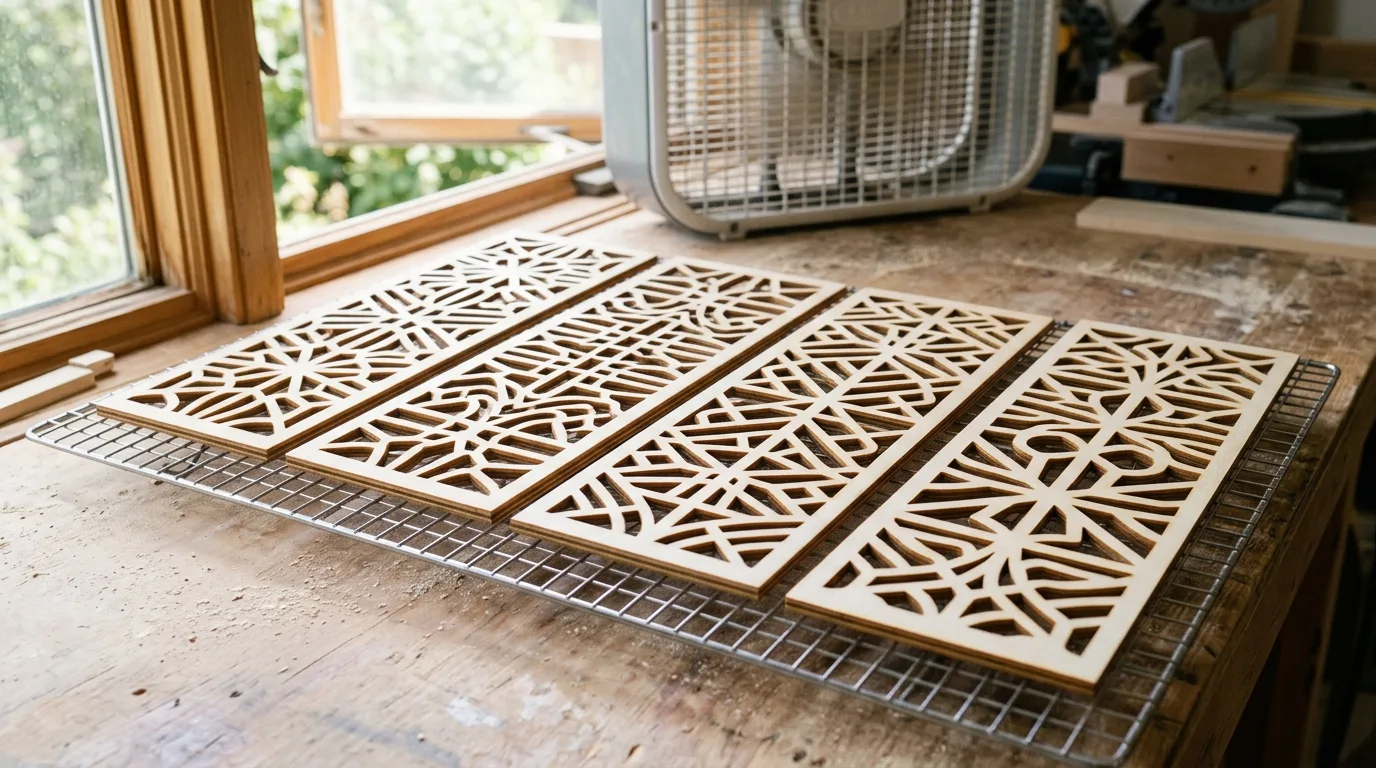
I started leaving cut pieces on a drying rack near a box fan overnight before packaging, and stopped getting smell-related messages from buyers. The difference is that noticeable.

Sealing it up fresh traps and concentrates the smell
Sealing a laser-cut piece immediately in an airtight plastic bag or shrink wrap traps off-gassed smoky compounds in a tiny volume of air, building up to a strong burnt odor that hits the customer on opening. Air the item out first, then use breathable or odor-absorbing packaging, and the customer gets a faint, temporary wood-smoke scent instead of a concentrated blast.
This is distinct from visible smoke and soot residue on the workpiece surface during a cutting session – that’s about keeping your work clean while you’re cutting. This article is about the invisible absorbed odor that off-gasses afterward, days or weeks later, which is a separate challenge for sellers who ship finished pieces.
Honest guidance for a customer who receives a smoky-smelling item
Unbox the item and let it air out in a ventilated room for a few days. It isn’t toxic, it isn’t mold, and it isn’t a sign of a defective product – the smell fades on its own without needing special cleaning. Research shows it commonly fades over 1-3 days in a well-ventilated area, though heavier engraving or thicker stock can extend that.
If a seller sets this expectation upfront in the listing or packaging insert, it turns a potential complaint into a non-issue. A simple note like “May have a faint wood-smoke scent on arrival – normal for laser-cut wood, fades quickly” covers it. This is a normal characteristic of laser-cut wood, not unique to any one seller or material.
Crafteker’s low-resin basswood gives you a head start on less persistent odor
Crafteker 3mm basswood sheets are 12×12 inch, laser-grade, void-free, and naturally low in resin – which matters here because low-resin wood tends to trap less persistent odor at the cut edge than resinous woods like pine. That gives sellers a head start before any airing-out or mitigation steps. At $24.99 for 12 sheets ($2.08/sheet), it’s the most cost-effective option for clean, consistent cuts with less lingering smell.
Ready to cut? Get the wood that cuts clean and airs out faster:
→ Buy Crafteker 12-Pack Basswood Sheets on Amazon – $24.99
Also available: 5-pack ($15.97) · 3-pack ($12.99)
Frequently Asked Questions
Why does my laser-cut wood item still smell like smoke days after I got it?
The charred edge and nearby wood fibers are porous and absorb smoke particulates during cutting, then slowly release that smell back into the air over days to weeks. It’s off-gassing, not a defect, and it fades with time in a ventilated space.
Is the smoky smell on a laser-cut item unsafe or toxic?
No – it’s residual combustion byproducts off-gassing from the wood, not mold or a hazardous chemical. Airing the item out in a ventilated room is generally all that’s needed. It isn’t a sign the product is unsafe.
How can sellers reduce lingering smoke smell before shipping?
Let freshly cut pieces air out in a ventilated space before packaging, lightly sand the darkest charred edges to remove the most odor-saturated layer, and add a passive absorber like baking soda or activated charcoal to the shipping container. I started leaving cut pieces on a drying rack near a box fan overnight before packaging, and stopped getting smell-related messages from buyers.
Does sealing a laser-cut item in plastic packaging make the smell worse?
Yes – sealing a freshly cut piece in an airtight bag traps off-gassed smoky compounds in a small volume of air, so the smell can hit harder when a customer opens the package. Airing it out first before using breathable or odor-absorbing packaging reduces this.
Where can I buy low-resin basswood that holds less lingering odor?
Crafteker on Amazon: 3-pack $12.99, 5-pack $15.97, 12-pack $24.99 ($2.08/sheet best value), laser-grade and void-free with naturally low resin content, giving a head start on less persistent smoke odor at the cut edge.
About the author: Mike Dolan is a laser maker and wood materials specialist with 8+ years cutting basswood, birch, and MDF on diode and CO₂ machines. He tests every Crafteker basswood batch before listing.
Got a message from a buyer once asking if the smoky smell in the box meant something was wrong with her order. Started airing pieces out on a rack near a fan overnight before packaging and tossing a small container of baking soda in the shipping box – haven’t had a single smell complaint since. Crafteker’s low resin helps too, less funky edge smell to start with compared to the hobby-store sheets I used before.