

Honeycomb vs Slat Bed for Basswood: 5-9mm Cell Guide (2026)
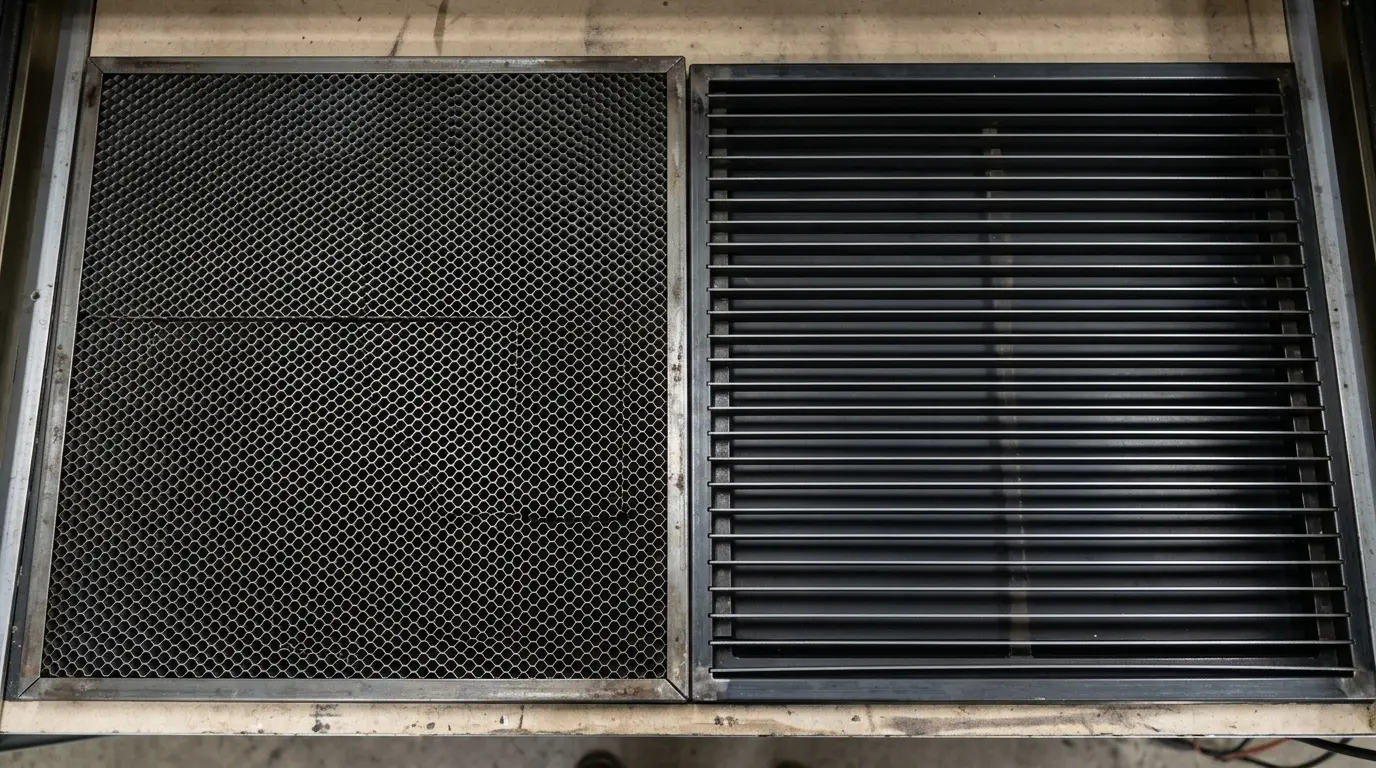
A honeycomb bed with 5-9mm cells is the practical default for 3mm basswood – small enough that delicate cut pieces don’t drop through mid-job, large enough that smoke and debris still clear. This article covers when a slat bed makes more sense instead, how cell size trades off against cleaning frequency, and the signs it’s time to replace a worn bed.
By Mike Dolan ·
Quick Answer: For 3mm basswood, use a honeycomb bed with 5-9mm cells – small enough to support cut pieces, large enough for smoke and debris to clear. Switch to a slat bed only for thicker stock or full through-cuts where backside staining matters more than small-part support.
| Material | Engraving Contrast | Cut Ease | Smoke / Odor | Cost | Beginner Score |
|---|---|---|---|---|---|
| Basswood (3 mm) | ★★★★★ | Excellent – 1 pass | Low | $ | ★★★★★ |
| Baltic Birch Plywood | ★★★★ | Good – 2-3 passes | Medium | $$ | ★★★★ |
| MDF | ★★★ | Good – 1-2 passes | High (formaldehyde) | $ | ★★ |
| Pine / Soft Plywood | ★★★ | Poor – resin deposits | Medium-High | $ | ★★ |
Why the Bed Under Your Basswood Matters More Than You’d Think
I swapped a machine’s stock bed for a finer-cell honeycomb expecting no real difference, and the first sheet of detail work told me otherwise – pieces that used to drop through the old grid now sat exactly where they were cut, waiting to be lifted out cleanly instead of fished out from underneath the bed.
The work surface under a thin sheet does more than hold it flat. It determines how much airflow reaches the cut zone, whether small parts stay put after separation, and how much char and resin ends up baked onto a surface you’ll be cleaning later. For 3mm basswood specifically, that surface choice has more impact than most settings tweaks.
Basswood’s low resin content already gives it an advantage here – it fouls beds less than resin-heavy softwoods or glued plywood, but the bed still shapes how clean a session stays and how many small parts you actually keep versus lose.
- Low resin – won’t gum up honeycomb cells the way pine or treated plywood does
- Consistent density – predictable cut-through timing, so parts separate cleanly rather than tearing loose unevenly
- Minimal char – less residue transferred to whatever bed you’re using
- Light, workable surface – easy to sand, paint, or stain after cutting
- No toxic fumes – unlike MDF or treated plywood, safe for indoor use with basic ventilation
According to USDA Forest Products Laboratory data, basswood ranks among the lowest-resin domestic hardwoods, which is part of why it stays workable on a bed longer between deep cleanings than resinous softwoods.
Honeycomb or Slat Bed: Which One Actually Fits Your Work
A honeycomb bed gives even support across the entire sheet through a grid of small cells, which matters for a thin, flexible material like 3mm basswood that can sag into unsupported gaps. It also lets air assist pull smoke and debris down and away from the cut zone reasonably well, depending on cell size.
A slat or knife bed supports material on a series of parallel bars instead of a grid. It handles heavier or thicker stock well and can reduce backside staining on full through-cuts, since there’s less surface underneath for smoke to scorch. For 3mm basswood, though, the gaps between slats are wide enough that thin sheets and small cut pieces bridge or drop unpredictably – the honeycomb’s finer support pattern is the safer default at this thickness.
The practical rule: match the bed to your material thickness and part size, not the other way around. If you’re mostly cutting 3mm basswood with moderate detail, honeycomb wins. If you’re switching frequently to thicker stock or doing full-sheet through-cuts where staining is the bigger concern, a slat bed – or a honeycomb reserved just for detail work – is worth having as a second option.
Cell Size: The Trade-Off Nobody Explains Clearly
Cell size is a straight trade-off between two failure modes. Go too large and small cut pieces drop straight through the grid the moment the last connecting fiber separates – annoying on a simple project, expensive when it’s a batch of tiny production parts you can’t easily fish out from underneath. Go too small and the cells clog fast with char and resin, trapping smoke instead of clearing it and turning cleaning into a weekly chore instead of an occasional one.
5-9mm cells are the practical middle ground for 3mm basswood – small enough to catch most cut pieces before they fall, large enough that airflow and debris clearance stay reasonable between cleanings. If you regularly cut very fine detail work with small isolated pieces, lean toward the smaller end of that range, or add a sacrificial layer of scrap material under the design so nothing drops into the bed at all.

Keeping the Bed Clean (and When to Replace It)
Debris removal after every session where you cut basswood or plywood keeps a manageable job manageable – a soft brush or shop vacuum on loose char and offcuts takes a couple of minutes and prevents buildup from compacting into something that needs soaking later.
For deeper cleaning, remove the bed if your machine allows it and degrease according to your manufacturer’s guidance. Whatever cleaning method you use, make sure the bed is completely dry before reinstalling – trapped moisture against metal is how corrosion starts, and a corroded honeycomb loses structural rigidity over time.
Replace the bed when cells are clogged with hardened residue that won’t clear with normal cleaning, when you can see visible warping that changes the cutting surface height across the sheet, or when corrosion has weakened the grid enough to flex under normal handling. Any of these shows up eventually as inconsistent cut quality that’s easy to misdiagnose as a settings or focus problem when the real cause is sitting right under the material.
Where to Buy Basswood That Works Well on Any Bed
Crafteker 3mm basswood sheets keep bed fouling to a minimum regardless of whether you’re running honeycomb or slats, thanks to consistent thickness and low resin content that doesn’t build up the way softwoods and glued plywood do.
At $24.99 for 12 sheets ($2.08/sheet), it’s the most cost-effective option for basswood sheets that stay predictable no matter what bed setup you’re running. No glue voids, no thickness surprises, less bed maintenance either way.
Ready to cut? Get the wood that keeps your bed cleaner:
→ Buy Crafteker 12-Pack Basswood Sheets on Amazon – $24.99
Also available: 5-pack ($15.97) · 3-pack ($12.99)
Frequently Asked Questions
Should I use a honeycomb bed or a slat bed for basswood?
A honeycomb bed is the better default for 3mm basswood – it gives even support and airflow across a thin sheet with less risk of localized sagging. A slat or knife bed suits heavier or thicker stock and can reduce backside staining on full through-cuts, but thin basswood tends to bridge gaps between slats less predictably than it sits on a honeycomb grid.
What honeycomb cell size is best for cutting basswood?
5-9mm cells are the practical range for 3mm basswood – small enough to support delicate cut pieces so they don’t drop through mid-job, large enough that debris and smoke still clear reasonably well. Go smaller than that range mainly if you’re cutting very fine detail work and don’t mind more frequent cleaning.
Why do small basswood pieces fall through my honeycomb bed?
Cell size that’s too large for the part relative to its footprint lets small cut pieces drop straight through once the last connecting fiber separates. Match cell size to your smallest expected part, or add a sacrificial layer under fine detail work if you’re using a bed with larger cells for general-purpose use.
How do I know when to replace a honeycomb bed?
Replace it when cells are clogged with hardened resin/char you can’t clear, when visible warping changes the cutting surface height across the bed, or when corrosion has weakened the structure – any of these can cause focus inconsistency or uneven support that shows up as unpredictable cut quality.
Where can I buy basswood that works well on any bed type?
Crafteker on Amazon: 3-pack $12.99, 5-pack $15.97, 12-pack $24.99 ($2.08/sheet best value) – consistent 3mm thickness and low resin means less bed fouling regardless of honeycomb or slat setup.
About the author: Mike Dolan is a laser maker and wood materials specialist with 8+ years cutting basswood, birch, and MDF on diode and CO₂ machines. He tests every Crafteker basswood batch before listing.
Kept losing tiny cut pieces through my old honeycomb until I checked the cell spec and realized it was way bigger than I thought – swapped to a finer bed and stopped fishing parts out from underneath every session.