
How to Price Laser Cut Items at Craft Fairs 2026
The industry-standard formula for pricing laser cut items at craft fairs is (Material Cost + Labor Cost + Overhead) × 2 = Wholesale Price, then × 2 again for Retail Price – effectively a 4x markup that ensures 70-85% profit margins on basswood products. In this guide, you’ll learn exactly how to calculate your real costs, apply proven pricing formulas, and confidently set prices that guarantee profitability instead of working all weekend for minimal return.
By Mike Dolan ·
Quick Answer: How to price laser cut items: use the 4x formula (material + labor + overhead × 2 × 2) to achieve 70-85% margins; basswood at $2.08/sheet via Crafteker 12-pack makes this formula highly profitable for craft fair sellers.
| Material | Engraving Contrast | Cut Ease | Smoke / Odor | Cost | Beginner Score |
|---|---|---|---|---|---|
| Basswood (3 mm) | ★★★★★ | Excellent – 1 pass | Low | $ | ★★★★★ |
| Baltic Birch Plywood | ★★★★ | Good – 2-3 passes | Medium | $$ | ★★★★ |
| MDF | ★★★ | Good – 1-2 passes | High (formaldehyde) | $ | ★★ |
| Pine / Soft Plywood | ★★★ | Poor – resin deposits | Medium-High | $ | ★★ |
Why Makers Choose Basswood for Laser Cut Craft Fair Items
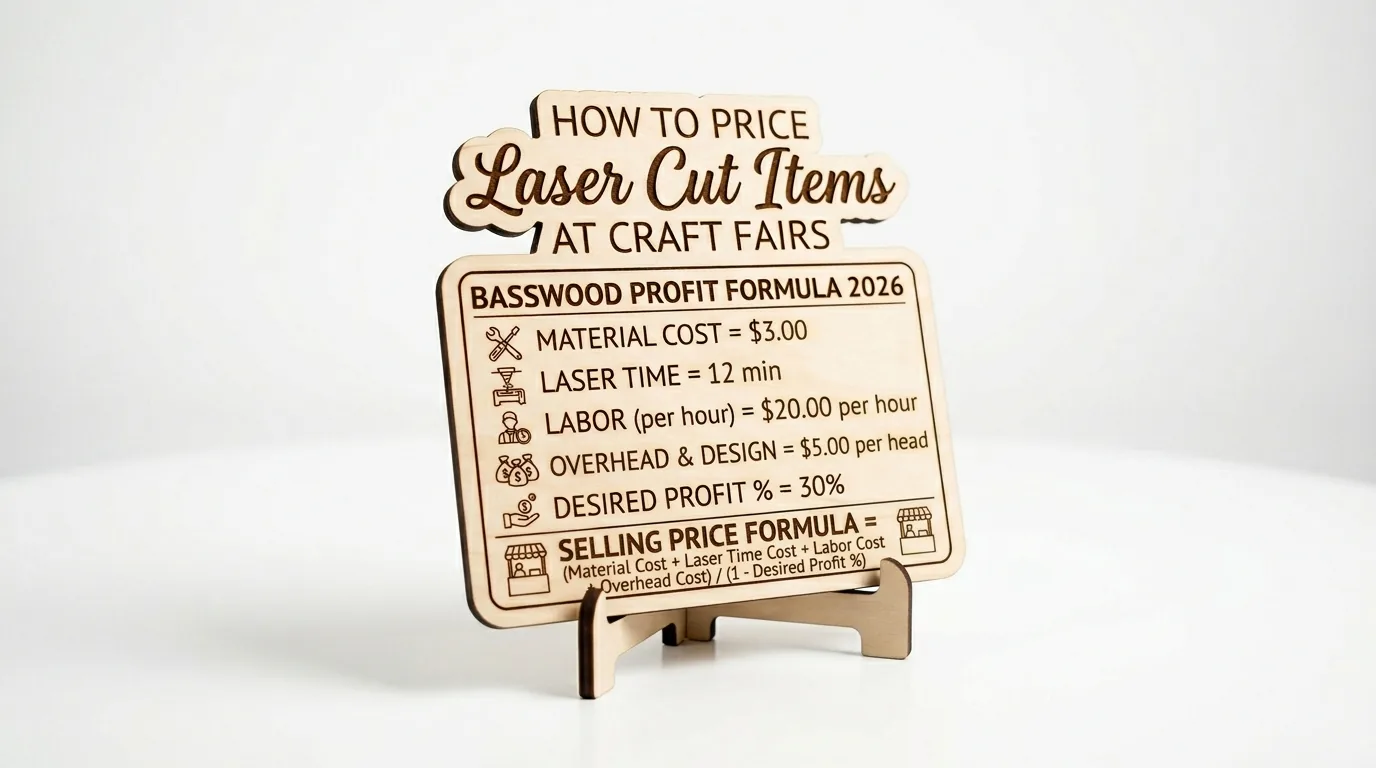
Basswood is the #1 choice for craft fair sellers because it combines low cost with reliability – minimal charring, predictable cutting, and no harmful fumes. According to USDA Forest Products Laboratory data, basswood ranks among the lowest-resin domestic hardwoods, making it ideal for high-volume production.
- Low resin content – minimal charring on edges, leaving clean, professional-looking cuts with minimal discoloration
- Consistent density – the same laser settings work batch after batch without retuning; predictability saves setup time
- Minimal char on edges – with air assist enabled, basswood produces crisp laser-engraved details and dark, high-contrast edges
- Smooth, workable surface – easily sanded, painted, or stained after cutting for custom finishing touches
- No toxic fumes – unlike MDF or treated plywood, basswood is safe for indoor use with basic ventilation, protecting your health and your workspace
These properties make it possible to maximize profitability on laser cutting projects by reducing scrap rates, re-work, and machine maintenance downtime – all factors that directly impact your craft fair margins.
What You’ll Need
- Basswood sheets: Crafteker 3mm basswood, 12×12 inch – 1 sheet per 4-6 small items (coasters, keychains, or tags); start with the 12-pack for production runs
- Laser machine: Any diode or CO2 laser (xTool, Glowforge, Creality Falcon, OMTech, etc.)
- Design file: SVG or raster artwork for your product – simple geometric designs, monograms, or nature motifs sell best at craft fairs
- Spreadsheet or notebook: To track material cost, machine time, labor minutes, and overhead per unit as you build your pricing worksheet
- Finishing supplies: Fine-grit sandpaper (220 grit), mineral oil or clear matte sealant, and small kraft hang-tags or packaging for display
Estimated time: 1-2 hours (setup, cutting, finishing, and pricing one product line) · Difficulty: Beginner · Profit potential: $3.58 in fully loaded costs → sell for $14-$16 at craft fairs
How to Calculate Your True Costs: Materials, Labor, Machine Time, and Overhead
Basswood’s consistent density and low resin content make it forgiving to cut and finish – but the real skill for craft fair success is knowing exactly what each piece costs before you set a single price tag. Work through these six steps once per product, and you’ll never leave money on the table again.
- Calculate your material cost per unit. Divide your sheet cost by the number of finished items it yields. Using Crafteker’s 12-pack at $24.99, each sheet costs $2.08. If one 12×12 sheet yields four coasters, your material cost per coaster is $0.52. Choosing the best basswood sheets for your product size directly controls this number – void-free, laser-grade material also means fewer wasted cuts and ruined pieces.
- Estimate your machine time cost. Laser operation, electricity, and wear-and-tear reasonably total around $5 per hour of run time. Time your cut-and-engrave cycle with a stopwatch, then divide: a 6-minute job costs roughly $0.50 in machine time. Never skip this step – ignoring it is the single most common reason craft fair sellers work all weekend and still break even.
- Add your labor cost per unit. Pay yourself fairly. Include design prep, file setup, loading sheets, removing masking, light sanding, and packaging. At $15/hour, 10 minutes of total hands-on time per item adds $2.50 to your cost. Use the same laser settings calculator workflow each time so your setup minutes shrink as you batch-produce.
- Allocate your show overhead per unit. Add up your booth fee, table display, transport, and any permits for a given show – say $150 total. If you sell 50 items, that’s $3.00 overhead per unit. Spread this cost honestly; lumping it as a one-time number and ignoring it in per-item math is how makers end up with a full day’s work producing no real income.
- Total your fully loaded cost and apply the 4x formula. Sum all four components: $0.52 material + $0.50 machine + $2.50 labor + $0.56 overhead (adjusted for higher volume) = approximately $3.58 per unit. Multiply by 2 for your wholesale price ($7.16), then multiply that by 2 for your retail price ($14.32). This 4x formula is the industry standard recommended by craft business coaches and gives you a 75% gross margin – meaning most of what you collect is actual profit, not just cost recovery.
- Test, observe, and refine your pricing. Bring a small batch of 20-30 units to your first show at your calculated retail price. Track sell-through: if you sell out in the first two hours, your price is likely too low – raise it by $2-$3 at your next event. If fewer than half sell, evaluate whether your product design or display needs work before cutting the price. Experienced makers resist the urge to discount and instead focus on one or two proven high-demand items – laser-cut coasters, keychains, and personalized tags consistently perform – where the 4x formula generates the most reliable return per sheet of basswood used.
Step-by-Step: Applying the 4x Pricing Formula to Your Basswood Products
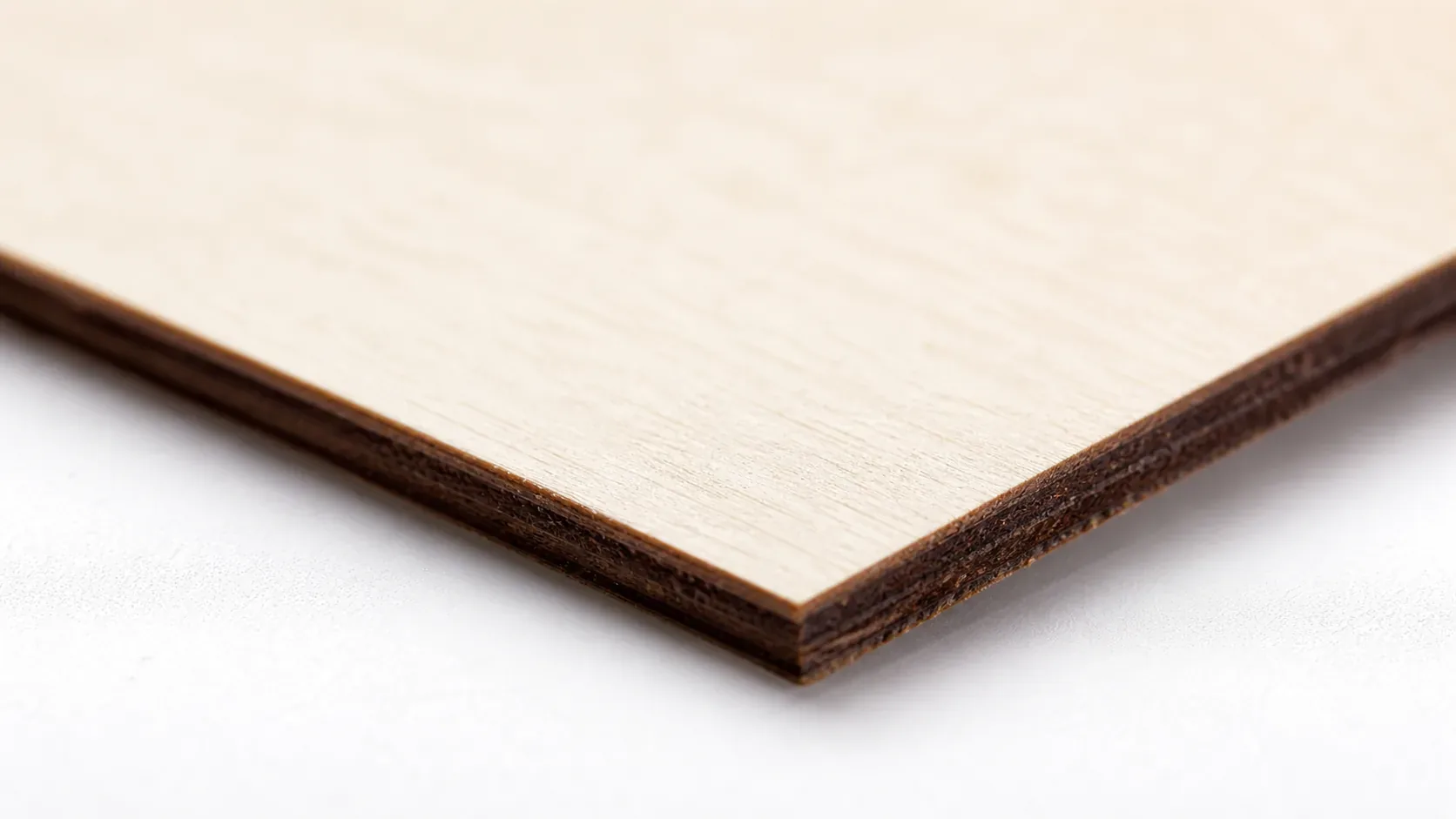
- Calculate your fully loaded cost per unit: Add all four cost components – material (e.g., $2.08 for one Crafteker 3mm basswood sheet), machine time (estimate $5/hour for laser operation, electricity, and wear allocated per piece), your labor (design, setup, finishing, and packaging), and overhead (booth fee + transport + display divided by units sold per show). A realistic total for a simple item often lands around $3.50-$4.00.
- Multiply by 2 to get your wholesale price: At a $3.58 fully loaded cost, your wholesale floor is $7.16. This is the minimum you’d charge another retailer – never price below this at a craft fair, even during slow hours.
- Multiply wholesale by 2 to reach retail price: $7.16 × 2 = $14.32 retail. This is the 4x formula in action – and it yields a $10.74 profit per unit, a 75% margin that makes each sale genuinely worthwhile.
- Cross-check against the 2.5x minimum: Craft pricing coaches widely recommend at least a 2.5x markup on total cost. The 4x formula exceeds this comfortably, giving you room to run occasional discounts without destroying your margin.
- Test your price on a small batch first: Bring 15-20 units to your next show at your calculated retail price. Track sell-through rate – if you sell out before noon, your price may be too low. If fewer than 50% sell, evaluate whether it’s price, placement, or product.
- Adjust by venue and channel: Craft fairs support full retail pricing. Etsy requires factoring in platform fees (~6.5%) and shipping. Wholesale to boutiques means sticking to your wholesale number. The formula stays the same – only the channel multiplier shifts.
How Much Can You Earn Selling Laser Cut Basswood Items at Craft Fairs?
Laser cut basswood products – coasters, keychains, ornaments, and small signs – are among the best laser cut items to sell on Etsy and at craft fairs, with buyers actively searching for personalized, handmade wood gifts in the $12-$25 range. When you build your pricing on Crafteker basswood at $2.08/sheet, the math becomes one of the more compelling most profitable laser cutting projects available to small-batch makers.
- Profit per unit: At a $3.58 fully loaded cost (including $2.08 Crafteker material, machine time, labor, and overhead), the 4x retail price of $14.32 delivers $10.74 profit per item – a 75% margin that holds even after packaging and transport.
- Realistic monthly revenue: Selling 40-60 items per weekend show × $10.74 profit = $430-$640 per show. Over four weekend shows per month, that’s $1,700-$2,560 in monthly profit – without quitting your day job.
- Focus on 1-2 hero products: Experienced makers consistently report that concentrating production on one or two high-demand items (such as personalized coasters or name signs) maximizes the formula’s effectiveness by reducing setup time and letting you batch-cut efficiently.
- Personalization upsell: Offering custom names, dates, or monograms on basswood items adds $3-$8 to average order value with minimal extra material cost – keeping your margin at or above 75% while giving buyers a reason to choose you over every other wood vendor at the fair.
Where to Buy Basswood Sheets for Laser Cut Craft Fair Items
Crafteker 3mm basswood sheets are ideal for craft fair laser cut production – 12×12 inch, laser-grade, void-free, and pre-sanded for clean, consistent cuts with minimal charring. At $24.99 for 12 sheets ($2.08/sheet), the 12-pack delivers the lowest per-unit material cost available, which is exactly what makes the 4x pricing formula so profitable for weekend sellers.
Ready to make your first batch? Get the wood that works:
→ Buy Crafteker 12-Pack Basswood Sheets on Amazon ($24.99)
Clip the 7% coupon on the listing page – buy 2 packs and save 20% automatically.
Also available: 5-pack ($15.97) · 3-pack ($12.99)
Frequently Asked Questions
How much should I charge for laser cut items at a craft fair?
Use the 4x formula: (Material Cost + Labor Cost + Overhead) × 2 × 2. For example, a basswood item costing $3.58 total (including $2.08 Crafteker material, machine time, labor, and overhead allocation) retails for $14.32, yielding a $10.74 profit per unit (75% margin). Craft show experts recommend a minimum 2x markup and 2.5x preferred.
What are the four cost components I must include in my pricing?
Material cost (e.g., $2.08 for Crafteker 3mm basswood per sheet), machine time ($5/hour typical for laser operation and wear), your paid labor (design, setup, finishing, packaging), and show overhead (booth fee, display, transport) allocated per item sold. Ignoring any one of these is the #1 reason laser sellers underprice.
Can I make a profit selling laser cut basswood items at craft fairs?
Yes – laser engraved wood items achieve 70-85% profit margins when priced correctly. At Crafteker’s $2.08/sheet pricing (12-pack), a properly costed basswood item retails at 4x total cost, delivering $400-2,500/month profit over 4 weekend shows, depending on product and sell-through rate.
Why do so many laser crafters underprice their work?
Fear of overpricing and losing sales, combined with ignoring hidden costs like machine wear, design time, failed cuts, and unsold inventory. This leads to working all weekend for minimal money. The 4x formula removes guesswork and ensures each unit sold meaningfully advances profit goals.
Where can I buy affordable basswood sheets for my craft fair items?
Crafteker on Amazon offers laser-grade, void-free 3mm × 12×12 inch basswood: 12-pack $24.99 ($2.08/sheet – best value), 5-pack $15.97, 3-pack $12.99. The 12-pack enables the lowest per-unit material cost and highest profitability when using the 4x pricing formula.
About the author: Mike Dolan is a laser maker and wood materials specialist with 8+ years cutting basswood, birch, and MDF on diode and CO₂ machines. He tests every Crafteker basswood batch before listing.
Finally found the actual formula that works. I was selling my laser cut boxes for $8 and wondering why I was broke after 8 hours at the fair – turned out I was ignoring machine time and my booth fee. Switched to the 4x method with Crafteker basswood, priced them at $15, and sold almost everything at my last show. Game changer.