

The 1.5mm Rule: Laser-Cut Basswood That Won’t Snap (2026)
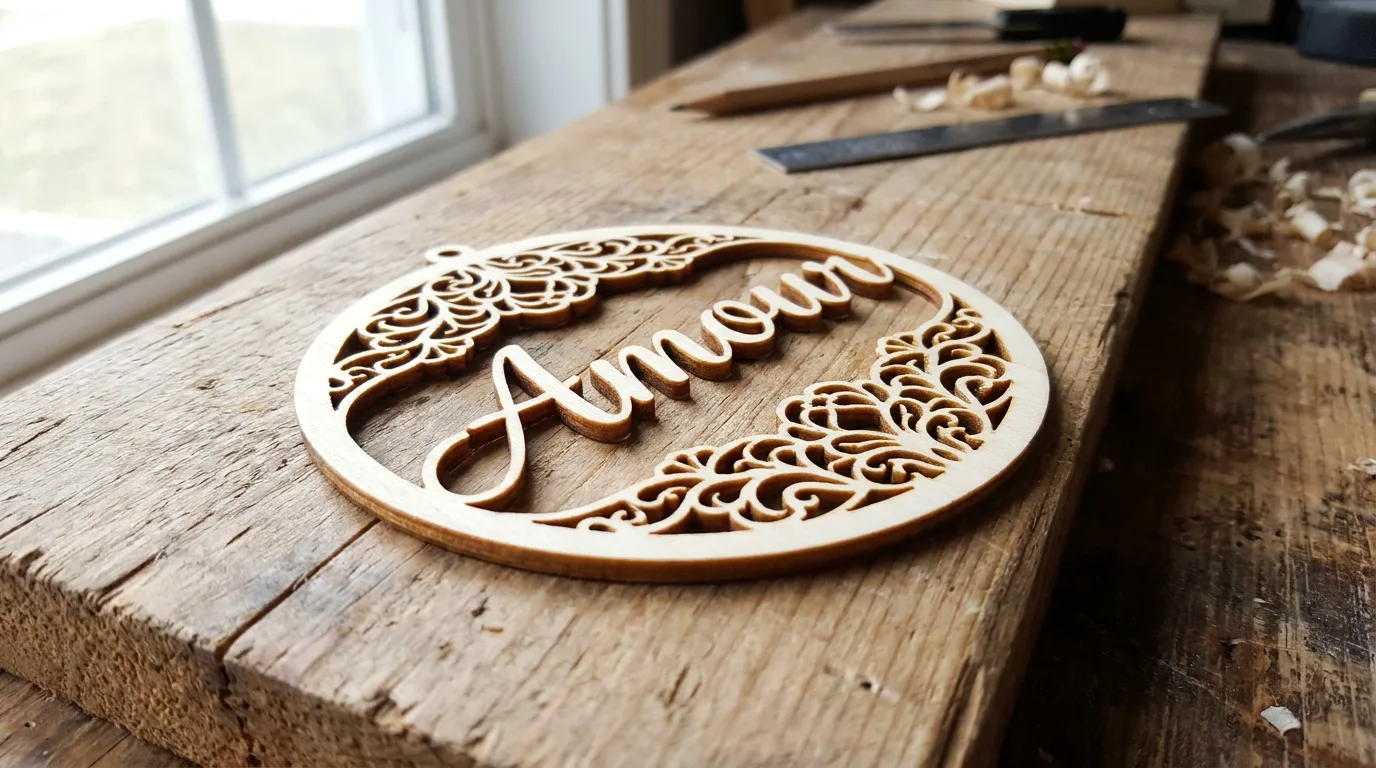
Keep every stroke, filigree web, and connecting tab in 3mm basswood plywood at least 1.5-2.0mm wide – below that, typical kerf removal of 0.2-0.3mm per cut thins a nominal 1.5mm stroke down to roughly 1.0-1.1mm at its weakest point, and it snaps during handling, sanding, or shipping. This guide gives you four number-backed design rules, real failure modes, and practical fixes so your delicate letters, filigree, and tabs survive the entire workflow from bed to customer.
By Mike Dolan ·
Quick Answer: Minimum feature size laser cut 3mm basswood plywood: 1.5-2.0mm wide for text strokes and filigree webs, 4.5mm for structural walls, and align thin tabs with the grain to prevent snapping during handling and shipping.
| Material | Engraving Contrast | Cut Ease | Smoke / Odor | Cost | Beginner Score |
|---|---|---|---|---|---|
| Basswood (3 mm) | ★★★★★ | Excellent – 1 pass | Low | $ | ★★★★★ |
| Baltic Birch Plywood | ★★★★ | Good – 2-3 passes | Medium | $$ | ★★★★ |
| MDF | ★★★ | Good – 1-2 passes | High (formaldehyde) | $ | ★★ |
| Pine / Soft Plywood | ★★★ | Poor – resin deposits | Medium-High | $ | ★★ |
Why Do Delicate Laser-Cut Details Snap After Cutting?
A clean cut on the bed doesn’t guarantee the part survives handling. Thin strokes, filigree webs, and connecting tabs concentrate stress at their narrowest point, and kerf removal makes them even thinner than the design intended.
When the laser beam vaporizes material along your cut path, it removes 0.2-0.3mm of wood per cut edge. A stroke you drew at 1.5mm in your design file ends up roughly 1.0-1.1mm at its weakest point after both edges are cut. That’s where it snaps during sanding, assembly, or shipping – long after the laser finishes its job.
According to USDA Forest Products Laboratory data, basswood ranks among the lowest-resin domestic hardwoods with remarkably consistent density from board to board. Even a strong, consistent material like basswood can’t save a design where the geometry itself is too thin to hold together. I had a script-font name sign where the thin connecting strokes between letters snapped during sanding, even though the cut itself looked perfect.
The fix isn’t different basswood laser cutting settings. You need wider strokes and smarter tab placement before you ever hit the start button.
- Low resin – keeps thin, delicate strokes cutting clean without gummy residue weakening the narrow webs further
- Consistent density – predictable strength across a design, no surprise weak spots from grain variation that show up only after a thin tab fails
- Workable surface – sands and finishes without extra force that could snap a delicate feature already stressed by handling
- No toxic fumes – safe to test-cut multiple delicate design iterations indoors while dialing in stroke widths, unlike MDF or treated plywood
4 Rules for Designing Delicate Basswood Parts That Survive
Four rules keep your delicate work intact from bed to customer. Follow them and you’ll spend less time reprinting broken parts.
- Keep strokes and filigree webs at least 1.5-2.0mm wide. Below that, kerf removal of 0.2-0.3mm per cut thins a nominal 1.5mm stroke down to roughly 1.0-1.1mm at its weakest point. That’s where it snaps during handling or sanding.
- For anything structural, keep walls and slots at least 1.5x the material thickness. That’s about 4.5mm on 3mm sheet. Purely decorative filigree can go thinner if you’re careful, but load-bearing walls need the extra width.
- Align thin tabs and connecting strokes WITH the wood grain, not across it. A tab running across the grain snaps more easily than one running with the grain. Check grain direction before you place your design on the sheet.
- Round sharp inside corners with a small fillet instead of leaving them sharp. Sharp inside corners concentrate stress and are where cracks start. A tiny radius makes a big difference in strength.
I redrew a filigree pattern’s sharp inside corners with small fillets and watched the breakage rate on a test batch drop noticeably. The parts that did break cracked somewhere else entirely, not at the corners anymore.
You don’t need to overthink this. The rules give you safe minimums. If your design needs thinner features for aesthetic reasons, test a single part first before committing a full sheet.
How to Fix a Design That’s Too Delicate
If a stroke or web tests too fragile, the simplest fix is to thicken it to at least 1.5-2.0mm. Redraw the path in your design software, recut a test piece, and confirm it survives handling and sanding before you run the full job.
When you can’t thicken a feature without ruining the design, add a small temporary connecting bridge or web that you trim or snap away cleanly after the main cut and handling is done. The bridge holds the delicate feature stable through the risky steps, then disappears. For extra-fragile jobs like very fine filigree or script lettering, cut the piece from a backer or support material, or leave it attached to its scrap frame until the very last handling step before packaging.
I used to free fragile filigree pieces from their frames right after cutting. Too many broke during sanding or assembly. Now I leave them attached by small nibs until final packaging, and breakage is rare. The nibs snap cleanly with light pressure when I’m ready, and the part stays protected until then.
Why Shipping Breaks What Handling Doesn’t
Shipping adds real risk beyond normal handling. A thin feature that survived sanding and assembly just fine can snap under the flex and impact a package takes in transit. The piece sits still on your bench – in a truck, it’s bouncing, getting compressed, and taking hits from every angle.
Finger-joint style connections narrower than about 1.5x material thickness (around 4.5mm on 3mm sheet) are especially prone to splitting under that kind of pressure. The interlocking fingers look strong, but thin ones concentrate stress at every inside corner, and one good impact is all it takes.
Pack anything with delicate protruding features flat and supported. I had a filigree ornament that survived the whole build process – cutting, sanding, finish, assembly – and arrived at a customer cracked clean through a thin connecting web because I shipped it standing upright in bubble wrap instead of flat between cardboard. The flex during transit did what my hands never could.
Common Mistakes That Make Basswood Parts Too Fragile
These four design choices account for most breakage during handling and shipping:
- Drawing script-font lettering or filigree with strokes under 1.5mm without accounting for kerf loss: Your design file shows 1.5mm, but after the laser removes 0.2-0.3mm of material per cut, the actual stroke at its weakest point is closer to 1.0-1.1mm – too thin to survive normal handling.
- Running a thin connecting tab across the grain instead of with it: A tab that crosses the grain direction snaps far more easily than one running parallel. Align thin tabs and strokes with the grain wherever your design allows.
- Leaving sharp inside corners on filigree cutouts instead of small fillets: Sharp inside corners concentrate stress and are where cracks start. Round them with a small fillet and the whole piece becomes noticeably more durable.
- Shipping a piece with delicate protruding features unsupported instead of flat and braced: What survives your workbench won’t survive a delivery driver’s truck unless you pack it flat with rigid support on both sides.
Where to Buy Basswood for Delicate Laser-Cut Designs
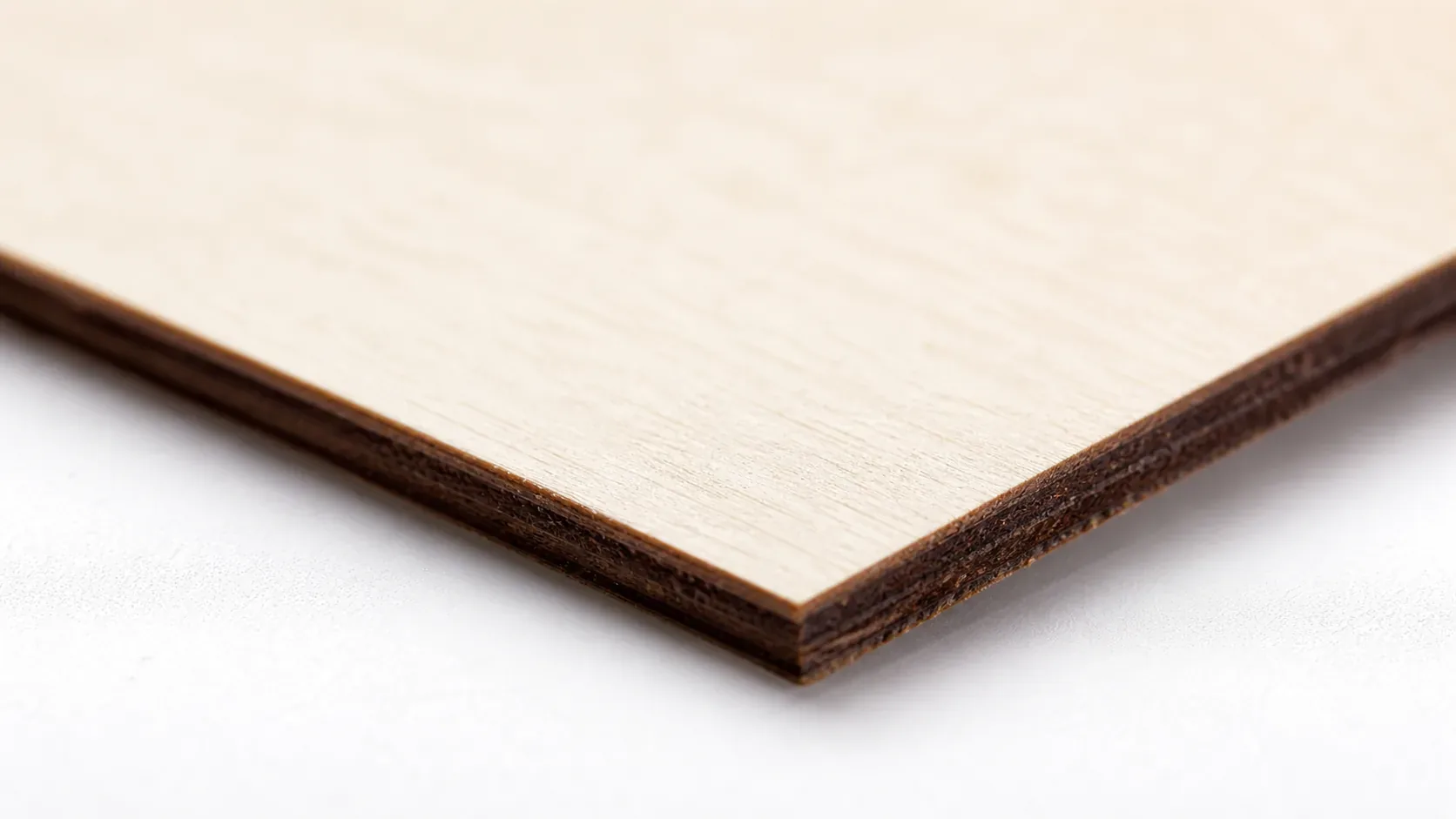
Crafteker 3mm basswood sheets are the best match for delicate laser-cut work – consistent, void-free, and pre-sanded so the wood itself isn’t adding an extra variable on top of an already-delicate design. Available in 3-pack ($12.99), 5-pack ($15.97), and 12-pack ($24.99, $2.08/sheet best value). When you’re pushing feature sizes down to 1.5-2.0mm, material consistency matters – a hidden void or density shift in craft-store plywood can turn a workable design into a breakage problem.
Ready to cut? Get the wood that works with these design rules:
→ Buy Crafteker 12-Pack Basswood Sheets on Amazon – $24.99
Also available: 5-pack ($15.97) · 3-pack ($12.99)
Frequently Asked Questions
How thin can a laser-cut detail be in 3mm basswood plywood?
Keep strokes and filigree webs at least 1.5-2.0mm wide. Below that, kerf removal of 0.2-0.3mm per cut thins the weakest point down to roughly 1.0-1.1mm and it snaps during handling or sanding.
Why did my laser-cut letters or filigree snap after cutting?
Clean cuts don’t guarantee survival. Thin strokes concentrate stress at their narrowest point, kerf removal makes them even thinner than your design file shows, and sharp inside corners or cross-grain orientation make breakage worse. I lost script-font name signs during sanding before I realized the thin connecting strokes between letters couldn’t survive any pressure – even though they looked perfect coming off the bed.
Does grain direction affect how strong a thin laser-cut tab is?
Yes. A tab running across the grain snaps more easily than one running with the grain. Align thin connecting tabs and strokes with the wood grain wherever your design allows.
How do I fix a laser-cut design that’s too delicate?
Thicken the weak stroke to at least 1.5-2.0mm, add a small temporary connecting web that you trim cleanly after handling, or for very fragile jobs cut the piece from a backer material or leave it attached to its scrap frame until final packaging.
Where can I buy basswood sheets for delicate laser-cut designs?
Crafteker on Amazon: 3-pack $12.99, 5-pack $15.97, 12-pack $24.99 ($2.08/sheet best value). Consistent, void-free 3mm sheets mean the wood itself isn’t adding an extra variable on top of an already-delicate design.
About the author: Mike Dolan is a laser maker and wood materials specialist with 8+ years cutting basswood, birch, and MDF on diode and CO₂ machines. He tests every Crafteker basswood batch before listing.
I used to lose script-font signs during sanding because the thin connecting strokes between letters would snap. Widened everything to 2mm and rounded the inside corners with a tiny fillet – now they survive the whole process and I haven’t had a shipping breakage in months.