

5-Step Ramp Test for Focal Height on 3mm Basswood (2026)
Use a gentle-slope ramp test to find the sharpest focal height on 3mm basswood plywood, then confirm it with a short cut on flat scrap. The method applies to hobby diode and CO2 lasers, but your machine manual comes first.
This post contains affiliate links. As an Amazon Associate I earn from qualifying purchases, at no extra cost to you. Learn more.
By Mike Dolan ·
Quick Answer: This 5-step ramp test locates the sharpest laser focal height on 3mm basswood before you cut a finished sheet.
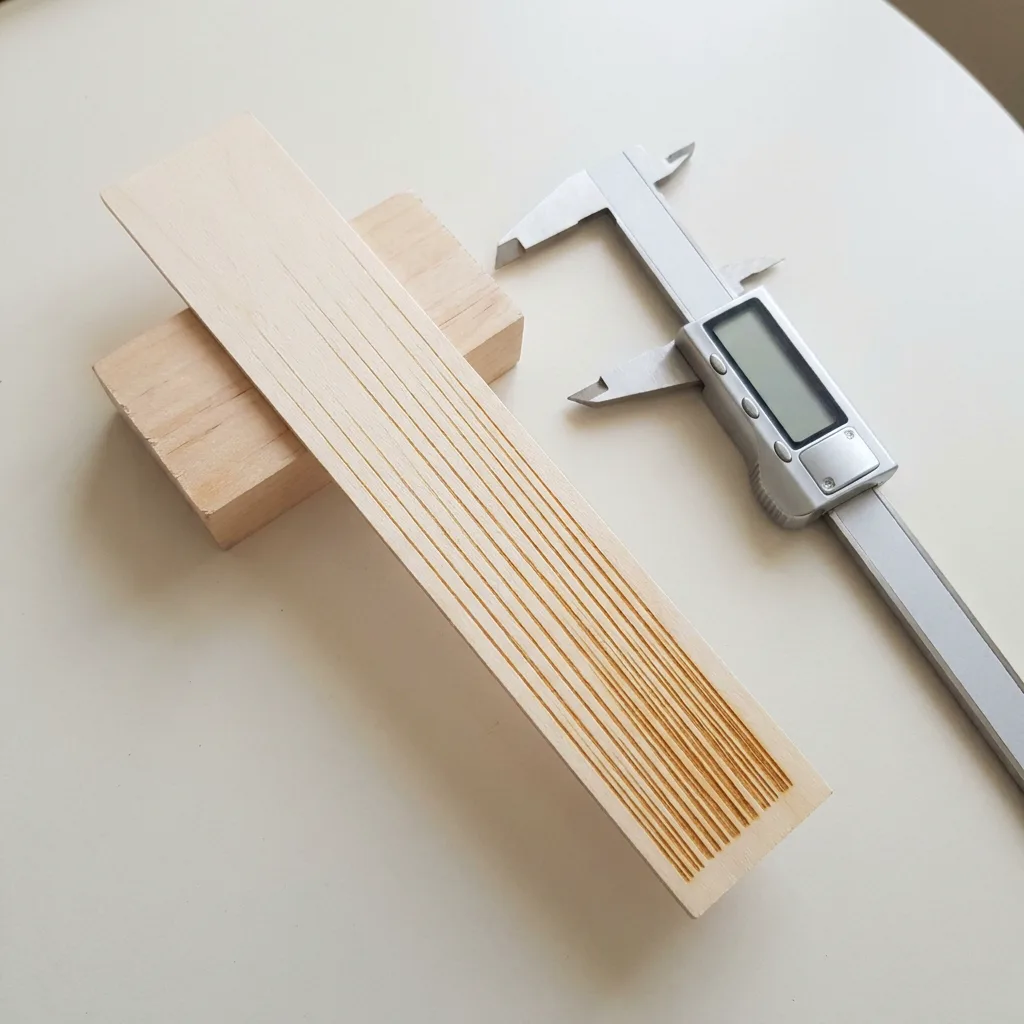
What a Ramp Test Is
A ramp test places 3mm basswood plywood at changing heights under one thin engraved line or row of marks. The beam is narrowest at the focal point, so the line is thinnest and sharpest there; above and below that point, the line becomes wider. This is a practical method for Crafteker 3mm 3-ply basswood sheets, but follow your laser manual for setup, operation, and safety.
5 Steps to Run a 3mm Basswood Ramp Test
A 3mm basswood ramp test locates the sharpest focal height by running one consistent mark across a gently sloped scrap sheet. It gives you a measured reference for focus or Z height without sacrificing a finished panel. Use it after a new lens, machine setup, basswood batch, or troubleshooting wide lines and incomplete cuts.
- Choose stable scrap. Select a reasonably flat piece of 3mm basswood plywood. Prop one end on a flat object to create a gentle slope, then secure the sheet without placing a clamp, support, or other object in the laser path.
- Set up the laser. Follow your hobby diode or CO2 laser manual before positioning the material. Program one thin engraved line or a row of marks across the slope, and keep power, speed, and other operating conditions consistent throughout the test.
- Run the test. Start the mark on the scrap and stay with the machine while it operates. Watch the line as it crosses the changing material height, but do not adjust focus, power, speed, or alignment during the pass.
- Mark the sharpest spot. Inspect the complete line and find the thinnest, cleanest, most sharply defined section. Place a small piece of painters tape outside the laser path to identify that location safely.
- Measure and confirm. Measure from the machine bed or reference surface with a digital caliper or ruler. Set focus or Z height to match, then make a short cut on flat scrap to check the result.
Record the measured height alongside the material batch and machine setup so you can compare future tests without relying on memory. For practice designs or simple files, the free Crafteker laser file bundle can give you additional scrap projects for checking engraving and cutting behavior.
How to Read the Result and Set the Height
Read the ramp test by finding the narrowest, cleanest, sharpest part of the line, not merely the darkest section. A dark or burned mark may be wider because heat spreads through the plywood. The best focal point usually appears well defined, while the line broadens as the material moves above or below focus.
Measure from the same bed or reference surface your machine uses during focusing, then follow the manual for setting focus or Z height. Diode and CO2 machines can use different procedures. Afterward, make a short cut on flat scrap from the same basswood batch and use the test card playbook for organized comparisons.
If the confirmation cut does not pass through or the engraved lines remain wide, repeat the ramp test before changing several settings at once. A new result may reflect material variation, warping, lens condition, or a setup difference rather than a problem with the ramp method itself.
4 Common Ramp-Test Mistakes
Most ramp-test problems come from an unsuitable slope, unstable scrap, incorrect spot selection, or inconsistent machine settings. Correcting one issue at a time gives you a clearer focal-height result and reduces wasted basswood. Keep the test on scrap, follow the machine manual, and inspect the whole line before measuring.
- Slope too steep. Cause: A steep slope creates a large height change over a short distance and makes the mark harder to interpret. Fix: Use a gentle slope and follow the machine manual for safe setup and operating conditions.
- Warped test piece. Cause: Warping changes the material height independently of the intended slope. Fix: Choose stable, reasonably flat scrap and secure it appropriately without placing supports or fasteners in the laser path.
- Wrong spot measured. Cause: A dark, wide, or burned area can look prominent without being the focal point. Fix: Inspect the complete line and measure the narrowest, sharpest, cleanest section instead.
- Power or speed changed. Cause: Different operating conditions alter line width and darkness, making the comparison invalid. Fix: Keep power, speed, and other settings consistent, and follow the machine manual for the test procedure.
3 Laser Safety Cautions
Safe ramp testing requires ventilation, suitable eye protection, constant supervision, and careful control of heat and flame risks. The exact protective equipment and operating procedure depend on your machine, enclosure, and local guidance. Read the manual before testing and review this laser safety checklist before operating.
- Provide ventilation and eye protection. Use suitable ventilation and wear laser glasses as required by the machine manual and applicable safety guidance. Do not assume one type of protection suits every diode or CO2 setup.
- Stay with the machine. Never leave the laser unattended while it operates, including during the ramp test and the flat-scrap confirmation cut. Stop the machine if smoke, flame, movement, or another unsafe condition appears.
- Control heat and flame risk. Treat burned marks and plywood edges as potential heat and flame hazards. Keep the work area suitable for safe operation, remain present throughout the test, and follow the machine manual.
Ramp Test vs. Flatness Check
A ramp test finds focal height by comparing line sharpness across changing material heights, while a flatness check only shows whether the basswood sheet rests evenly on the bed. A sheet can be flat without being at the beam’s sharpest focus, so the two checks answer different setup questions.
Use a flatness check when a sheet may be bowed, lifted, or uneven; a 3-point flatness check can help document that condition. Use a ramp test when you need focal height. If cuts fail or lines look wide, test on scrap before changing the finished sheet.
Where to Get 3mm Basswood for Focus Tests
Crafteker 3mm basswood sheets are 12×12 inch, laser-grade, void-free and pre-sanded: a pale, even surface for engraving and paint, and consistent sheets for repeat batches. At $24.99 for 12 sheets ($2.08/sheet), test pieces cost very little. Need designs? Grab the free Crafteker laser file bundle.
Ready to dial in your focus?
Tools & Materials Used

Laser-ready basswood for the projects in this guide.
Measure the height of the sharpest spot.
Hold the test strip steady and keep marks clean.
Match the wavelength of your laser.
Frequently Asked Questions
What is a laser ramp test for 3mm basswood?
It is a scrap-material focus test. You place 3mm basswood plywood on a gentle slope, engrave one thin line or row of marks across it, and find the spot where the mark is thinnest and sharpest.
Why does the line become wider above and below focus?
The laser beam is narrowest at its focal point. As the material sits above or below that height, the beam spreads and the engraved line becomes wider.
Can you use this method with a diode and a CO2 laser?
Yes, the basic ramp principle works with both types. Their focus controls, operating procedures, and safety requirements differ, so follow the manual for your machine.
How do you measure the best focal height?
Mark the thinnest and sharpest part of the line, then measure its height from the machine bed or other reference surface with a caliper or ruler. Use that measurement for the focus or Z height.
Does a ramp test replace checking whether basswood is flat?
No. A ramp test locates focal height, while a flatness check shows whether the sheet sits evenly on the bed. Use both when warped or bowed material may affect the result.
About the author: Mike Dolan is a laser maker and wood materials specialist with 8+ years cutting basswood, birch, and MDF on diode and CO₂ machines.
Follow your laser manual for focus and safety, and always run the test on scrap 3mm basswood.