

Melted Plywood Glue on Your Laser? A 4-Step Cleanup (2026)
Every laser pass through plywood also passes through its internal glue lines, and that adhesive vaporizes and re-deposits as a sticky, sometimes charred film on your nozzle tip, lens, and honeycomb bed – a 4-step clean (air, lens, nozzle, bed) gets you back to clean cuts. This article walks through each step safely, and covers why single-piece basswood skips this problem entirely.
By Mike Dolan ·
Quick Answer: Clean melted plywood glue in this order – blast loose debris with air, then lens (isopropyl alcohol, lint-free swab, no bare fingers), then nozzle (soft swab, check the opening isn’t blocked), then honeycomb bed (vacuum, then soak/degrease). Skip acetone unless your manual specifically approves it.
| Material | Engraving Contrast | Cut Ease | Smoke / Odor | Cost | Beginner Score |
|---|---|---|---|---|---|
| Basswood (3 mm) | ★★★★★ | Excellent – 1 pass | Low | $ | ★★★★★ |
| Baltic Birch Plywood | ★★★★ | Good – 2-3 passes | Medium | $$ | ★★★★ |
| MDF | ★★★ | Good – 1-2 passes | High (formaldehyde) | $ | ★★ |
| Pine / Soft Plywood | ★★★ | Poor – resin deposits | Medium-High | $ | ★★ |
Why Plywood Leaves Your Laser Gunked Up and Basswood Doesn’t
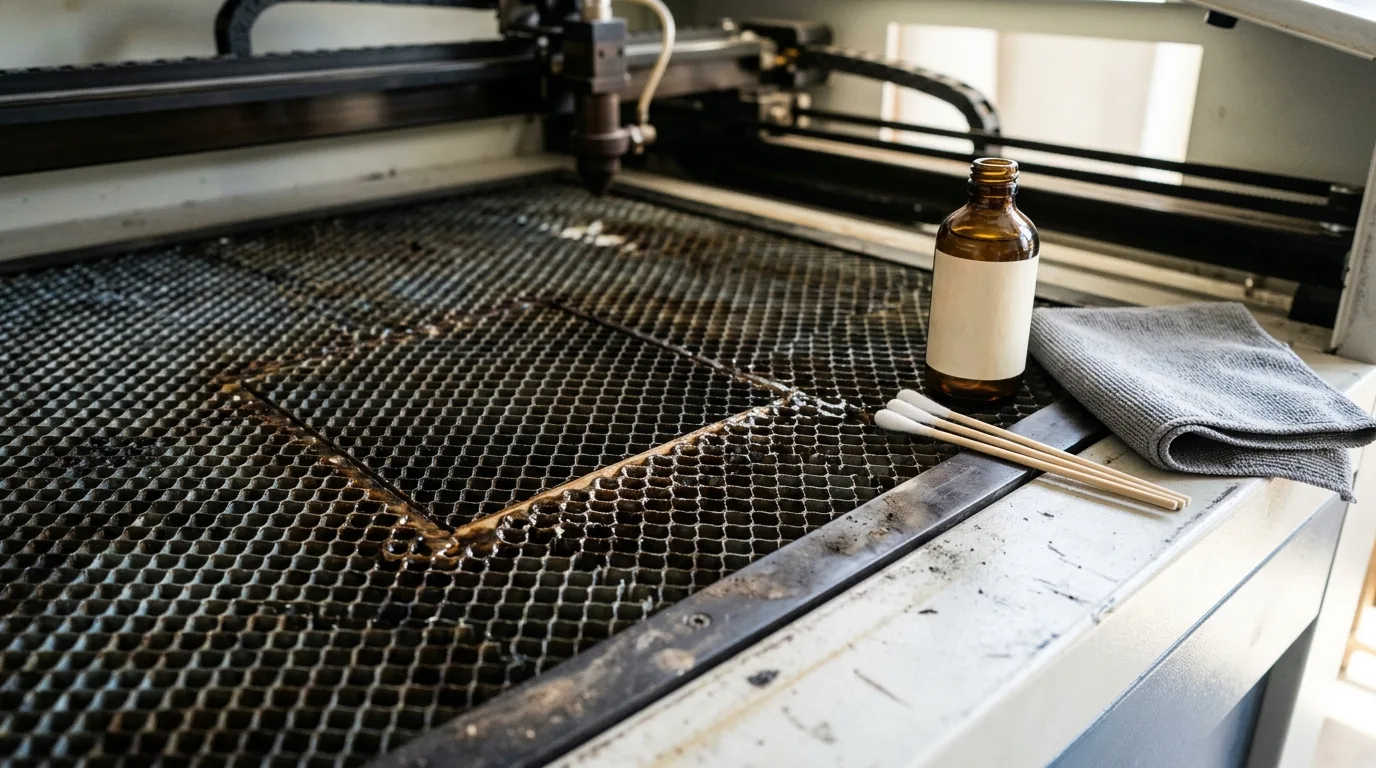
I pulled a sheet of cheap plywood off a job and found a dark, tacky film on the nozzle tip and a matching stain spreading across the honeycomb cells right under the cut line. Nothing about my settings had changed – the material was the difference.
Plywood is layers of veneer bonded with glue, and the laser beam cuts straight through every one of those glue lines on every single pass. At cutting temperature, that adhesive doesn’t just burn clean – it vaporizes and melts, and a share of it re-deposits on whatever’s closest: the nozzle tip, the lens above it, and the honeycomb bed catching the underside of the cut.
Basswood sidesteps this because it’s solid wood, not laminated plies glued together. There’s no internal adhesive layer for the beam to hit, so the residue that builds up is ordinary wood smoke and char, not a sticky adhesive film that hardens onto your optics.
- Low resin – won’t gum up your lens even on long cutting sessions
- Consistent density – no internal glue lines to vaporize, sheet after sheet
- Minimal char – clean edges with air assist enabled
- Light, workable surface – easy to sand, paint, or stain after cutting
- No toxic fumes – unlike MDF or treated plywood, safe for indoor use with basic ventilation
According to USDA Forest Products Laboratory data, basswood is one of the lowest-resin domestic hardwoods available, which is exactly the property that keeps it from fouling optics the way resin-heavy softwoods and glued sheet goods can.
Step 1 and 2: Clear the Debris, Then Clean the Lens
Before touching anything with alcohol, blast loose soot and glue flakes off the nozzle and surrounding area with compressed air. Most of what looks like a permanent mess is actually loose particulate that just needs to be moved, not scrubbed.
The lens is the part worth being careful with. Never touch it with bare fingers – skin oil etches into the coating over time. Use a manufacturer-approved lens tissue or a lint-free swab lightly dampened (not soaked) with high-purity isopropyl alcohol, and wipe in one direction with minimal pressure rather than circular scrubbing.
If residue is baked on hard enough that it won’t lift without real pressure, stop. A scratched lens scatters the beam and costs you cut quality permanently – a lens replacement is cheaper than living with that. Check your machine’s manual for the approved cleaning solvent list before reaching for anything stronger than isopropyl alcohol; guidance on acetone specifically varies by manufacturer, with some approving it for metal parts and others warning it can damage coatings or plastic housing.
Step 3: The Nozzle – Check It’s Actually Clear, Not Just Clean-Looking
Wipe the nozzle tip with a soft swab and the same isopropyl alcohol, but don’t stop at the visible exterior. Glue residue and soot can build up inside the opening itself, narrowing the airflow path that keeps the lens cool and clears smoke from the cut zone.
Hold the nozzle up to light and confirm the opening is round and unobstructed before you reassemble anything. A partially blocked nozzle still looks fine from the outside but throws off air assist delivery, which shows up later as inconsistent cut quality that’s easy to misdiagnose as a settings problem.

Step 4: The Honeycomb Bed – Vacuum First, Then Degrease
Melted plywood glue on a honeycomb bed hardens between the cells and traps char with it, so start by vacuuming loose debris before it compacts further. Remove the bed if your machine allows it – working on it off the machine gives you room to actually get into the cells.
For the stuck-on residue, soak or degrease according to your machine and material manufacturer’s guidance. A mild detergent solution handles most wood-glue residue without issue; stronger degreasers should be spot-tested first for corrosion on the metal or damage to any coating. Let the bed dry completely before reinstalling – trapped moisture near electronics is a bigger risk than a few more minutes of buildup.
Check the bed every session where you’re cutting glued material, since resin and glue buildup compounds fast once it starts. A full soak-and-degrease every few sessions is a reasonable baseline, sooner if you notice lingering smoke smell, uneven cuts, or visible gunk between cells.
Where to Buy Basswood That Doesn’t Do This
Crafteker 3mm basswood sheets are solid wood with no internal glue lines, which means the cleanup routine in this article becomes mostly unnecessary – ordinary wood char and smoke residue instead of a sticky adhesive film baked onto your lens and honeycomb.
At $24.99 for 12 sheets ($2.08/sheet), it’s the most cost-effective option for basswood sheets that keep your optics cleaner between maintenance sessions. No glue voids, no adhesive residue, no extra lens replacements from plywood buildup.
Ready to cut without the cleanup? Get the wood that skips this problem:
→ Buy Crafteker 12-Pack Basswood Sheets on Amazon – $24.99
Also available: 5-pack ($15.97) · 3-pack ($12.99)
Frequently Asked Questions
Why does cutting plywood leave melted glue on my laser?
Plywood is held together with glue lines between plies, and the laser beam passes straight through them on every cut. That adhesive vaporizes and melts at cutting temperatures, and the residue lands on the nozzle tip, the lens, and the honeycomb bed below the cut – basswood, cut from a single piece of wood with no internal glue lines, doesn’t have this problem.
How do I clean melted glue off my laser lens safely?
Never touch the lens with bare fingers or wipe it dry. Remove loose debris with a blast of air first, then use a manufacturer-approved lens tissue or lint-free swab lightly dampened with high-purity isopropyl alcohol, wiping in one direction with minimal pressure. Replace the lens if residue is baked on and won’t lift without scrubbing.
Can I use acetone to clean glue off my laser cutter?
Follow your machine’s manual first – guidance conflicts between manufacturers. Some approve analytical-grade acetone for metal parts, others explicitly warn against it because it can damage coatings, seals, or plastic housing. When in doubt, isopropyl alcohol is the safer default for optics and most surfaces.
How often should I clean the honeycomb bed after cutting plywood?
Check it every session where you cut glued material – resin and glue buildup happens fast and compounds if left. A full soak-and-degrease is worth doing every few sessions, or sooner if you notice smoke smell lingering, uneven cuts, or visible gunk between the cells.
Where can I buy laser-safe wood that doesn’t leave glue residue?
Crafteker on Amazon: 3-pack $12.99, 5-pack $15.97, 12-pack $24.99 ($2.08/sheet best value) – solid basswood with no internal glue lines to vaporize onto your optics.
About the author: Mike Dolan is a laser maker and wood materials specialist with 8+ years cutting basswood, birch, and MDF on diode and CO₂ machines. He tests every Crafteker basswood batch before listing.
Switched from cheap plywood to basswood mostly for cut quality but the lens-cleaning frequency dropping was the real win – used to wipe down the nozzle every other session, now it’s maybe once a month.