

Why Plywood Pops or Lifts Mid-Cut: 3 Hidden Causes (2026)
A loud crack and a sheet that suddenly lifts or bulges mid-cut almost always means an internal void, a weak glue line, or trapped delaminated gas releasing under heat – three causes that are invisible from either face until the laser finds them. This article covers what’s actually happening, what to do when it happens, and why solid basswood doesn’t have this failure mode at all.
By Mike Dolan ·
Quick Answer: A pop or lift mid-cut in plywood is usually an internal void or weak glue line releasing trapped hot gas. Test a small grid on scrap from the same sheet before a full project – it’s the only reliable way to catch this before it happens on your final piece.
| Material | Engraving Contrast | Cut Ease | Smoke / Odor | Cost | Beginner Score |
|---|---|---|---|---|---|
| Basswood (3 mm) | ★★★★★ | Excellent – 1 pass | Low | $ | ★★★★★ |
| Baltic Birch Plywood | ★★★★ | Good – 2-3 passes | Medium | $$ | ★★★★ |
| MDF | ★★★ | Good – 1-2 passes | High (formaldehyde) | $ | ★★ |
| Pine / Soft Plywood | ★★★ | Poor – resin deposits | Medium-High | $ | ★★ |
The Cut Was Going Fine, Then Something Cracked and the Sheet Jumped
I was midway through a clean cut on a plywood panel when I heard a sharp crack and watched a section of the sheet visibly lift and bulge for a split second before settling back down. The design finished, but that section came out warped and the surface around it was scorched in a way nothing before it had been.
Nothing about my settings changed mid-cut. What changed was what the laser hit next: an internal void or a weak glue pocket between plies that I had no way of seeing from either face of the sheet. Heat built up in that trapped pocket until it released all at once – the crack, the lift, the sudden scorching.
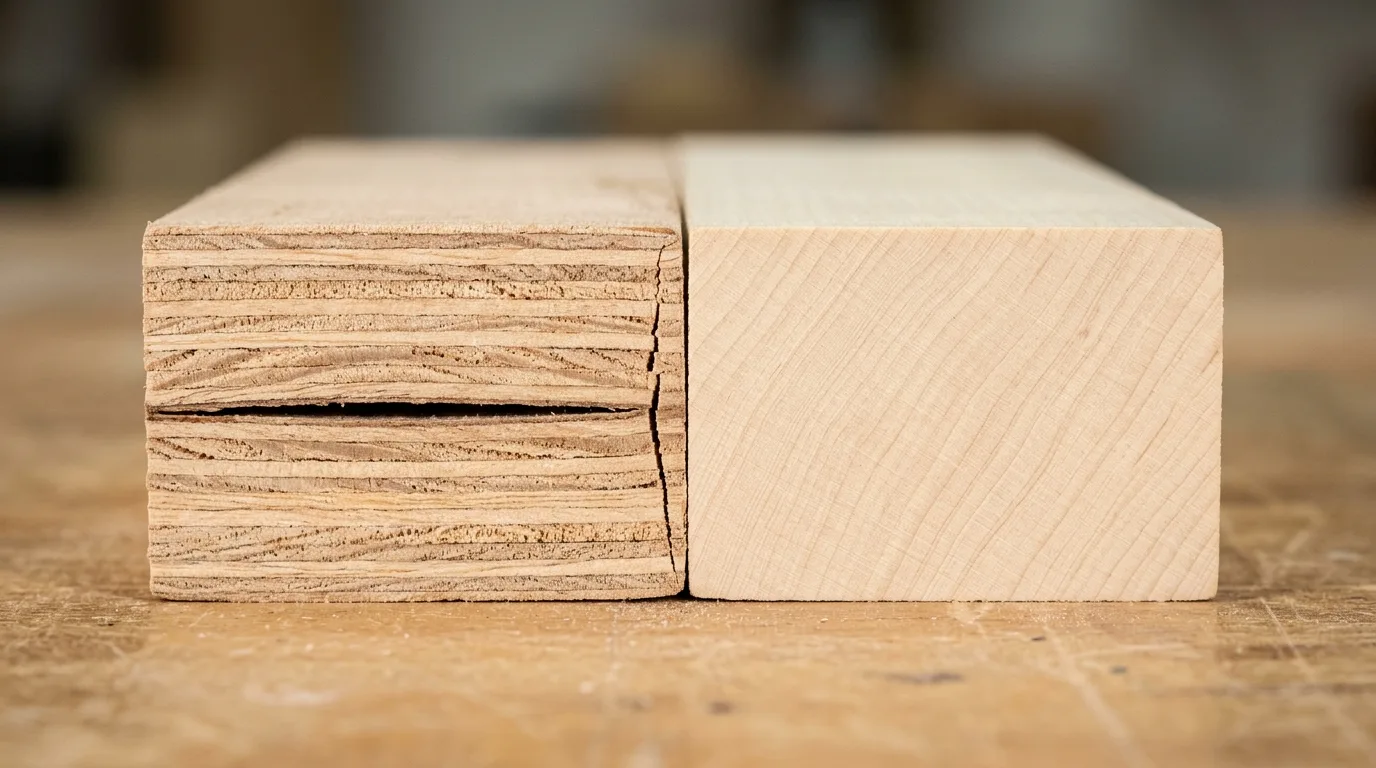
This is a sheet-material problem, not a settings problem, and it’s specific to laminated wood products. Basswood, cut from a single piece of wood, simply doesn’t have internal glue lines or void pockets for gas to build up behind in the first place.
- Low resin – no glue-line chemistry to trap gas or fail unpredictably under heat
- Consistent density – no internal voids hiding between the same settings that worked on your last sheet
- Minimal char – clean edges with air assist enabled, no surprise scorching from a hidden pocket
- Light, workable surface – easy to sand, paint, or stain after cutting
- No toxic fumes – unlike MDF or treated plywood, safe for indoor use with basic ventilation
According to USDA Forest Products Laboratory data, solid wood’s continuous grain structure behaves predictably under heat in a way that laminated products with internal glue interfaces cannot always guarantee, since manufacturing defects in any single glue line become a hidden weak point.
Cause 1 and 2: Internal Voids and Weak Glue Lines
Internal voids and glue pockets change how the beam and airflow interact with the material well before the surface shows any sign of trouble. A void changes local heat behavior, and a weak or thin glue line between plies can be the exact spot where trapped hot gas has nowhere to go except suddenly outward, lifting the veneer above it.
Delamination works similarly – a ply that’s only weakly bonded to begin with can separate under the heat and pressure of the cut, and if it separates while gas is trapped beneath it, that’s the crack and lift you hear and see. None of this shows up in a visual inspection of a flat, closed sheet. The defect is inside, between layers you can’t see without already destroying the sheet.
Cause 3: Inconsistent Thickness and Warp Compounding the Problem
A warped or inconsistent-thickness sheet adds a second failure mode on top of the void/delamination risk: material that drifts out of focus mid-cut delivers inconsistent heat across the surface, which can concentrate stress right at a weak glue line that might have otherwise held. The combination – a marginal glue bond plus an unpredictable focus height – is worse than either problem alone.

What to Do When It Happens (and How to Catch It Before It Does)
If a sheet pops or lifts mid-job, stop and inspect before resuming. The pop can mean the material shifted out of its original position or focus height, and the delaminated area near your cut path may behave unpredictably on the next pass. Never leave a laser unattended, and treat any pop as a signal to check the material rather than push through.
You can’t reliably spot voids or weak glue lines by eye on a closed sheet – they’re internal by definition. The practical safeguard is testing a small grid on scrap cut from the same sheet before committing to a full project. If the test area cuts clean with no surprises, the sheet is more likely to behave the same way across the rest of its surface. It’s not a guarantee, but it’s the closest thing available short of buying material that doesn’t have this defect mode built in.
Where to Buy Basswood Without Void or Delamination Risk
Crafteker 3mm basswood sheets are solid wood with no internal glue lines and no void pockets, which means the failure mode in this article simply doesn’t apply – there’s no hidden pocket for gas to trap behind and no glue bond to weaken under heat.
At $24.99 for 12 sheets ($2.08/sheet), it’s the most cost-effective option for basswood sheets that behave the same, predictably, sheet after sheet.
Ready to cut without the surprises? Get solid basswood:
→ Buy Crafteker 12-Pack Basswood Sheets on Amazon – $24.99
Also available: 5-pack ($15.97) · 3-pack ($12.99)
Frequently Asked Questions
Why does my plywood pop, crack, or lift up in the middle of a laser cut?
That’s almost always an internal void or weak glue line releasing suddenly under heat, letting trapped hot gas escape beneath a top veneer. The surface can look fine right up until the pocket underneath lets go, producing a loud crack and a localized lift or bulge.
Is it safe to keep cutting after plywood pops during a laser job?
Stop and inspect first. A pop can mean the sheet shifted out of its original position or focus height, and a delaminated area near the cut path can behave unpredictably on the next pass. Never leave a laser unattended, and treat a pop as a signal to check the material before resuming.
Can I tell if a plywood sheet has hidden voids before cutting?
Not reliably by eye – voids and glue pockets are internal and often invisible from either face. Testing a small grid on scrap from the same sheet before committing to a full project is the practical way to catch a bad sheet before it fails mid-job.
Why doesn’t basswood have this popping problem?
Basswood is solid wood, not layers of veneer bonded with glue, so there are no internal glue lines or void pockets for trapped gas to build up behind. The failure mode this article covers is specific to laminated sheet goods like plywood.
Where can I buy basswood without internal voids or delamination risk?
Crafteker on Amazon: 3-pack $12.99, 5-pack $15.97, 12-pack $24.99 ($2.08/sheet best value) – solid basswood with no glue lines or internal voids to pop or delaminate mid-cut.
About the author: Mike Dolan is a laser maker and wood materials specialist with 8+ years cutting basswood, birch, and MDF on diode and CO₂ machines. He tests every Crafteker basswood batch before listing.
Had a plywood sheet crack loudly and lift right in the middle of a cut last month, ruined the whole panel. Switched to basswood for anything I can’t afford to lose mid-job and haven’t had it happen once since – no glue lines means nothing to pop.