
30-40W Diodes on 3mm Basswood: When More Power Backfires (2026)
A 30-40W diode laser can char and weaken 3mm basswood faster than a 10-20W laser if you don’t compensate with higher speed and fewer passes – community-reported settings for 40W machines land as low as 8-15mm/s, far below what the wattage suggests. This article breaks down why more power backfires on thin stock, what real makers report for settings, and how to fix charring and overburn without babysitting every cut.
By Mike Dolan ·
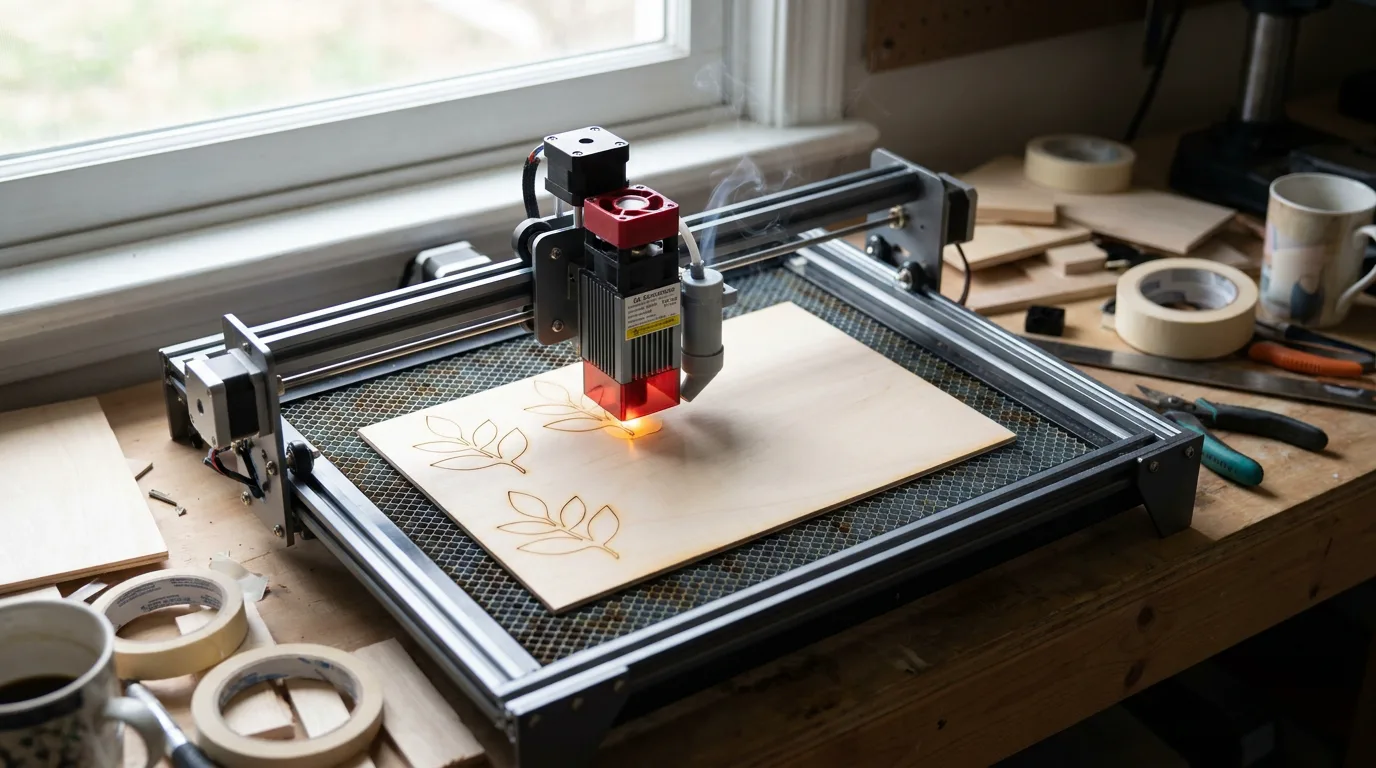
Quick Answer: 30-40W diode lasers on 3mm basswood need slower speeds (8-15mm/s) and 84-100% power, not more wattage, to avoid charring, wider-looking kerfs, and weakened fine features.
| Material | Engraving Contrast | Cut Ease | Smoke / Odor | Cost | Beginner Score |
|---|---|---|---|---|---|
| Basswood (3 mm) | ★★★★★ | Excellent – 1 pass | Low | $ | ★★★★★ |
| Baltic Birch Plywood | ★★★★ | Good – 2-3 passes | Medium | $$ | ★★★★ |
| MDF | ★★★ | Good – 1-2 passes | High (formaldehyde) | $ | ★★ |
| Pine / Soft Plywood | ★★★ | Poor – resin deposits | Medium-High | $ | ★★ |
Why a 40W Diode Can Cut Basswood Worse Than a 20W One
On 3mm stock, extra wattage that isn’t matched with higher speed and fewer passes just dumps more heat into a very thin cross-section. That widens the heat-affected zone instead of cutting faster or cleaner – more charring, rougher edges, same material.
Basswood is naturally suited to laser work. According to USDA Forest Products Laboratory data, it’s among the lowest-density, lowest-resin domestic hardwoods, which is why it cuts and engraves cleanly at modest power in the first place. But even consistent, laser-grade basswood can’t compensate for a machine running too hot for the material’s thickness – the wood isn’t the variable, the settings are.
I learned this the annoying way. I set a new 40W diode to its default high-power setting on 3mm basswood, expecting faster, cleaner cuts than my old 20W unit. Instead I got charred, rough edges – the extra wattage didn’t buy me anything until I slowed down first.
If you want the fix laid out with real numbers, our basswood laser cutting settings guide and our piece on how to prevent charring when laser cutting both cover it in more depth. For now, here’s why a high-power diode changes the math:
- Low resin – doesn’t add extra fuel or smoke on top of a cut that’s already running hotter than it needs to
- Consistent density – the settings you dial in on one sheet actually hold for the next, instead of retuning every batch on top of an already-touchy high-power setup
- Minimal char – sands cleanly even where a hot cut left slightly darker edges
- Light, workable surface – easy to sand, paint, or stain after cutting, once you’ve got the burn under control
- No toxic fumes – safer to run test cuts indoors while you dial a high-power machine down to something the material can actually handle
Real Settings: 30-40W Diodes on 3mm Basswood
Every workable setting for a 30-40W diode on 3mm basswood runs slower than the wattage suggests it should. These five data points come from LightBurn Forum threads, xTool support forum reports, and a r/lasercutting post – not Crafteker lab testing – so treat them as starting points and test on scrap first.
| Source | Speed | Power | Passes | Note |
|---|---|---|---|---|
| xTool S1 40W (settings reference) | 15mm/s | 100% | 1 | machinesformakers.com settings page |
| xTool D1 Pro 40W (settings reference) | 10mm/s | 100% | 1 | machinesformakers.com settings page |
| xTool S1 (forum report) | 20mm/s | 90% | — | user reported charring issues at these settings |
| xTool support forum report | 8mm/s | 84% | — | reported to cut cleanly |
| r/lasercutting user (S1 40W) | 10mm/s | 100% | — | shared as a working reference point |
Notice the pattern: nothing here cracks 20mm/s, and the setting that “cuts cleanly” sits at just 8mm/s. On 3mm stock, dwell time – how long the beam sits on one spot – matters more than the watt number on the spec sheet. Use the laser settings calculator as a starting point if you’re running a different machine.
How to Fix Charring and Overburn on a High-Power Diode
Increase speed before you touch power. Charring on a 30-40W diode almost always means the beam is dwelling too long, not that it needs more energy – bumping power on top of that just deepens the burn without helping the cut. If the laser is already cutting through but the edges look scorched, drop power instead of stacking another pass; extra passes on thin basswood compound heat damage fast.
Air assist matters here too. Check that airflow actually reaches under the material, not just across the top – trapped smoke sits in the kerf and re-burns the edge as the beam passes back over it. And resist the urge to run three light passes instead of one correct one; each pass reheats wood that’s already scorched, so fewer passes at the right power beats more passes at a “safe” one.
Focus and lens condition are worth a check before you touch settings at all. An out-of-focus beam spreads its energy over a wider spot, which means it dwells longer to cut the same depth – and a dirty lens does the same thing by weakening the beam. I dropped power and raised speed on a 40W machine mid-project after a run of scorched edges, and the very next attempt came out light-colored and clean. Same board, same laser, just less heat per second. For a deeper walkthrough, see how to prevent charring when laser cutting.
Does Kerf Really Get Wider at High Power?
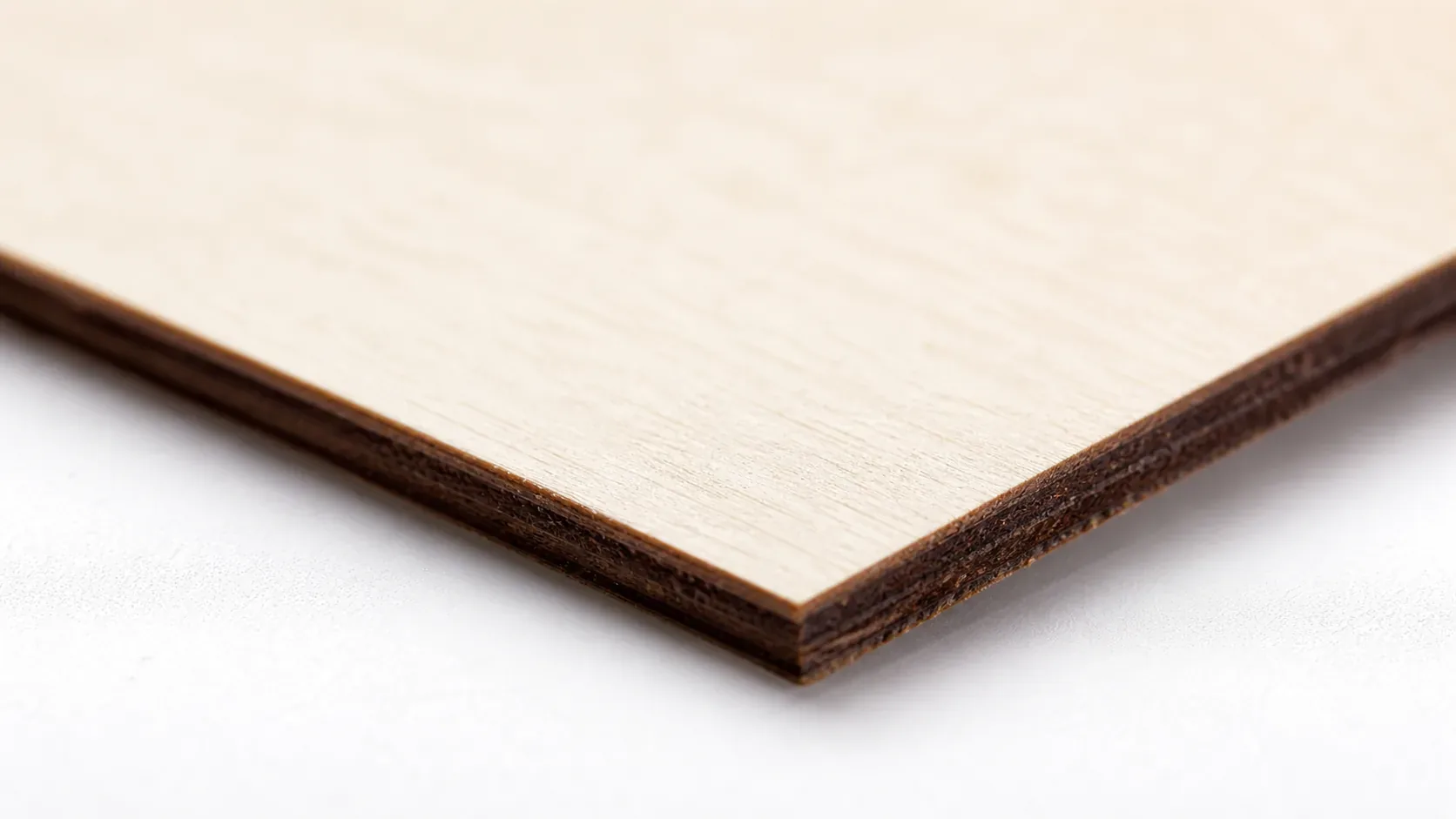
Yes, but only as a reported quality effect, not a measured one. LightBurn Forum and xTool forum users describe wider-looking, more-burned kerfs and weaker fine features at high power on thin stock – no one in this research ran an instrumented kerf-width test, so there’s no precise before/after figure to point to here.
The mechanism makes sense even without hard numbers: high power on 3mm basswood widens the heat-affected zone around the cut line. On a large shape, that extra char eats into wood you weren’t keeping anyway. On a thin tab, a small letter, or filigree, that same heat-affected zone can consume most of the feature. Delicate geometry is where “more power isn’t better” shows up first.
I ran a design with small tabs at high power and the outer cut looked totally fine – clean edge, no visible problem. The tabs told a different story: visibly browner, more brittle, weaker than the rest of the piece. Same laser, same pass, two different outcomes depending on feature size. If you’re cutting fine detail work, this is exactly the kind of thing our basswood laser cutting settings guide walks through in more depth.
Common Mistakes Running a 30-40W Diode on Thin Basswood
Most charring and overburn problems on high-power diodes come down to one of these four habits:
- Treating wattage as a speed shortcut: A 40W rating doesn’t mean you can run faster than a 20W machine on 3mm stock – speed and power have to be dialed in together, not power alone.
- Adding power instead of speed: If a cut isn’t going through cleanly, the instinct is to crank power up. Slow down first – extra power on thin material usually just means more char, not more penetration.
- Stacking passes at high power: Running a second or third pass at the same high power compounds burn damage fast on 3mm stock. Fewer passes with adjusted speed beats repeated exposure almost every time.
- Ignoring air assist: A LightBurn Forum thread on this exact problem ties poor airflow under the material directly to worse charring – smoke lingering in the kerf re-burns the edge as the beam passes back over it. See our guide on how to prevent charring when laser cutting for more on airflow setup.
Where to Buy Basswood for High-Power Diode Lasers
Crafteker 3mm basswood sheets are void-free and consistent sheet to sheet, which matters more on a hot-running 30-40W diode. When the wood itself isn’t an extra variable, you can trust that a setting dialed in on scrap will hold across the whole batch. Available as a 3-pack ($12.99), 5-pack ($15.97), or 12-pack ($24.99, $2.08/sheet – best value for regular cutting).
Ready to cut? Get the wood that works with these settings:
→ Buy Crafteker 12-Pack Basswood Sheets on Amazon – $24.99
Also available: 5-pack ($15.97) · 3-pack ($12.99)
Frequently Asked Questions
Can too much laser power ruin a cut in 3mm basswood?
Yes, it can. On stock this thin, extra power that isn’t offset by higher speed and fewer passes just piles up heat instead of cutting faster – you get charring and a wider heat-affected zone, not a better result.
What settings should I use on a 40W diode for 3mm basswood?
Two community-reported starting points: xTool S1 40W at 15mm/s, 100% power, 1 pass, and xTool D1 Pro 40W at 10mm/s, 100% power, 1 pass. These are starting points, not universal values – test on scrap first, then fine-tune with the laser settings calculator.
Why are my laser-cut edges charring on a high-power diode?
Usually too much power or too many passes for the material’s thickness. LightBurn Forum users consistently land on the same fix: raise speed or drop power first, and check air assist and airflow under the material before you touch the power dial again.
Does a wider kerf happen at higher laser power?
Reported, yes – measured, no. Makers describe wider-looking, more-burned kerfs at high power on thin stock, but that’s a quality effect from overexposure that people notice, not something anyone’s put a number on. No precise kerf-width figure exists for this.
Where can I buy basswood sheets for laser cutting?
Crafteker sells 3mm basswood on Amazon: 3-pack at $12.99, 5-pack at $15.97, and a 12-pack at $24.99 ($2.08/sheet, the best per-sheet value).
About the author: Mike Dolan is a laser maker and wood materials specialist with 8+ years cutting basswood, birch, and MDF on diode and CO₂ machines. He tests every Crafteker basswood batch before listing.
Had the same charring problem on my 40W diode until I dropped power to about 85% and bumped speed up instead of adding a second pass – edges went from black and crispy to a clean light tan on this Crafteker 3mm basswood. Wish someone had told me sooner that more watts just means faster burning, not faster cutting.