
Safe Wood to Laser Cut: What NOT to Cut in 2026
Pressure-treated lumber, MDF, and pallet wood release toxic fumes when laser cut – formaldehyde, pesticides, and heavy metals that can damage your lungs, your machine, and your warranty. This guide shows you exactly which materials to avoid, why they’re dangerous, and which woods (like untreated basswood) cut clean and safe every time.
By Mike Dolan ·
Quick Answer: Safe wood to laser cut means avoiding MDF (formaldehyde fumes), pallets (pesticide residue), and treated lumber (chemical off-gas). Stick to untreated hardwoods and quality plywood like basswood – void-free, low resin, minimal char.
| Material | Engraving Contrast | Cut Ease | Smoke / Odor | Cost | Beginner Score |
|---|---|---|---|---|---|
| Basswood (3 mm) | ★★★★★ | Excellent – 1 pass | Low | $ | ★★★★★ |
| Baltic Birch Plywood | ★★★★ | Good – 2-3 passes | Medium | $$ | ★★★★ |
| MDF | ★★★ | Good – 1-2 passes | High (formaldehyde) | $ | ★★ |
| Pine / Soft Plywood | ★★★ | Poor – resin deposits | Medium-High | $ | ★★ |
The Materials You Should Never Laser Cut – and Why
Not all wood is laser wood. Some materials look fine on a workbench and turn genuinely dangerous the moment a beam hits them. The fumes aren’t just unpleasant – they’re the kind that damage lung tissue, corrode machine optics, and in a few cases can void your warranty faster than a bad Amazon review.
I ruined 3 sheets before I figured out 90% power was too hot – but that lesson cost me wood and time. Cutting the wrong material entirely can cost you your health. Here’s what to keep off your laser bed, full stop.
According to the USDA Forest Products Laboratory, wood chemistry varies enormously by species and treatment – and the difference between a natural hardwood and a chemically treated board isn’t always visible to the eye. That’s exactly why knowing your material matters before you hit start.
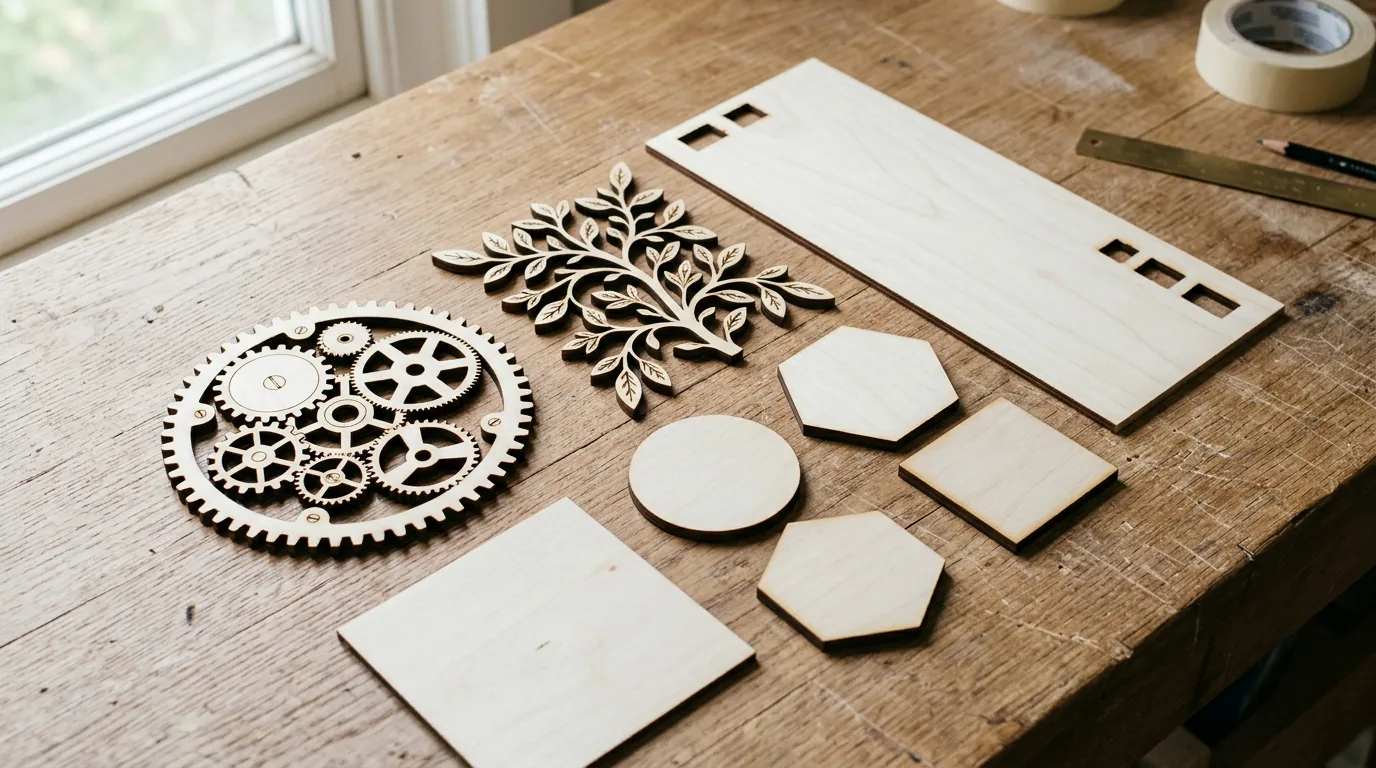
Basswood sidesteps all of this cleanly. It’s a low-resin domestic hardwood with consistent density and no chemical treatments – which is why you’ll find it in the best basswood sheets for laser cutting roundups again and again. If you want to dial in your power and speed without second-guessing your material, check the full basswood laser cutting settings guide next.
- Low resin – protects your lens and keeps your enclosure or open-frame bed clean; no sticky residue building up on optics over time
- Consistent density – the same settings work batch after batch without retuning
- Minimal char – produces clean cut edges with air assist enabled
- Light, workable surface – easy to sand, paint, or stain after cutting
- No toxic fumes – unlike MDF or treated plywood, safe for indoor use with basic ventilation
How to Spot Treated, Painted, and Contaminated Wood Before You Cut
All settings below are for Crafteker 3mm basswood sheets (12×12 inch, laser-grade). Use the Laser Settings Calculator to fine-tune for your specific unit if results differ.
| Machine | Cut Speed | Cut Power | Passes | Engrave Speed | Engrave Power | Air Assist |
|---|---|---|---|---|---|---|
| 5W Diode | 3-5 mm/s | 100% | 2-3 | 60-80 mm/s | 35-40% | Recommended |
| 10W Diode | 6-8 mm/s | 100% | 1-2 | 80-150 mm/s | 40-50% | Recommended |
| 20W Diode | 8-12 mm/s | 100% | 1-2 | 150-300 mm/s | 40-60% | Recommended |
| 40W Diode | 10-15 mm/s | 100% | 1-2 | 200-400 mm/s | 45-65% | Recommended |
| 40W CO2 | 20-35 mm/s | 65-75% | 1 | 200-400 mm/s | 45-65% | Required |
| 60W CO2 | 30-50 mm/s | 60-70% | 1 | 200-400 mm/s | 45-65% | Required |
Note: Air assist is strongly recommended for diode lasers to protect the open-frame lens from smoke and resin buildup, and required for CO2 machines to manage smoke inside the enclosure and keep the cut kerf clear. Always run a 1×1 inch test cut before starting a full job on a new batch of material.
The Crafteker 12-pack basswood sheets are purpose-built for diode and CO2 lasers alike – 12×12 inch, 3mm, laser-grade, void-free. $24.99 for 12 sheets ($2.08/sheet).
How to Identify Unsafe Wood Before It Goes Under the Laser
You can catch most dangerous wood before it ever touches the honeycomb – if you know what to look for. A quick 60-second check beats spending the next 10 minutes evacuating your workspace.
Light brown edges after a cut are normal. Jet-black and flaky isn’t – here’s why: that char usually means the wood had a coating, treatment, or resin that your settings didn’t account for.
- Check for a green, brown, or orange tint. Pressure-treated lumber often carries a greenish cast from copper-based preservatives. That color isn’t stain – it’s chemical. Don’t cut it, full stop.
- Flip pallets over and read the stamp. Look for IPPC markings near the corner blocks: “MB” means methyl bromide fumigation (never cut), “HT” means heat-treated (safer, but check for spill residue and paint anyway), “KD” means kiln-dried. No stamp at all means no history – treat it as unsafe.
- Do a smell test before you cut, not during. Untreated basswood and hardwoods have little to no odor at room temperature. A chemical, sweet, or solvent-like smell straight off the sheet is a hard no – it will only get stronger under the beam.
- Run a small test cut and check the edge color. Pale cream to warm brown means you’re clear. Jet-black, flaky, or oddly colored (green, blue-grey) char means stop immediately and don’t finish the job on that sheet.
How Does Basswood Compare to Other ‘Safe’ Woods for Laser Cutting?
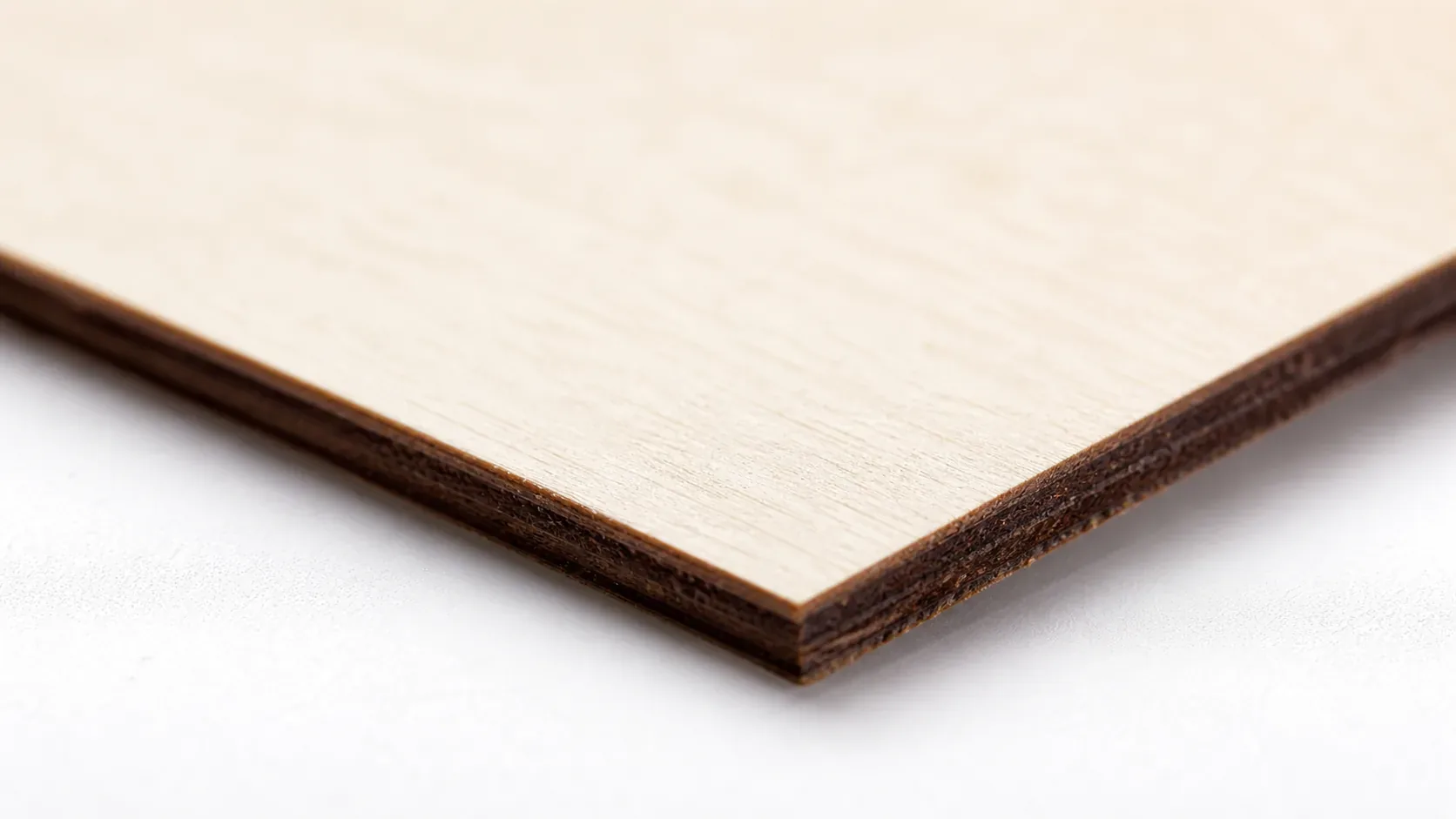
Basswood wins on three fronts: low resin, predictable char, and consistent grain. Baltic birch is popular but has more resin and can surprise you with darker edges. Cherry looks beautiful but costs significantly more and char shows up fast if your power is even slightly high.
First time I cut Baltic birch at full power – edges looked almost burned. Basswood at the same settings? Clean ivory edges. Now I know the difference. For beginners running test cuts and production sellers burning through sheets, basswood removes one more variable from the equation.
| Wood | Resin Content | Char Tendency | Cost Per Sheet | Availability |
|---|---|---|---|---|
| Basswood | Very low | Minimal, pale brown | ~$2.08 | Wide, laser-grade options |
| Baltic Birch | Moderate | Moderate, darker edges | ~$3.50-$5.00 | Wide, quality varies |
| Cherry | Low-moderate | High if overpowered | ~$6.00+ | Limited, specialty only |
If your edges look like toasted marshmallows with Baltic birch, you’re not doing it wrong – the wood just demands tighter settings. Basswood forgives a little more. For Etsy sellers running batch jobs, that forgiveness saves sheets and headaches. Check our basswood laser cutting settings guide for dialed-in numbers across wattages.
Ventilation and Fume Extraction: Non-Negotiable When Laser Cutting Wood
Light brown edges are normal. Jet-black and flaky isn’t – here’s why. Black, crumbling edges or a chemical smell in the room means your ventilation is failing, your wood is treated, or both. Either way, stop cutting and fix it before your next run.
Most fume and char problems trace back to these four issues:
- No carbon filtration: An exhaust fan alone moves smoke but doesn’t neutralize toxic compounds. If you’re cutting indoors, you need a carbon filter rated for your machine’s output – budget $150-$300 for a unit that actually works, not a repurposed box fan.
- Insufficient CFM: Desktop diode lasers need a minimum of 200-400 CFM exhaust to clear smoke between passes. Underpowered setups let char re-deposit in the kerf, which blocks the beam and forces extra passes – and more fumes.
- Cutting treated or contaminated wood: No ventilation system fully handles copper chromium arsenate or methyl bromide off-gas. If your wood has any chemical smell before the cut, that smell gets dramatically worse during it. Ask me how I know – I tried to get away without checking a “scrap birch” board once. The room cleared in under 30 seconds and I had a headache for hours. Lesson: always know your source.
- Inconsistent material: Craft-store plywood with glue pockets forces the laser to work harder through dense spots, creating localized char and uneven fume bursts. Laser-grade basswood with consistent density means predictable, low-fume cuts. See how to prevent charring when laser cutting for the full breakdown.
Where to Buy Laser-Safe Basswood Sheets
Crafteker 3mm basswood sheets are void-free, laser-grade, and cut clean without the fume surprises you get from mystery-source wood. At $24.99 for 12 sheets ($2.08/sheet), the 12-pack is the best value for anyone running regular production cuts or working through settings.
All sheets are 12×12 inch, pre-sanded, and ship FBA – so quality is consistent batch to batch. No hidden voids mid-cut, no re-tuning every order. That consistency is worth more than the few cents you’d save hunting for cheaper alternatives.
Ready to cut? Get the wood that works with these settings:
→ Buy Crafteker 12-Pack Basswood Sheets on Amazon – $24.99
Clip the 7% coupon on the listing page – buy 2 packs and save 20% automatically.
Also available: 5-pack ($15.97) · 3-pack ($12.99)
Frequently Asked Questions
Is MDF safe to laser cut?
No. MDF uses formaldehyde-based resins that emit formaldehyde gas when vaporized by the laser. Strong ventilation may reduce fume concentration, but many makers avoid it entirely because the exposure risk and cleanup burden aren’t worth the cost savings. I ruined 3 sheets of nearby work before I figured out the fumes were contaminating everything in the room.
Can you laser cut pallet wood?
Not safely. Pallets stamped “MB” were treated with methyl bromide pesticide. Even unmarked pallets may have spill residue, nails, or unknown cargo contamination. Without full history of the pallet, you can’t know what toxic compounds will off-gas when cut – ask me how I know a “clean-looking” pallet can clear a room in 30 seconds.
What wood should I use instead of treated lumber?
Untreated hardwoods like basswood, cherry, or walnut, and quality plywood like Baltic birch. Laser-grade basswood ($2.08/sheet in 12-packs) cuts clean, void-free, and produces minimal char – no toxic fumes, no surprises. If your edges look like toasted marshmallows, slow down and check your material source first.
How do I know if wood is painted or treated?
Check for visible paint, stain, or coating. Pressure-treated lumber has a green, orange, or brown tint. Pallets have stamps (MB, HT, KD) on the underside. When in doubt, ask the source. If there’s any chemical smell before you even fire the laser, don’t cut it.
Where can I buy basswood sheets for laser cutting?
Crafteker on Amazon: 3-pack $12.99, 5-pack $15.97, 12-pack $24.99 ($2.08/sheet best value). All sheets are 3mm, 12×12 inch, void-free, and laser-grade. Clip the 7% coupon on the listing page for extra savings.
About the author: Mike Dolan is a laser maker and wood materials specialist with 8+ years cutting basswood, birch, and MDF on diode and CO₂ machines. He tests every Crafteker basswood batch before listing.
I made the mistake of cutting some ‘reclaimed’ pallet wood at a maker space last year. Didn’t ask about treatment, just grabbed it. The smell was awful and cleared the whole room in minutes. Since then I’ve switched to Crafteker basswood exclusively – clean edges, no fumes, no regrets. Way cheaper than replacing machine optics.