
30x Weaker: Grain Direction in Laser-Cut Basswood (2026)
Grain direction can make a thin feature roughly 30x weaker across the grain than along it in clear air-dry radiata pine. This guide shows how grain affects strength, edge quality, warping, design orientation, and your choice of basswood sheets. Light brown edges are normal. Jet-black, flaky edges usually mean the material or design needs another look.
By Mike Dolan ·
Quick Answer: grain direction affects laser cutting plywood: keep fragile load paths with the grain because across-grain features can be roughly 30x weaker and more prone to snapping.
| Material | Engraving Contrast | Cut Ease | Smoke / Odor | Cost | Beginner Score |
|---|---|---|---|---|---|
| Basswood (3 mm) | ★★★★★ | Excellent – 1 pass | Low | $ | ★★★★★ |
| Baltic Birch Plywood | ★★★★ | Good – 2-3 passes | Medium | $$ | ★★★★ |
| MDF | ★★★ | Good – 1-2 passes | High (formaldehyde) | $ | ★★ |
| Pine / Soft Plywood | ★★★ | Poor – resin deposits | Medium-High | $ | ★★ |
How Does Grain Direction Affect Laser-Cut Strength?
Grain direction affects laser-cut strength because wood is anisotropic: its strength changes with direction. A narrow feature is strongest when the load runs parallel to the fibers and weakest when the load crosses them. That difference matters most in tabs, prongs, living hinges, and snap-fit parts that concentrate force in a small area.
As a general wood-science reference, not Crafteker basswood lab testing, clear air-dry radiata pine has tensile strength around 90.0 MPa parallel to the grain and only about 2.82 MPa perpendicular to it. That is roughly 30x weaker across the grain. See USDA Forest Products Laboratory data for the underlying reference material.
I ruined a batch of thin snap-fit prongs because I oriented the load across the grain. The parts looked fine on the sheet, then snapped during assembly. The fix was simple: rotate the design so the force follows the visible grain. A quick scrap test can save a full sheet and a thoroughly unpleasant cleanup session.
The same design can also show a cleaner edge with the grain. Industry sources report cutting with the grain roughly 10-20% faster than across it, while across-grain paths carry more risk of chipping and splintering. For plywood, start with the visible face veneer: the core plies are cross-laminated, but the face grain still guides practical design orientation. See our guide to the best basswood sheets for laser cutting.
Why Basswood?
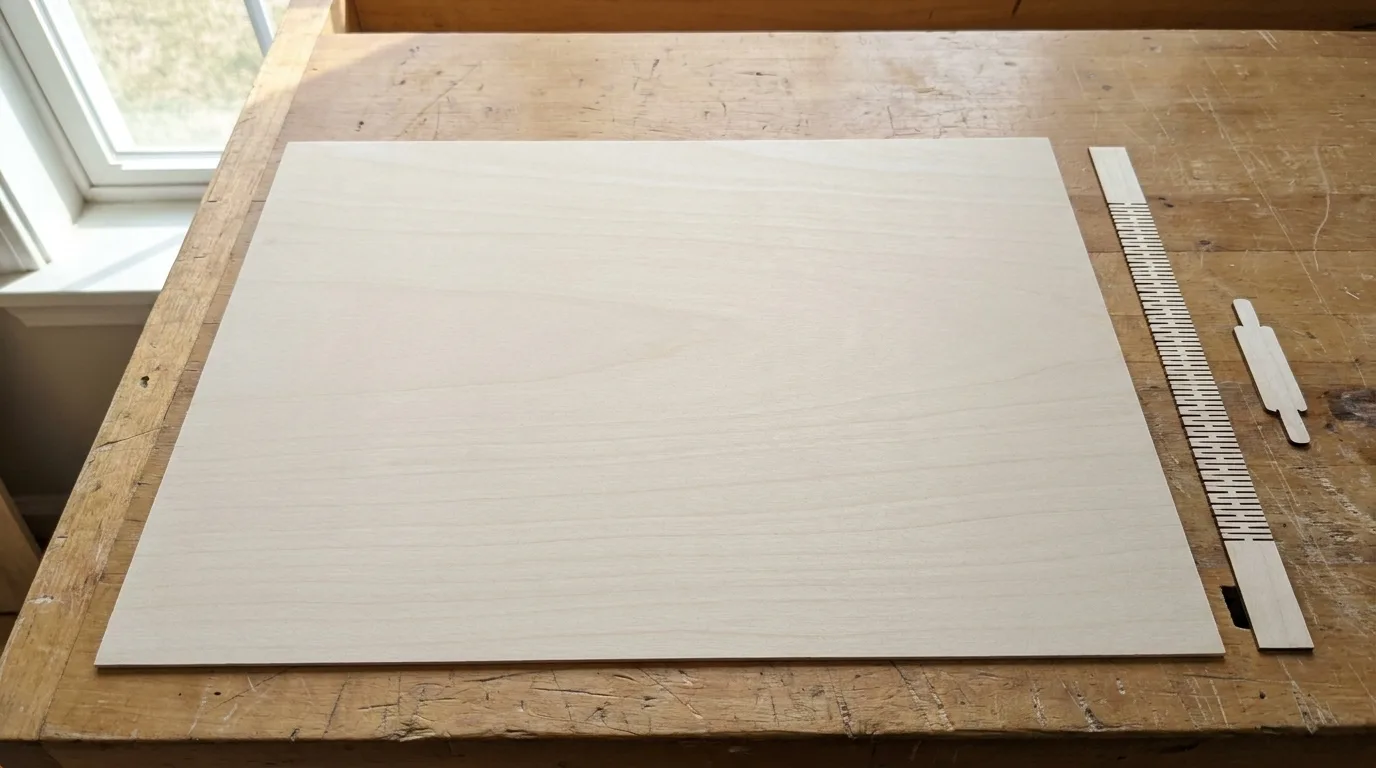
Basswood is a forgiving material for grain-aware design because its pale surface makes the grain easy to read before nesting. Consistent stock also makes results easier to compare; still, inspect every sheet because grain can run slightly differently from one sheet to the next.
- Low resin – a basswood material trait that helps keep grain-related edge behavior easier to read.
- Consistent density – gives you a more predictable material, but density alone does not indicate grain orientation.
- Minimal internal voids – a quality signal from a good supplier, separate from grain direction and fiber strength.
- Light, workable surface – practical for sanding, painting, staining, and handling after cutting.
- Readable, consistent face grain – makes it easier to spot orientation before nesting, but check each sheet every time.
With the Grain vs Across the Grain: What Changes
Grain direction changes edge quality and can affect cutting speed: features aligned with the grain usually cut more cleanly, while features crossing it face more chipping and splintering. That difference matters most on narrow tabs, hinges, prongs, and other parts that have very little wood holding them together.
| Direction | Edge Quality | Cut Speed |
|---|---|---|
| With the grain | Smoother edge, less tear-out | Roughly 10-20% faster per industry sources |
| Across the grain | More chipping/splintering risk | Slower, rougher cut |
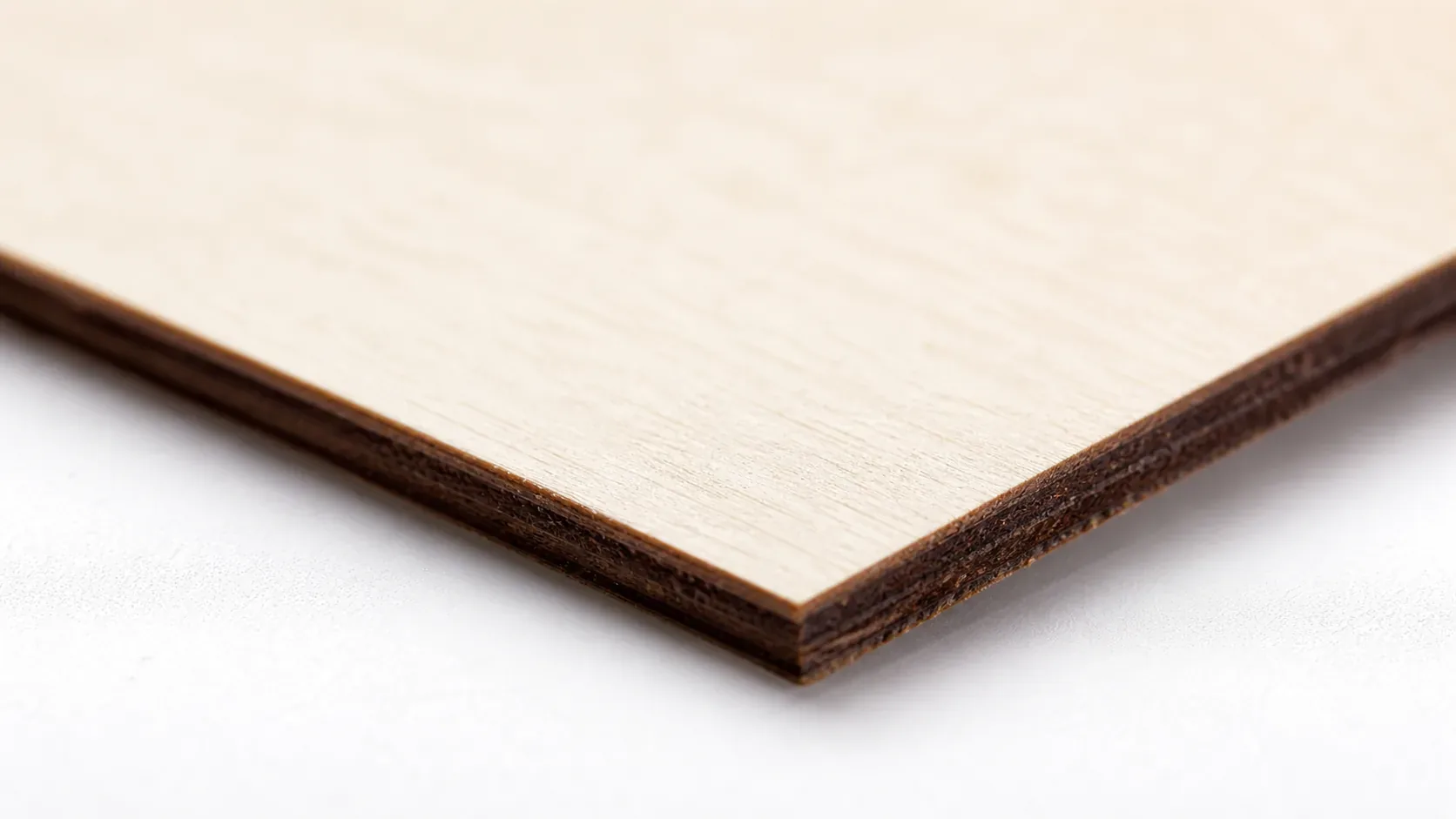
For plywood, start by checking the visible face veneer. Its grain usually guides the main orientation decision because the core plies underneath are cross-laminated at 90 degrees to the face. That layered construction helps the sheet behave better than solid wood, but the surface grain still tells you how delicate features will respond.
We tested the same design in both orientations, and the with-grain pass left a visibly cleaner edge with less tear-out. The across-grain version was still usable, but its narrow details needed more cleanup. If your edges look like toasted marshmallows, orientation may be part of the problem – not just your laser settings.
For material with a dependable face and fewer surprises, see our best basswood sheets for laser cutting. Consistent grain makes it much easier to rotate a design intelligently instead of guessing from one corner of the sheet.
Why Plywood Warps Less Than Solid Wood (But Still Warps)
Plywood warps less than solid wood because its plies are cross-laminated at 90 degrees, balancing movement between layers. Solid wood moves much more across the grain than along it as moisture changes, and that uneven movement is what drives many humidity-related bends, cups, and curls.
That stability has limits. A large, thin plywood panel can still curl when exposed to changing humidity, especially if one face gains or loses moisture faster than the other. I left a large thin plywood panel in a room after a humidity swing and found it curled the next day. Plywood is stable does not mean plywood never moves.
Give sheets time to settle in the room where you will cut and assemble them. Keep them flat, supported, and away from damp floors, radiators, and sunny windows. Our guide to storing and acclimating basswood sheets covers the practical setup. Flat stock starts with fewer headaches than a sheet already trying to become a bowl.
Before a large panel job, inspect both faces and the edges for a developing curl. For small parts, warping may barely matter; for wide panels, it can change focus across the surface and alter how cleanly the laser meets the wood. A flat work surface and gentle hold-down help keep the sheet behaving while you cut.
How Should I Orient My Design on the Sheet?
Orient narrow or fragile features so their load runs with the grain, not across it. That includes living hinges, snap-fit tabs, and thin prongs. Wood carries stress more comfortably along its grain, while a cross-grain feature can split or snap even when the design looks perfectly fine on the sheet.
For large flat panels and simple shapes, grain direction matters much less than it does for delicate structural details. Before committing a full sheet, make a quick test cut on scrap whenever the design includes thin load-bearing parts. I rotated a fragile tab 90 degrees on the sheet, and the reoriented version survived handling that had snapped the first version.
Common Mistakes with Grain Orientation
Most grain-related failures come from orienting the fragile details first and checking the wood grain later. A little planning saves a surprising amount of sanding, redesigning, and staring at a broken tab.
- Nesting delicate features blindly: Ignoring grain direction while arranging narrow tabs, prongs, or hinges can put the entire load across the weakest direction. Rotate the design or rearrange the sheet before cutting.
- Assuming plywood removes grain effects: Cross-laminated plies make plywood more stable than solid wood, but they do not make fragile features immune to splitting, chipping, or breakage.
- Skipping the face-grain check: Look at the visible face veneer before cutting a living hinge or snap-fit joint. If you miss it, even otherwise sound geometry may fail during assembly.
- Overthinking simple panels: Grain orientation matters far less for large, simple flat panels than for thin structural features. Spend your attention on hinges and tabs first, then use these ways to prevent charring when laser cutting for edge cleanup. I once spent an evening cleaning chipped hinge edges before noticing the file had been nested across the visible grain.
Where to Buy Consistent-Grain Basswood Sheets
Crafteker 3mm basswood sheets are void-free, laser-grade, and made with consistent, predictable grain, so orienting hinges and snap-fit parts is easier. The 12×12 inch sheets come in a 3-pack for $12.99, a 5-pack for $15.97, or a 12-pack for $24.99 ($2.08/sheet). The 12-pack is the best value for repeat work and ships FBA.
I once sorted a mixed stack before a detailed project, wasted a sheet on a hidden void, and muttered things that would not improve the layout. Consistent void-free stock made the next project much easier: the grain was clearer, the nesting was quicker, and I could spend my attention on the design instead of detective work.
Ready to cut? Get the wood that works with these settings:
→ Buy Crafteker 12-Pack Basswood Sheets on Amazon – $24.99
Clip the 7% coupon on the listing page – buy 2 packs and save 20% automatically.
Also available: 5-pack ($15.97) · 3-pack ($12.99)
Frequently Asked Questions
Does grain direction affect laser-cut strength?
Yes. Wood is anisotropic, so a narrow feature with its load running with the grain is much stronger than one carrying the same load across the grain. A clear air-dry radiata pine reference shows around 90.0 MPa tensile strength parallel to the grain versus about 2.82 MPa perpendicular.
Why is plywood more stable than solid wood?
Plywood uses plies cross-laminated at 90 degrees, which balances moisture-related movement between layers. It still can warp during humidity swings, especially in large thin panels.
Which way should I orient a living hinge or snap-fit tab relative to grain?
Orient the load path with the grain, not across it, for narrow or fragile features. Check the visible face-veneer grain before nesting the design.
Does grain direction affect laser cutting speed?
Yes. Cutting with the grain can run roughly 10-20% faster with a cleaner edge than cutting across the grain, based on industry and practitioner sources.
Where can I buy basswood sheets for laser cutting?
Crafteker is available on Amazon in a 3-pack at $12.99, a 5-pack at $15.97, and a 12-pack at $24.99, the best value at $2.08 per sheet. Clip the 7% coupon on the listing page.
About the author: Mike Dolan is a laser maker and wood materials specialist with 8+ years cutting basswood, birch, and MDF on diode and CO₂ machines. He tests every Crafteker basswood batch before listing.
I rotated my living hinge design so the load ran with the grain, and the parts stopped snapping during assembly. Crafteker basswood had a consistent face grain, which made the reorientation easy to spot.