
How to Store Basswood Sheets at 35-55% RH (2026)
Store basswood flat at 35-55% RH and let new sheets rest for at least 24-48 hours before laser cutting. You’ll get practical storage habits, a no-fuss acclimation routine, and the warning signs that tell you to wait.
By Mike Dolan ·
Quick Answer: How to store and acclimate basswood plywood sheets before laser cutting: keep them flat at 35-55% RH and acclimate them for at least 24-48 hours.
| Material | Engraving Contrast | Cut Ease | Smoke / Odor | Cost | Beginner Score |
|---|---|---|---|---|---|
| Basswood (3 mm) | ★★★★★ | Excellent – 1 pass | Low | $ | ★★★★★ |
| Baltic Birch Plywood | ★★★★ | Good – 2-3 passes | Medium | $$ | ★★★★ |
| MDF | ★★★ | Good – 1-2 passes | High (formaldehyde) | $ | ★★ |
| Pine / Soft Plywood | ★★★ | Poor – resin deposits | Medium-High | $ | ★★ |
Why Humidity Control Matters for Basswood Plywood
Humidity control matters because basswood is hygroscopic: it absorbs moisture from surrounding air and releases it as conditions change. Thin 3mm sheets react much faster than thick lumber because they have less mass to buffer each swing. Keeping the stack flat at 35-55% RH helps limit bowing, cupping, shifting focus height, and rougher laser-cut edges.
According to USDA Forest Products Laboratory data, wood density and moisture behavior are closely connected; basswood’s light, even structure makes those changes easy to see in a thin sheet. I left a sheet leaning against a cold garage wall overnight in winter – by morning it had a visible bow and wouldn’t sit flat on the bed no matter how I clamped it.
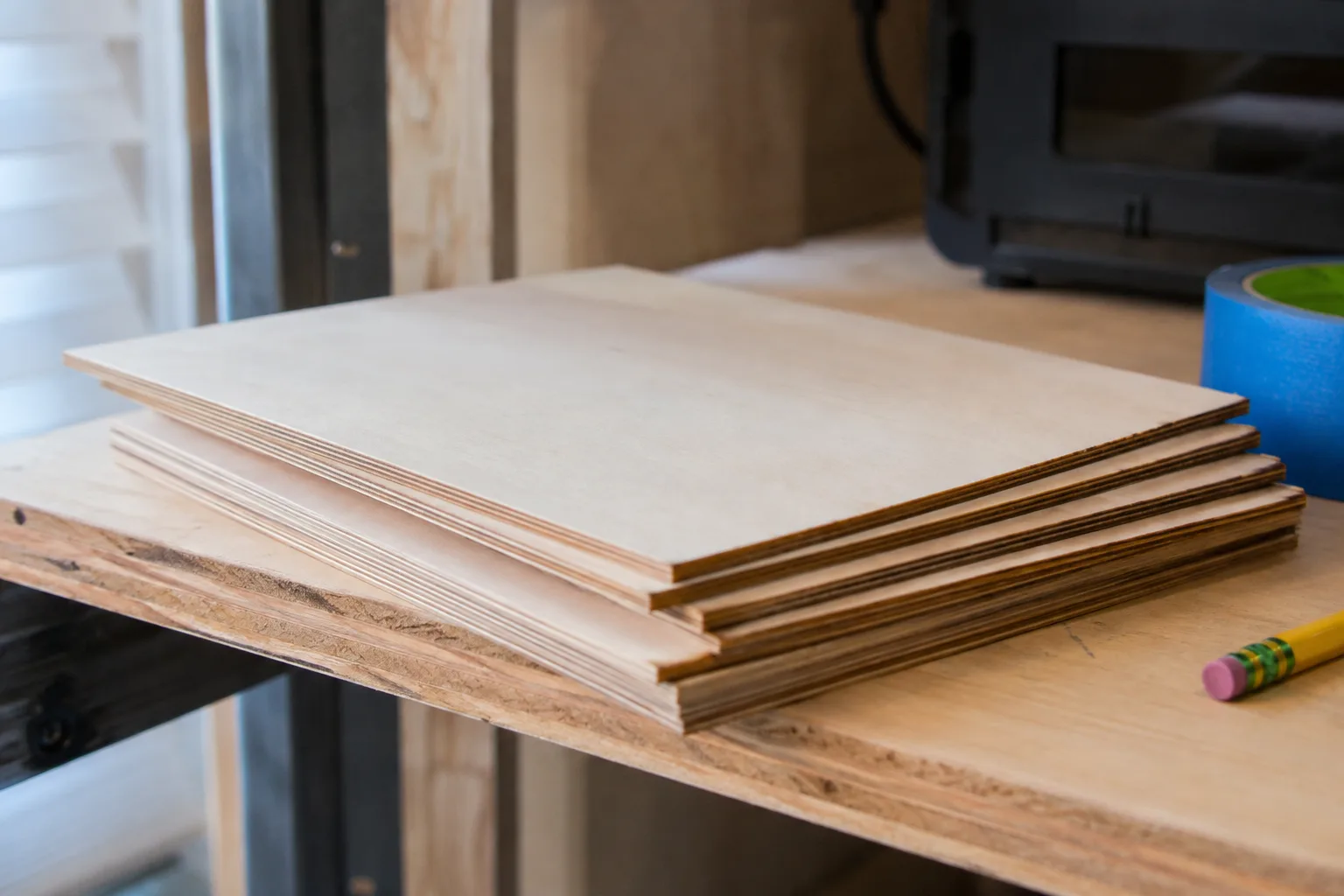
A stable sheet starts with stable storage. Aim for 6-8% MC for indoor work, stack sheets horizontally on a level surface, and keep them away from sun, heaters, and damp floors. A light, flat weight on top can help, while a sealed bag or bin with a silica packet is useful in very humid conditions. These are general woodworking and flooring-industry guidelines, not Crafteker lab-tested figures.
Once storage is handled, your basswood laser cutting settings have a fair chance to behave consistently. For projects that need a dependable starting material, compare the best basswood sheets for laser cutting and avoid asking a warped sheet to perform miracles.
- Low resin – fewer resin pockets that swell unevenly with moisture
- Consistent density – the whole sheet gains or loses moisture at the same rate, so it stays flatter than mixed-density plywood
- Minimal internal voids – fewer air pockets for moisture to collect in
- Light, workable surface – easy to sight down for warping before you commit to cutting
- No toxic fumes – safe to acclimate indoors near your workspace without ventilation concerns
Ideal Storage Conditions for Basswood Plywood Sheets
A little seasonal movement is normal; a sheet that looks like a shallow potato chip needs a better home. Store basswood flat at 35-55% RH, with a general 6-8% MC target for stable indoor cutting. Keep the stack away from spots that dry or dampen one face faster than the other.
| Factor | Target Range | Why It Matters |
|---|---|---|
| Relative Humidity | 35-55% RH | Limits swelling and shrinkage that cause warping or cupping |
| Moisture Content | 6-8% MC | General target for stable indoor cutting with clean edges |
| Storage Position | Flat, stacked horizontally | Thin 3mm sheets bow under their own weight stored on edge |
| Keep Away From | Direct sun, heat vents, damp basement floors | Prevents uneven local drying or moisture pickup |
These ranges are general woodworking and flooring-industry storage guidance, not Crafteker’s own lab-tested numbers – they’re a solid starting point, not a lab spec. Humid air swells wood and stresses glue lines; overly dry air shrinks it and can leave thin veneer faces brittle. A light weight keeps a flat stack calm; in very humid climates, a sealed bag or bin with a silica packet helps.
Crafteker’s basswood ships flat-packed and void-free, so it can settle into your shop instead of fighting shipping warp. I once parked a stack beside a heat vent, and the top sheet curled before lunch. Browse the Crafteker basswood sheets for laser-grade stock made to start flat.
How to Acclimate a New Sheet Before Cutting: Step-by-Step
Acclimate a new sheet in the same room as your laser, flat on a level surface, until it matches your workshop conditions. This simple pause prevents a cold, damp, or bowed sheet from turning a clean design into a sanding chore before you commit a full job.
- Unbox and unwrap in the cutting room. Open the package where you will use the laser, not in a garage or shed if your laser lives indoors. I cut straight out of a just-delivered box in January once – the wood was cold and slightly damp from the truck, and the edges came out grey and fuzzy instead of clean brown until I let the next sheet sit out for a day first.
- Lay every sheet flat. Put sheets on a level table or shelf, never upright against a wall. Edge storage invites thin plywood to sag, twist, or take on a stubborn bow.
- Let the wood rest. Leave it for at least 24-48 hours at 40-60% RH and 68-74°F. Give it longer if it arrived from a very different season or climate, or if you are acclimating a full stack.
- Check the edge for movement. While the sheet rests on a flat surface, sight down its edge. Any bowing or cupping is easier to spot here than after the laser head starts chasing an uneven focus height.
- Make a small test cut. Use a scrap corner and watch the edge. Unusually dark, fuzzy cuts or extra steam can mean the sheet still holds extra moisture; compare your result with the basswood laser cutting settings after the sheet has settled.
- Cut the full sheet only after the test looks right. Once the sheet lies flat and the test edge is clean, light-to-medium honey-brown, you are ready. If it still looks off, give it more time rather than forcing the job through.
How Does Moisture Content Affect Laser Cut Quality?
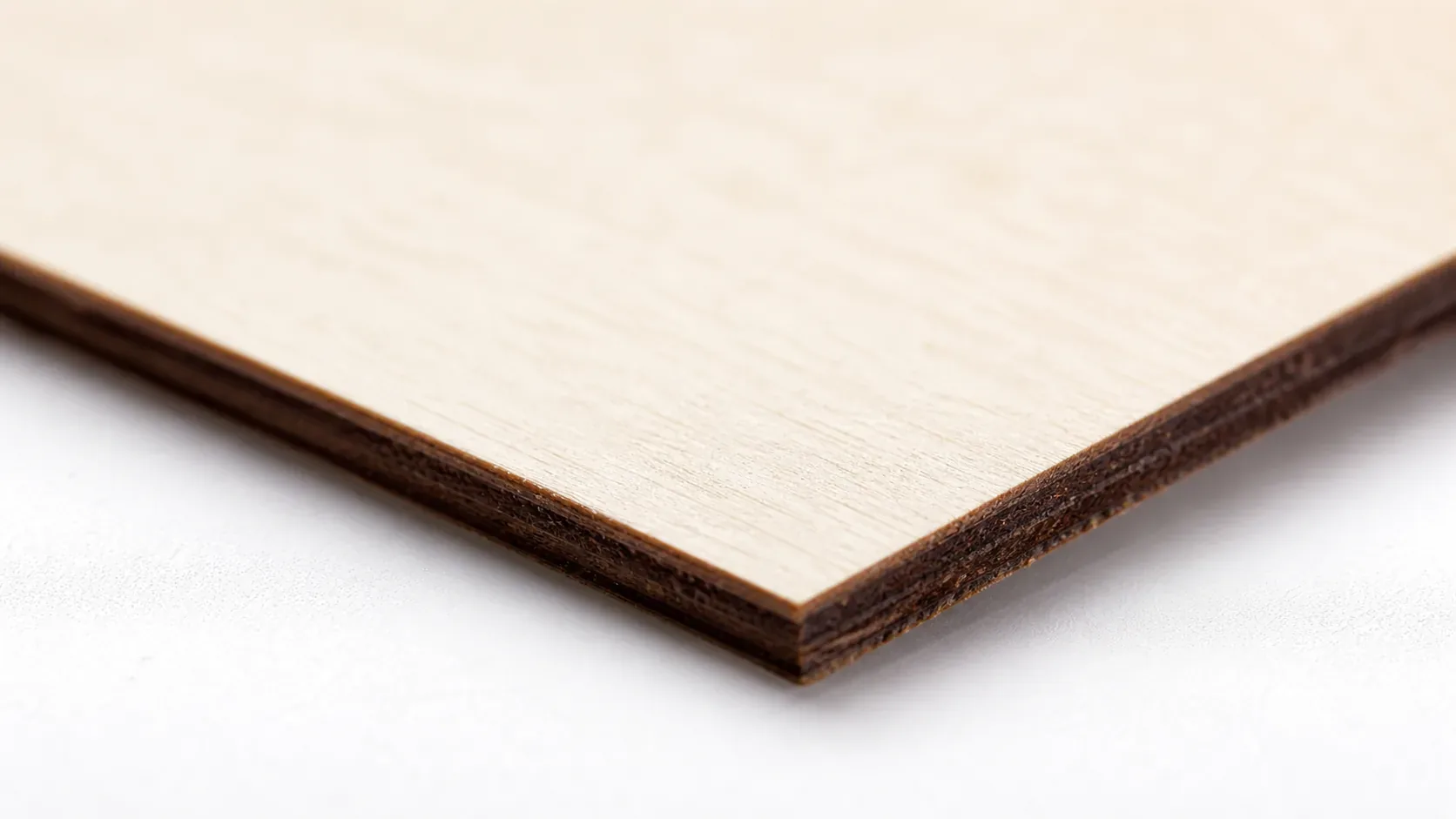
Moisture content directly affects edge quality: wood above the general 6-8% MC target can steam, char more, and leave rough edges because the laser must drive off water before it can cut wood. Overly dry basswood has the opposite problem – thin face veneer can turn brittle and chip at delicate details.
Keep sheets acclimated within 35-55% RH for the consistent honey-brown edge you want. I compared a damp offcut with one that had rested flat in the shop, and the damp piece left a grey fuzzy edge that needed sanding. Once the sheet is settled, use our laser settings calculator for machine-specific power and speed.
Warning Signs Your Basswood Sheet Isn’t Ready to Cut
Light brown edges are normal; grey fuzz and visible steam are your cue to pause. A sheet that has not settled into your workshop can waste material, dirty the kerf, and turn a clean project into a sanding project.
- Visible cupping or bowing: Rest the sheet on a flat surface and sight along its edge. Any visible curve can shift the laser’s focus across the work area.
- It will not lie flat: If the sheet lifts under its own weight or flexes differently from dry sheets already in the shop, let it rest flat longer with light weight on top.
- It feels cool or damp: Compare it with sheets that have been resting in the cutting room. A cool, damp-feeling panel likely still holds extra moisture.
- The test edge looks wrong: Extra smoke, visible steam, or fuzzy grey-ish edges instead of clean honey-brown edges mean the sheet needs more time before the full job.
I ignored a sheet that felt cool and wavy because the job was due that afternoon, then spent longer sanding the edges than I would have spent waiting. If the warning signs show up, pause now; your next sheet will thank you.
Where to Buy Basswood for Laser Cutting
Crafteker 3mm basswood sheets give you a clean starting point: laser-grade, void-free 12×12 inch sheets ship flat-packed rather than rolled or bent, so acclimation begins with flat material instead of a shipping warp rescue. They ship through Amazon FBA, and the 12-pack at $24.99 ($2.08/sheet) is the most cost-effective option.
I once tried to flatten a shipping-bent sheet under a pile of books, and it still fought the laser bed after sitting in the shop. Start with flat-packed sheets, store them flat, and you can spend your time making instead of wrestling plywood.
Ready to cut? Get the wood that works with these settings:
→ Buy Crafteker 12-Pack Basswood Sheets on Amazon – $24.99
Clip the 7% coupon on the listing page – buy 2 packs and save 20% automatically.
Also available: 5-pack ($15.97) · 3-pack ($12.99)
Frequently Asked Questions
What humidity should I store basswood plywood at?
Store basswood plywood at 35-55% RH, the widely recommended range for limiting warping caused by swelling or shrinkage.
How long should I acclimate basswood plywood before laser cutting?
Let it acclimate for at least 24-48 hours at 40-60% RH and 68-74°F, then allow up to several days if it arrived from a very different climate or you are resting a full stack.
What moisture content is best for laser cutting basswood?
Around 6-8% MC is the general target for stable indoor basswood cutting and clean, consistent edges.
Can I laser cut basswood straight out of the shipping box?
Not ideal – let the sheet rest flat in the room where you will cut it first, because cold or damp wood often leaves darker, fuzzier edges.
Where can I buy basswood sheets for laser cutting?
Buy Crafteker basswood on Amazon: 3-pack $12.99, 5-pack $15.97, or 12-pack $24.99 at $2.08/sheet. Clip the 7% coupon on the listing page.
About the author: Mike Dolan is a laser maker and wood materials specialist with 8+ years cutting basswood, birch, and MDF on diode and CO₂ machines. He tests every Crafteker basswood batch before listing.
The 35-55% RH and 6-8% MC ranges here are general woodworking and flooring-industry guidance, not Crafteker lab-tested numbers. Our sheets ship flat-packed, so acclimation starts with a flat sheet instead of one that also needs correction for shipping warp.