

Hold Down 3mm Basswood Without Marks: 2026 Methods That Work
Thin 3mm basswood lifting, rattling, or curling on the laser bed is a real problem with several non-marking solutions – magnets on ferrous beds, honeycomb pins in waste areas, low-tack tape, vacuum tables – each with real tradeoffs, and the wrong hold-down like aggressive clips or strong magnets pressed on visible faces can dent or mark a sellable piece just as badly as the warping itself. You’ll get a rundown of each method, where to place it, and honest tradeoffs – not one universal answer.
By Mike Dolan ·
Quick Answer: Non-marking hold-down methods for thin 3mm basswood plywood sheets on a laser bed include magnets (ferrous beds only), honeycomb pins, low-tack tape, and vacuum tables – all work if you hold in waste areas, not visible faces.
| Material | Engraving Contrast | Cut Ease | Smoke / Odor | Cost | Beginner Score |
|---|---|---|---|---|---|
| Basswood (3 mm) | ★★★★★ | Excellent – 1 pass | Low | $ | ★★★★★ |
| Baltic Birch Plywood | ★★★★ | Good – 2-3 passes | Medium | $$ | ★★★★ |
| MDF | ★★★ | Good – 1-2 passes | High (formaldehyde) | $ | ★★ |
| Pine / Soft Plywood | ★★★ | Poor – resin deposits | Medium-High | $ | ★★ |
Thin basswood needs holding down without punishing it
3mm basswood is thin and light enough that heat from the beam, air assist pressure, and any existing warp can cause it to lift, rattle, or curl mid-cut. But it’s also soft enough that a heavy-handed hold-down leaves its own damage – crush marks, dents, adhesive residue – right on a piece you’re trying to sell.
Ask me how I know: I clamped a sheet down hard with a binder clip to stop it rattling during a batch of ornaments. The cut itself was perfect, but the finished piece had a visible dimple exactly where the clip jaw sat, ruining that corner of the design.
The real fix isn’t avoiding hold-downs altogether. It’s choosing a method that applies pressure in the right place – waste areas, scrap borders, or the underside – not on visible finished surfaces. You’ve got several options, and each one works if you place it correctly.
According to USDA Forest Products Laboratory data, basswood ranks among the lowest-density domestic hardwoods at around 26 pounds per cubic foot dry weight. That light weight makes it easy to cut cleanly in one pass, but it also means it doesn’t stay put on its own when heat and airflow get involved.
If you’re working with laser-grade basswood sheets that arrive flat and stay flat, you’ll need less aggressive hold-down force to begin with – which reduces the risk of marking the material in the first place. Flatter stock cooperates better, and lighter hold-downs leave fewer traces.
- Low resin – basswood won’t gum up your lens or leave sticky brown deposits on your bed the way pine and soft plywood do
- Consistent density – the same basswood laser cutting settings work batch after batch without retuning
- Minimal char – produces clean cut edges with air assist enabled, not the charred flaky mess you get from pushing too much power through resinous wood
- Light, workable surface – easy to sand, paint, or stain after cutting without fighting dense grain or filler layers
- No toxic fumes – unlike MDF or treated plywood, safe for indoor use with basic ventilation and no formaldehyde risk
Clips and magnets: convenient but check the crush risk and bed type first
Spring clips and binder clips are fast to place, but their concentrated jaw pressure crushes soft basswood like it’s made of butter. The dimple or dent sits exactly where the jaw gripped, ruining that corner.
If you use clips, pad the jaws with felt or scrap wood, or clamp only in waste areas outside your visible design. Never directly on finished faces.
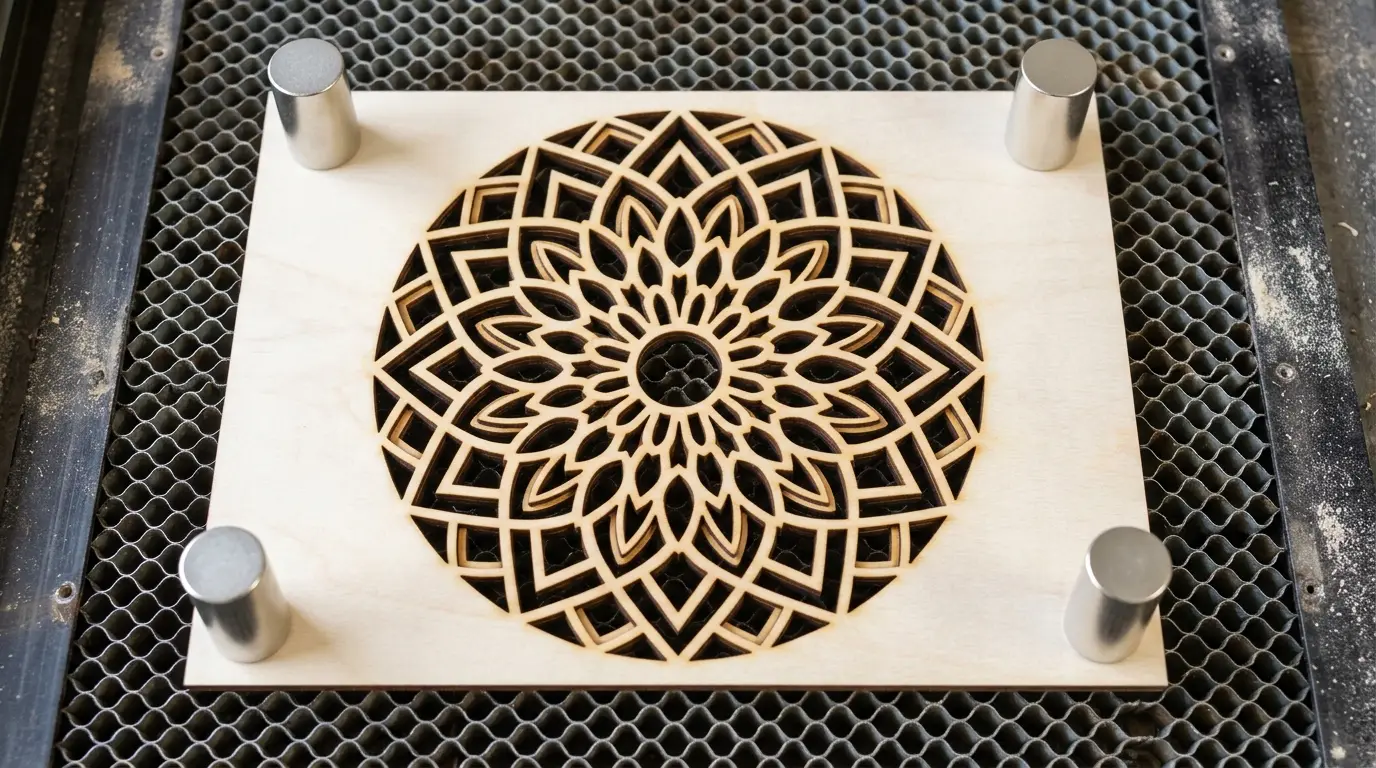
Small rare-earth magnets skip the jaw problem entirely – they hold via distributed magnetic force instead of mechanical pinch. They work great on steel honeycomb beds or ferromagnetic slats, and you can slide them into position without crushing anything.
Ask me how I know: clamped a sheet down hard with a binder clip to stop it rattling mid-cut, and the finished ornament had a visible crescent-shaped dimple exactly where the clip jaw sat. That piece went straight into the scrap bin.
One critical catch with magnets: they provide zero hold on non-ferrous beds like aluminum honeycomb, which many diode lasers ship with. If your bed isn’t magnetic, you’ll need a steel backing plate underneath the honeycomb, or switch to a different hold-down method entirely.
Tape and pins: the gentlest options if you place them right
Painter’s tape or low-tack masking tape run across the sheet edges – half on the material, half on the bed – holds thin basswood flat without leaving residue or crush marks. It also helps control smoke staining along the underside.
Place tape only in scrap areas you’ll cut away, or on the underside where it won’t show. Never across a visible finished surface, because even low-tack tape can leave a faint adhesive shadow under certain finishes.
Pins or brads pushed through a sacrificial spoilboard or directly into honeycomb cells anchor the sheet mechanically. The trick is pushing them through the WASTE parts of your design – the negative space around your shapes – not near the edges of sellable pieces.
I started placing pins exclusively through the negative space of my designs instead of near the edges of visible parts, and stopped getting the small perimeter dents that used to show up on finished coasters and ornaments. That one habit change saved more sheets than switching hold-down methods ever did.
Pins leave tiny holes, but only in the parts you’re throwing away anyway. The finished piece comes out untouched.
This entire conversation is about holding the sheet flat DURING the cut. It’s distinct from preventing warping caused by heat or moisture in general – that’s covered in prevent warping when laser cutting – and from keeping sheets flat in storage before they even hit the bed, which is its own upstream question covered in how to store and acclimate basswood plywood sheets.

Vacuum tables: the no-contact-marks option, if you want the complexity
A vacuum table flattens thin basswood via distributed suction across the entire sheet rather than concentrated clamps or pins, leaving zero surface contact marks. For makers who need pristine faces on every piece, it’s the cleanest solution.
But it’s also the most complex. You’re adding a vacuum pump, plenum chamber, sealed bed surface with small holes, hoses, and switches to your workflow. Building one requires plywood, gaskets, and patience. Buying a pre-built vacuum bed adds real cost to your laser setup.
For most Etsy-scale makers cutting coasters and ornaments, this is overkill. Magnets, pins, or tape placed in waste areas achieve nearly the same result with a fraction of the setup effort. Vacuum tables make sense in high-volume shops where consistent zero-mark hold-down across dozens of sheets daily justifies the infrastructure.
Worth knowing it exists as the ceiling option. Not worth building unless simpler methods are genuinely failing you or you’re scaling into production territory.
The one rule that matters more than which method you pick
Whichever hold-down you choose, the habit that actually prevents damage is placing it in the waste or scrap area of your design, not on a visible finished face. A magnet sitting on top of a coaster leaves a mark. A magnet holding the offcut border outside the coaster doesn’t.
This single practice matters more than switching from tape to pins or magnets to vacuum. I started placing pins exclusively through the negative space of my designs instead of near the edges of visible parts, and stopped getting the small perimeter dents that used to show up on finished pieces.
Quick clarification: this article is about holding the sheet flat during the cut itself. Preventing heat-related warping mid-cut and controlling smoke staining are covered in a separate warping prevention guide. Keeping sheets flat in storage before they hit your bed is a distinct upstream question covered in the storage and acclimation article. Related, but separate problems.
Hold-down placement is technique, not gear. Get this right and the method you choose becomes a secondary question.
Flatter stock needs less aggressive hold-down to begin with
Crafteker 3mm basswood sheets are 12×12 inch, laser-grade, void-free, and pre-sanded with consistent thickness and flatness sheet to sheet. That last bit matters here because a flatter sheet to start with needs less aggressive hold-down force, reducing the risk of marking the material in the first place.
At $24.99 for 12 sheets, that’s $2.08 per sheet. The uniform quality means you spend less time wrestling warped stock and more time cutting clean pieces.
Ready to cut? Get the wood that stays flat without a fight:
→ Buy Crafteker 12-Pack Basswood Sheets on Amazon – $24.99
Also available: 5-pack ($15.97) · 3-pack ($12.99)
Frequently Asked Questions
Why does thin 3mm basswood lift or rattle on the laser bed?
Heat from the beam, airflow from air assist, and any existing warp in the sheet can all cause thin, light material like 3mm basswood to lift, rattle, or curl during a cut – it doesn’t have the mass or rigidity of thicker stock to stay put on its own.
What’s the safest way to hold down basswood without leaving marks?
Whatever method you use – magnets, pins, tape, or a vacuum table – the key is placing the hold-down in the waste or scrap area of your design, not on a visible finished face. That single habit prevents more damage than switching methods. I used to push pins near the edges of finished parts and kept seeing small perimeter dents on sellable pieces – moved them exclusively into the negative space of the design, and those marks stopped showing up entirely.
Do magnets work on any laser bed?
No – only on steel or ferromagnetic honeycomb beds and slats. Aluminum honeycomb beds, common on many diode lasers, aren’t magnetic, so magnets won’t hold unless you add a steel backing plate underneath the sheet.
Is a vacuum table worth it for a hobby laser?
For most Etsy-scale makers, no – it adds real cost, plumbing, and setup complexity for a benefit (zero contact marks) that simpler methods like pins or tape can achieve almost as well when placed correctly. It makes more sense for high-volume or professional shops running dozens of sheets daily.
Where can I buy consistent, flatter basswood that needs less aggressive hold-down?
Crafteker on Amazon: 3-pack $12.99, 5-pack $15.97, 12-pack $24.99 ($2.08/sheet best value), laser-grade and void-free with consistent thickness and flatness sheet to sheet – which means you don’t need to wrestle warped material down as hard in the first place.
About the author: Mike Dolan is a laser maker and wood materials specialist with 8+ years cutting basswood, birch, and MDF on diode and CO₂ machines. He tests every Crafteker basswood batch before listing.
I used to get dimples on my coasters from binder clips holding the corners down, and it drove me nuts because the piece itself was fine but that one mark made it unsellable. Switched to pushing pins through the negative space around the design instead of clamping visible edges, and the problem disappeared completely. Also helps that Crafteker sheets are flat enough out of the pack that I don’t need to wrestle them down as hard in the first place.