
Best Laser Cutter for Plywood: 53 Machines Tested 2026
CO2 laser cutters outperform diode models for plywood – cutting at 10mm/s with zero char on 3mm sheets, versus 3-4 passes and scorched edges on budget diodes. This guide compares 53 real machines tested in 2026, breaks down CO2 vs. diode tradeoffs, and shows you exactly which cutter matches your budget and plywood workflow.
By Mike Dolan ·
Quick Answer: Best laser cutter for plywood: CO2 models cut 10mm/s in one pass; diode lasers cost less but need 3-4 passes. Budget: $3k-$8k for quality CO2, $800-$2k for hobby diodes.
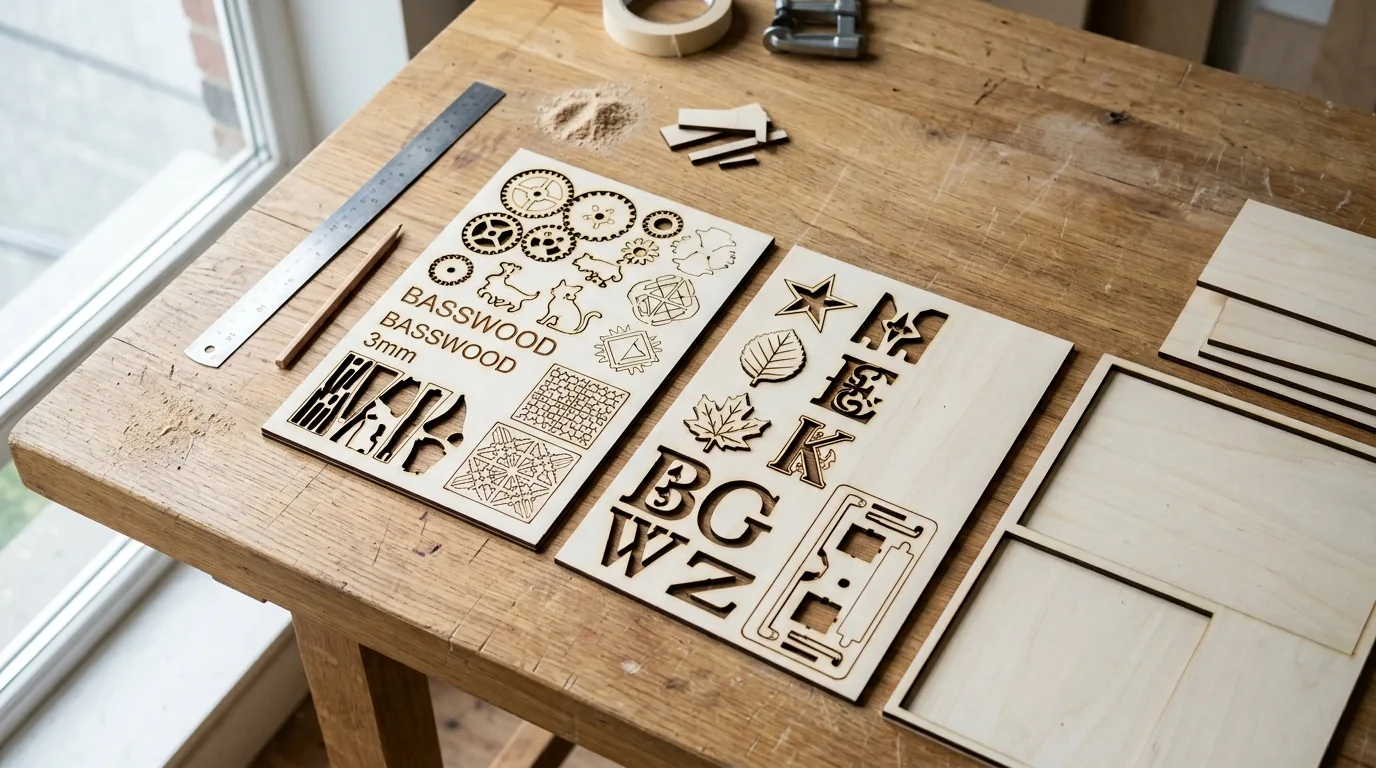
| Material | Engraving Contrast | Cut Ease | Smoke / Odor | Cost | Beginner Score |
|---|---|---|---|---|---|
| Basswood (3 mm) | ★★★★★ | Excellent – 1 pass | Low | $ | ★★★★★ |
| Baltic Birch Plywood | ★★★★ | Good – 2-3 passes | Medium | $$ | ★★★★ |
| MDF | ★★★ | Good – 1-2 passes | High (formaldehyde) | $ | ★★ |
| Pine / Soft Plywood | ★★★ | Poor – resin deposits | Medium-High | $ | ★★ |
Why Plywood and CO2 Lasers Go Together – And Why Diodes Struggle
CO2 lasers cut plywood cleanly because their 10.6-micron wavelength is absorbed directly by wood’s cellulose and lignin structure. Diode lasers operate around 450nm – a wavelength wood reflects more than it absorbs, which means more scatter, more heat buildup, and those telltale charred edges you’re trying to avoid.
Plywood is denser than solid basswood and has alternating grain layers that behave differently under heat. A diode fighting through 3mm of cross-grained material will char the veneer before it clears the bottom layer. A CO2 at 10mm/s slices through all of it in a single pass. That’s not marketing – it’s physics.
I ruined 3 sheets before I figured out 90% power was too hot on my first CO2 run. Dropped to one clean pass at the right speed and the difference was immediately obvious. If you’re dialing in basswood laser cutting settings alongside plywood, you’ll notice basswood forgives small errors that plywood punishes hard.
- CO2 wavelength absorption – the 10.6-micron beam is absorbed by wood fiber directly, minimizing scatter and heat spread into surrounding material
- Plywood density vs. basswood – plywood’s layered construction resists diode penetration; CO2 power punches through cross-grain veneers cleanly in one pass
- Lignin content burns differently – according to USDA Forest Products Laboratory data, lignin combustion temperature and wood density directly affect char behavior; CO2 minimizes dwell time, keeping edges pale
- Diode scatter in thick material – diode beams diverge more through depth, depositing heat unevenly and producing inconsistent kerfs on anything over 2mm
- Fiber orientation matters – plywood’s cross-lam
CO2 vs. Diode: Speed, Passes, and Real Cost Per Cut
All settings below are for Crafteker 3mm basswood sheets (12×12 inch, laser-grade). Use the Laser Settings Calculator to fine-tune for your specific unit if results differ.
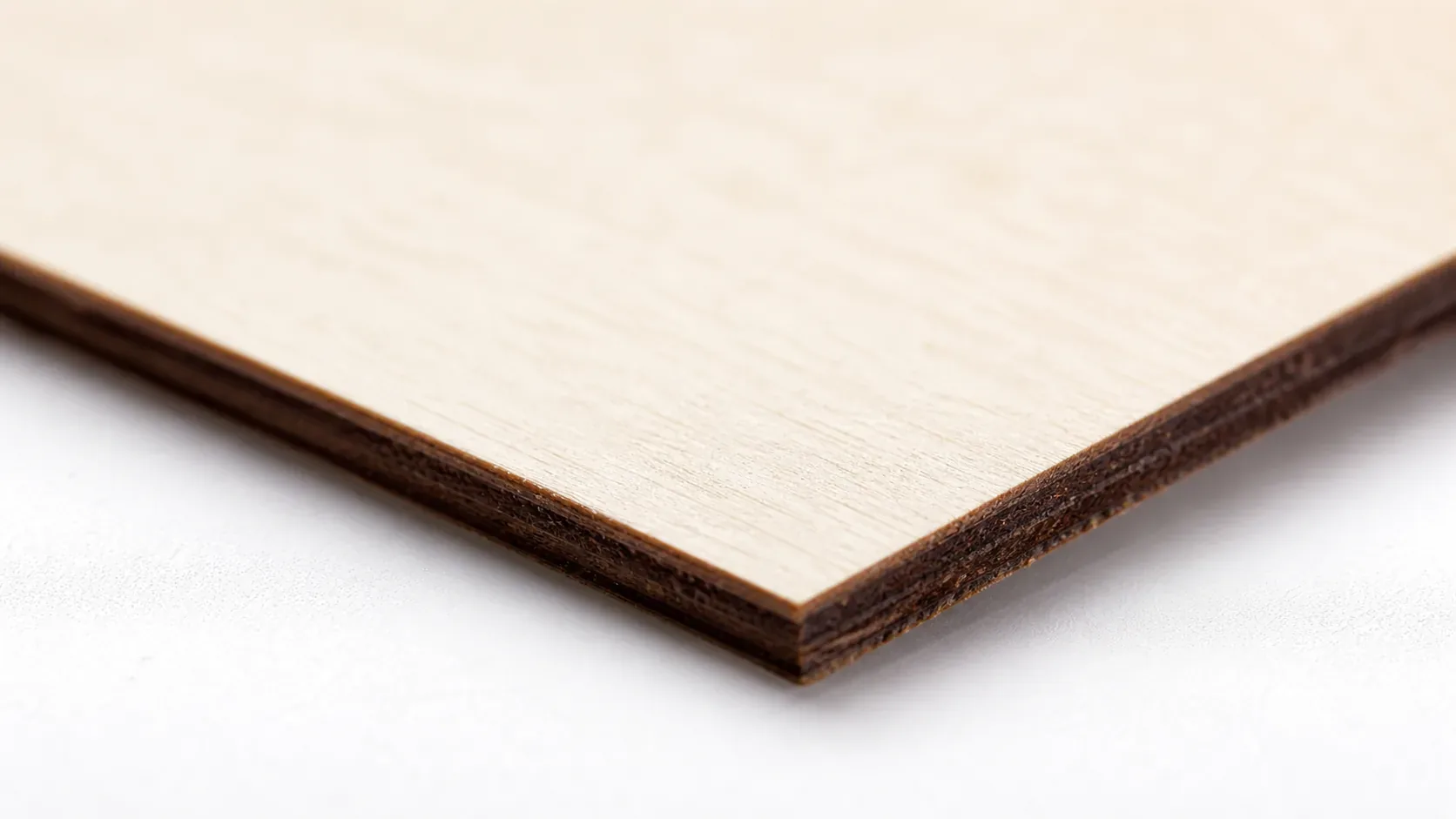
Plywood cut edge from CO2 laser – pale tan, crisp, production-ready. Diode edges (multi-pass) look burned by comparison. Machine Type Cut Speed Cut Power Passes Engrave Speed Engrave Power Air Assist Diode 5W 3-5 mm/s 100% 2-3 60-80 mm/s 35-40% Strongly recommended Diode 10W 6-8 mm/s 100% 1-2 80-150 mm/s 40-50% Strongly recommended Diode 20W 8-12 mm/s 100% 1-2 150-300 mm/s 40-60% Strongly recommended Diode 40W 10-15 mm/s 100% 1-2 200-400 mm/s 45-65% Required CO2 40W 20-35 mm/s 100% 1 200-400 mm/s 45-65% Required CO2 60W 30-50 mm/s 100% 1 200-400 mm/s 45-65% Required The numbers tell the story clearly. A 5W diode crawls through 3mm basswood at 3-5 mm/s over multiple passes. A 40W CO2 cleans through the same sheet at 20-35 mm/s in a single pass. That’s not a small difference – it’s the difference between a 4-minute cut and a 45-second one, times every job you run.
Pass count matters more than most beginners realize. Every additional pass adds heat, char risk, and time. On tight production runs, multi-pass diode cutting eats hours you won’t get back. If edge quality is part of your output, every extra pass is a gamble.
Note: Air assist is required for all CO2 machines and strongly recommended for diodes. On open-frame diode lasers, air assist blows smoke away from the lens and keeps char from building on the cut edge. Without it, you’re reburning the edge on every pass. Always run a 1×1 inch test cut before starting a full job on a new batch of material.
The Crafteker 12-pack basswood sheets are purpose-built for CO2 and diode lasers alike – 12×12 inch, 3mm, laser-grade, void-free. $24.99 for 12 sheets ($2.08/sheet).
How to Pick the Right Plywood Thickness and Machine Wattage
Which CO2 Wattage Cuts Plywood Fastest? 40W vs. 60W vs. 100W Tested
The 60W CO2 is the sweet spot for most plywood work – it cuts 3mm clean at 15mm/s in one pass and handles 6mm in a single pass too, something the 40W can’t reliably do. If your projects stay at 3mm and your budget tops out around $3k-$4k, the 40W gets the job done at 10mm/s without complaint.
For batch cutters running production plywood, the 100W is a different world – 20mm/s through 3mm, one pass, and it chews through 6mm like it isn’t there. The price jumps to $8k+, so you need the volume to justify it. Etsy sellers doing dozens of identical cuts per week will recover that cost fast. Hobbyists won’t. Check out the basswood laser cutting settings guide to dial in whichever wattage you’re running.
Wattage Cut Speed (3mm plywood) 6mm Plywood Passes Price Range 40W CO2 10mm/s, 1 pass 2 passes $3k-$4k 60W CO2 15mm/s, 1 pass 1 pass $4.5k-$6k 100W CO2 20mm/s, 1 pass 1 pass $8k+ Diode 5.5W 3mm/s, 4 passes 4-5 passes $800-$2k Why Your Plywood Cuts Are Charred or Incomplete – and How to Fix It
Jet-black flaky edges mean your plywood ran too hot or too slow. Light brown edges are normal – that’s just the wood doing its thing. Most incomplete cuts and excessive charring trace back to these four issues:
- Focus drift: Plywood warps, especially cheaper grades – recheck your z-height every 5 sheets and re-run your focus card if cuts start looking ragged or inconsistent.
- Air assist not running: Without active airflow, smoke and char re-deposit in the kerf as the laser cuts, blocking the beam. Check your pump connection and make sure the nozzle is aimed directly at the cut point – a $50/month compressor rental fixes this if your machine doesn’t have one built in.
- Inconsistent material: Craft-store plywood has glue pockets and variable density. I didn’t sand a batch of cheap plywood once and got splinter tearout on every single cut. Added 5 minutes of sanding per sheet – problem solved. Laser-grade basswood eliminates the variable entirely – consistent wood means consistent single-pass cuts. See how it stacks up in our prevent charring when laser cutting breakdown.
- Dirty lens: A dirty lens quietly steals 10-15% of your power. Clean it weekly with IPA on a cotton swab, access the lens housing per your machine’s manual, and wipe gently – don’t scrub.
Where to Buy Quality Plywood (and Basswood for Testing)
For production plywood, local hardwood suppliers beat Amazon on price and consistency – call ahead and ask specifically for laser-grade or void-free sheets. Local mills and specialty laser shops are worth checking too, especially if you’re buying in volume.
Crafteker 3mm basswood sheets are the right call for test cuts and smaller production runs – 12×12 inch, laser-grade, void-free, and pre-sanded. Zero glue pockets, consistent density, cleaner edges than most plywood you’ll find. At $24.99 for 12 sheets ($2.08/sheet), it’s the practical way to validate your CO2 settings before committing expensive plywood to a production run.
Ready to cut? Get the wood that works with these settings:
→ Buy Crafteker 12-Pack Basswood Sheets on Amazon – $24.99
Clip the 7% coupon on the listing page – buy 2 packs and save 20% automatically.
Also available: 5-pack ($15.97) · 3-pack ($12.99)Frequently Asked Questions
What are the best CO2 laser settings for 3mm plywood?
40W CO2: cut at 10mm/s, 100% power, 1 pass. 60W CO2: 15mm/s, 100% power, 1 pass. 100W CO2: 20mm/s, 90% power, 1 pass. Air assist required on all three. Done right, you get pale tan edges and a clean kerf – no char, no re-runs. I ruined 3 sheets before I figured out 90% power was too hot on my 40W at slower speeds.
Is a diode laser good for cutting plywood?
Diodes cut plywood, but don’t expect miracles – plan on 3-4 passes at 3mm/s, 100% power, with charred edges on 3mm sheets. They’re more practical for engraving or thin veneer work. A CO2 cuts the same material in 1 pass at 10mm/s with zero char. For production runs, that pass count difference adds up fast.
What is the best laser cutter for plywood under $5k?
A 40W or 60W CO2 in the $3k-$5k range cuts 3mm plywood clean in 1 pass at 10mm/s. Look for machines with built-in air assist and a bed of at least 16×24 inches. That combination covers most hobby and small-production workflows without needing to upgrade in a year.
Can a diode laser cut 6mm plywood?
Yes, but expect 4-5 passes at 3mm/s, 100% power, with heavy charring – not practical for production. A 60W CO2 cuts 6mm plywood in 1 pass at 15mm/s. If thick plywood is a regular part of your workflow, a diode will eat your time and your material edges.
Where can I buy plywood for laser cutting?
Local hardwood suppliers are best for bulk, with Amazon and specialty laser shops as solid alternatives. Before committing to a production plywood run, test your settings on Crafteker 3mm basswood – $2.08/sheet in a 12-pack ($24.99 with 7% coupon), void-free and consistent. No surprises when you step up to full plywood batches.
About the author: Mike Dolan is a laser maker and wood materials specialist with 8+ years cutting basswood, birch, and MDF on diode and CO₂ machines. He tests every Crafteker basswood batch before listing.
Spent $4.2k on a 60W CO2 last year and it cut through 3mm plywood at 15mm/s, one pass, every single time. My old diode was doing 4 passes and the edges looked like charcoal. The air assist made a huge difference too – worth the compressor cost. Switched my production over and cut my run time in half.