
Cut Shipping Costs in Half: Flat-Pack Basswood Design 2026
Shipping a flat-pack laser-cut basswood product via First-Class Package costs roughly $3-4 for a 1-8oz parcel, versus Priority Mail starting around $8 for 1lb – you can cut per-order shipping nearly in half by designing products that fold or knock down flat instead of shipping pre-assembled. This guide walks through tab-and-slot joints, living hinges, score lines, and nesting techniques that keep your parcels under USPS dimensional-weight and thickness breakpoints, with real 2026 pricing math and design checklists.
By Mike Dolan ·
Quick Answer: Flat-pack laser-cut basswood designs that fold or knock down flat ship First-Class Package at $3-4 for 1-8oz instead of Priority Mail at $8+ for 1lb, cutting per-order postage nearly in half.
| Material | Engraving Contrast | Cut Ease | Smoke / Odor | Cost | Beginner Score |
|---|---|---|---|---|---|
| Basswood (3 mm) | ★★★★★ | Excellent – 1 pass | Low | $ | ★★★★★ |
| Baltic Birch Plywood | ★★★★ | Good – 2-3 passes | Medium | $$ | ★★★★ |
| MDF | ★★★ | Good – 1-2 passes | High (formaldehyde) | $ | ★★ |
| Pine / Soft Plywood | ★★★ | Poor – resin deposits | Medium-High | $ | ★★ |
Why Flat-Pack Design Cuts Your Shipping Costs
A bulky, pre-assembled laser-cut item pushes shipments into Priority Mail and dimensional-weight pricing even when the actual item is light and thin. I shipped a pre-assembled desk organizer in a box sized to fit the assembled shape, not the wood inside it, and the Priority Mail bill reflected the size of the box, not the few ounces of basswood actually in there.
USPS dimensional weight applies to packages over 1 cubic foot (1,728 cubic inches). The formula is length × width × height in inches, divided by 139 (reduced from 166 as of July 2026). If that calculated weight exceeds your parcel’s actual weight, you pay the higher number. These are general 2026 USPS pricing and policy figures, not Crafteker’s own shipping data – verify current rates with USPS before quoting shipping to customers, since postal pricing changes regularly.
The real cost gap hits hard: First-Class Package or Ground Advantage runs roughly $3-4 for a 1-8oz parcel, while Priority Mail starts around $8 for 1lb. A product that ships flat instead of pre-assembled can cut your per-order postage nearly in half, and that savings compounds across every single order you send.
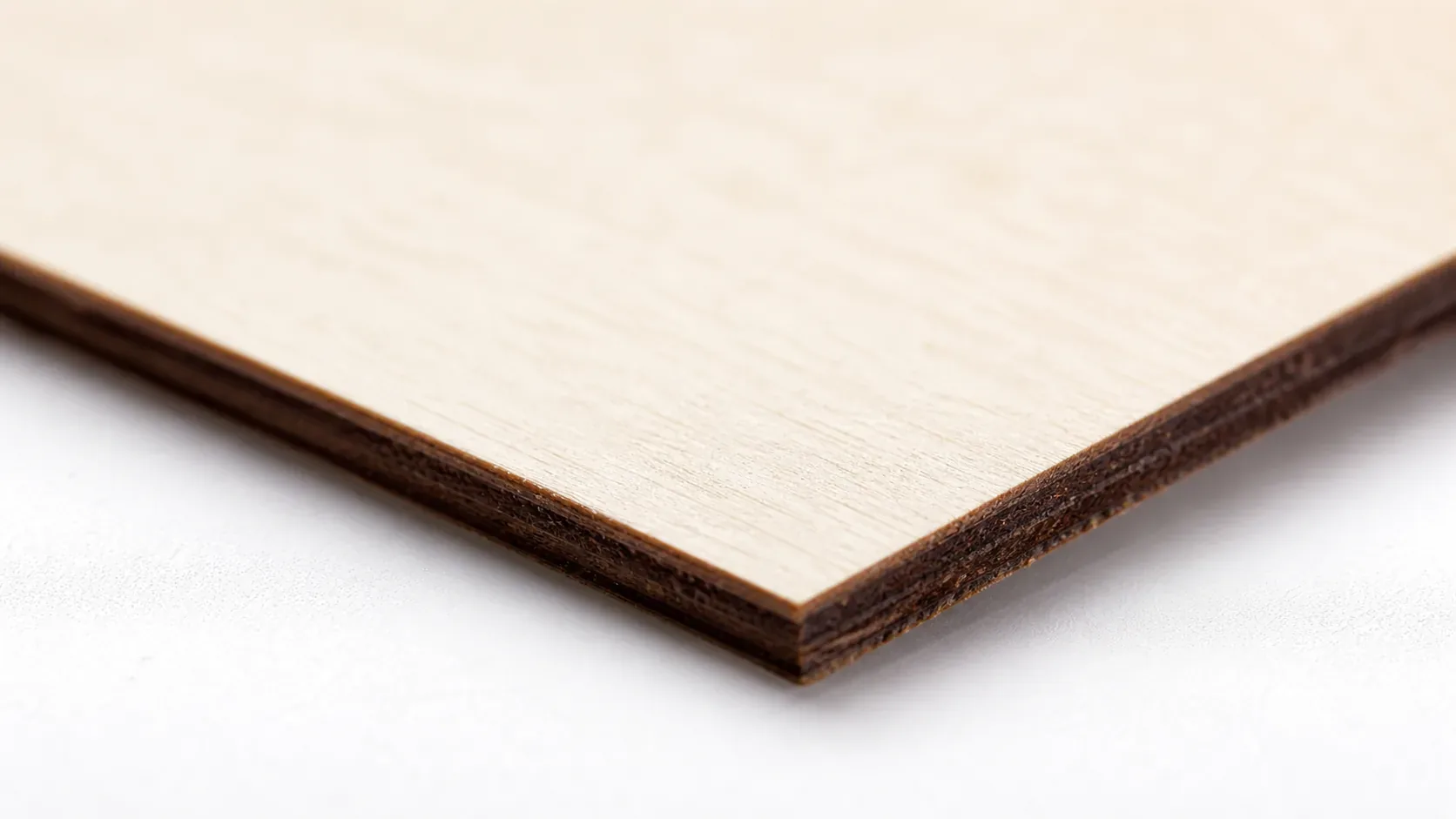
3mm basswood is naturally light and thin, which helps designs stay under weight and size breakpoints – but only if the design itself also folds or knocks down flat instead of shipping pre-assembled. According to USDA Forest Products Laboratory data, basswood ranks among the lowest-density domestic hardwoods, so it’s a natural material fit for lightweight shipping when paired with smart flat-pack design techniques like tab-and-slot joints or living hinges that let the piece collapse into a thin profile.
USPS flat envelopes max out around 0.75in thick, so a product that ships as three flat panels in a padded mailer qualifies for First-Class rates, while the same product shipped assembled in a box forces you into Priority Mail. The material is only half the equation – the other half is designing the product so it ships flat in the first place.
- Light weight among domestic hardwoods – basswood’s low density per the USDA reference above helps you hit weight breakpoints even with multiple panels in one flat envelope
- Thin 3mm stock – flat-packs naturally without needing bulky protective packaging or foam inserts that push parcels over thickness limits
- Workable, foldable when scored – supports living-hinge and engraved score-line flat-pack techniques directly, so a single piece can fold for shipping and open into a 3D shape on arrival
- Low resin content – cuts clean without gummy deposits that make tight tab-and-slot joints stick or misalign during assembly
- Consistent density – basswood laser cutting settings work batch after batch, so you can dial in precise hinge patterns and score depths that fold reliably without cracking
Design Techniques That Ship Flat
Four core techniques let you turn a bulky 3D product into a flat-packed parcel that fits in an envelope instead of a box:
| Technique | How It Works |
|---|---|
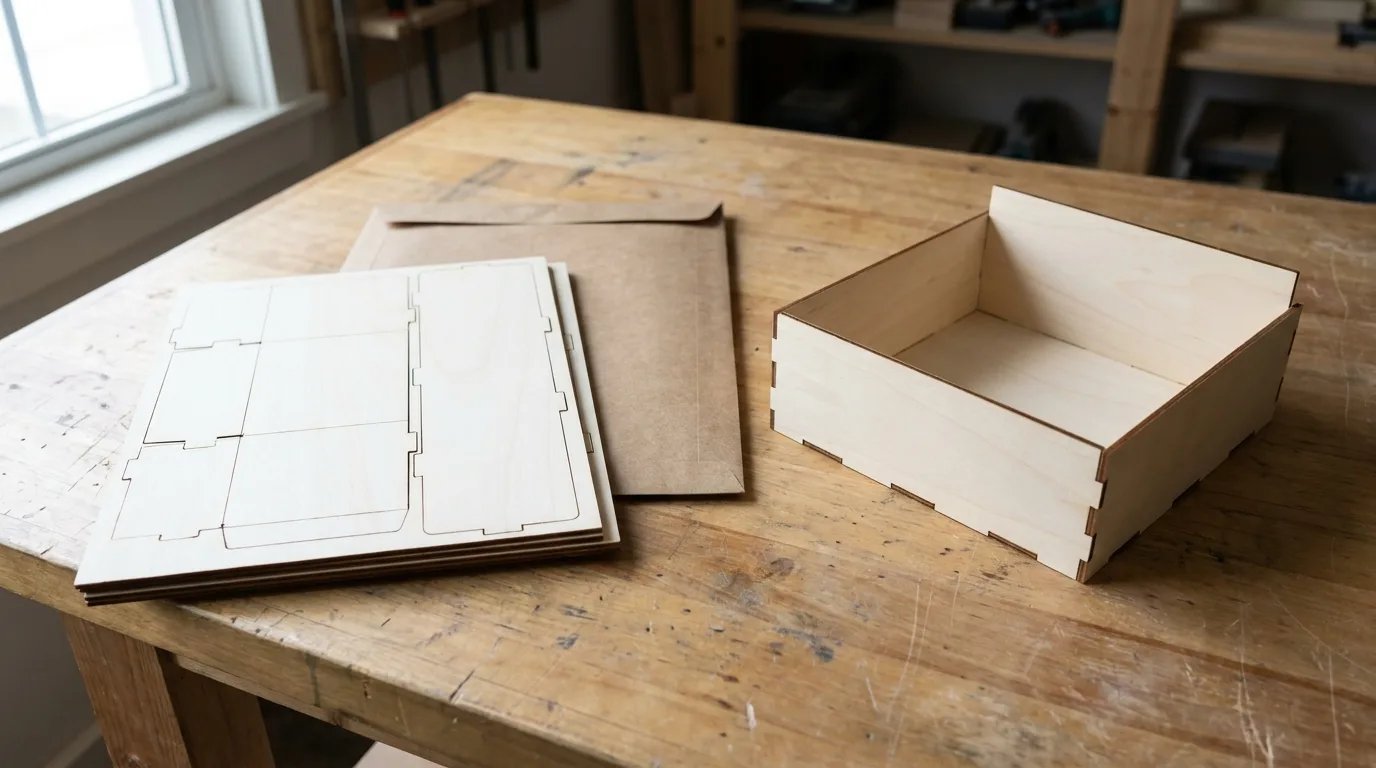
| Tab-and-slot joints | Parts interlock without glue, so the piece ships as flat cut pieces and assembles by hand on arrival |
| Living hinges | A pattern of fine parallel cuts lets a single rigid basswood piece fold flat for shipping and open into its 3D shape |
| Engraved score lines | A shallow engraved line (not cut through) creates a controlled fold point on an otherwise flat panel |
| Nested/modular parts | Multiple pieces are laid out to share cut lines and pack into the smallest possible flat footprint |
These techniques combine. Most flat-pack designs use two or more at once – a lamp shade might fold via living hinge and also use tab-and-slot for the base ring.
If you want the cutting-mechanics detail on living hinges specifically, read the guide to kerf compensation for finger joints and living hinges. I redesigned a photo frame to use a living hinge instead of separate hinge hardware, and the shipping box went from a small parcel box to a padded envelope. Same product, cheaper postage.
Why This Actually Saves Real Money on Every Order
Dimensional weight and mail-class breakpoints are about box size and thickness as much as actual weight. A bulky assembled item forces a bigger box even if it weighs almost nothing, while the same parts shipped flat can fit under the roughly 0.75in flat envelope threshold or stay under the 1-cubic-foot dimensional weight trigger.
This compounds across every single order, not just one shipment – the $3-4 versus $8+ gap doesn’t happen once, it happens on every parcel you send. At any real Etsy order volume, that per-order savings adds up fast.
I ran the same desk organizer two ways – assembled in a box versus flat-packed in a padded envelope – and compared the actual postage cost side by side. The assembled version landed in Priority Mail territory because of dimensional weight, even though the item itself was light. The flat-packed version shipped First-Class Package for the same product, same customer, same weight – just a different box.
How to Design a Product to Ship Flat
Start by sketching the assembled shape first, then work backward. Ask which joints actually need to be permanent and which can become tabs, slots, or living hinges instead. The goal is to let the customer do the final assembly, not you.
Keep your final flat stack under about 0.75 inches thick wherever possible – that’s the sweet spot for USPS flat envelopes and padded mailers. Nest parts tightly on the sheet so they share cut lines and pack into the smallest possible footprint. Wasted space on the laser bed turns into wasted space in the shipping box.
Weigh a prototype before you finalize packaging. I built a flat-packed plant stand, weighed it on my kitchen scale, and found it was close enough to the First-Class weight breakpoint that trimming one panel’s footprint was worth doing before the design went final – cheaper to adjust the file than to risk an upcharge at the post office on every order after.
Common Mistakes When Designing for Flat-Pack Shipping
- Designing the product fully assembled first and only thinking about shipping afterward. Flat-pack needs to be baked into the design from sketch one, not bolted on at the end.
- Using glued permanent joints where a tab-and-slot or living hinge would let the piece fold flat instead. Every joint is a choice – pick the one that ships thinner.
- Padding the box more than necessary, which can push a light package over the 1-cubic-foot dimensional-weight threshold. A single layer of bubble wrap is usually enough for basswood. More isn’t always safer – it’s just heavier and bulkier.
- Never actually weighing and measuring the final flat-packed parcel before choosing a mail class. Guessing costs money. A cheap kitchen scale pays for itself in one avoided Priority Mail upgrade.
Where to Buy Basswood for Flat-Pack Laser Projects
Crafteker 3mm basswood sheets are already thin and light – a natural starting point for flat-pack designs. At $24.99 for 12 sheets, you’re paying $2.08 per sheet, the best per-sheet value if you’re cutting production runs. The void-free quality means consistent cuts across every panel, so your tab tolerances stay predictable from the first sheet to the twelfth.
Also available in smaller packs: 5-pack at $15.97 and 3-pack at $12.99 if you want to test a design before committing to a full dozen. Clip the 7% coupon on the Amazon listing page – it stacks with multi-pack discounts.
Ready to cut? Get the wood that works with these settings:
→ Buy Crafteker 12-Pack Basswood Sheets on Amazon – $24.99
Clip the 7% coupon on the listing page – buy 2 packs and save 20% automatically.
Also available: 5-pack ($15.97) · 3-pack ($12.99)
Frequently Asked Questions
What is flat-pack design for laser-cut wood products?
Flat-pack design means your laser-cut piece folds or knocks down flat via living hinges, tabs, or score lines instead of shipping fully assembled. The customer receives flat parts in a thin envelope or small box and assembles them at home, which keeps your parcel under USPS thickness and dimensional-weight breakpoints and qualifies for cheaper mail classes.
How does USPS dimensional weight affect laser-cut wood shipping?
USPS dimensional weight applies to packages over 1 cubic foot (1,728 cubic inches). The formula is length x width x height in inches (each rounded up) divided by 139. If that dimensional weight exceeds your parcel’s actual weight, you pay the higher number. A bulky box around a light basswood product can triple your postage even though the item itself weighs almost nothing.
What’s the cost difference between First-Class Package and Priority Mail?
First-Class Package or Ground Advantage for a 1-8oz parcel runs roughly $3-4, while Priority Mail starts around $8 for 1lb. Keeping your flat-packed laser-cut basswood product under about 8-12oz and in a thin package can cut your per-order shipping nearly in half. These are general 2026 USPS pricing figures – verify current rates before quoting shipping to customers.
What kinds of laser-cut products work well as flat-pack designs?
Organizers with tab-and-slot trays, lamp shades that fold via living hinges, plant stands that knock down into flat panels, and signs with fold-out back stands are all natural fits. Any product where the 3D shape comes from interlocking or folding flat parts instead of permanent glued joints will ship thinner and cheaper.
Where can I buy basswood sheets for flat-pack laser projects?
Crafteker on Amazon: 3-pack $12.99, 5-pack $15.97, 12-pack $24.99 ($2.08/sheet best value for production runs). All sheets are 3mm thick, 12×12 inch, laser-grade, and void-free. Clip the 7% coupon on the listing page.
About the author: Mike Dolan is a laser maker and wood materials specialist with 8+ years cutting basswood, birch, and MDF on diode and CO₂ machines. He tests every Crafteker basswood batch before listing.
I redesigned my desk organizer to use tab-and-slot assembly instead of gluing it together before shipping, and my postage dropped from $9 Priority Mail to $3.80 First-Class Package on every single order. The Crafteker basswood is thin enough that three flat panels still fit in a padded envelope under the thickness limit.