
2 Standards for Formaldehyde-Free Laser Plywood (2026)
E0-rated plywood can release no more than 0.5 mg/L of formaldehyde, so it is low-emission but not literally zero-formaldehyde. You will learn how to read glue claims, spot checkable compliance labels, and choose a lower-odor sheet for indoor laser work.
By Mike Dolan ·
Quick Answer: Formaldehyde-free plywood for laser cutting means asking about glue and labels: E0 allows no more than 0.5 mg/L, while CARB Phase 2 and TSCA Title VI give you standards to check.
| Material | Engraving Contrast | Cut Ease | Smoke / Odor | Cost | Beginner Score |
|---|---|---|---|---|---|
| Basswood (3 mm) | ★★★★★ | Excellent – 1 pass | Low | $ | ★★★★★ |
| Baltic Birch Plywood | ★★★★ | Good – 2-3 passes | Medium | $$ | ★★★★ |
| MDF | ★★★ | Good – 1-2 passes | High (formaldehyde) | $ | ★★ |
| Pine / Soft Plywood | ★★★ | Poor – resin deposits | Medium-High | $ | ★★ |
What Does Formaldehyde-Free or Low-VOC Plywood Actually Mean?
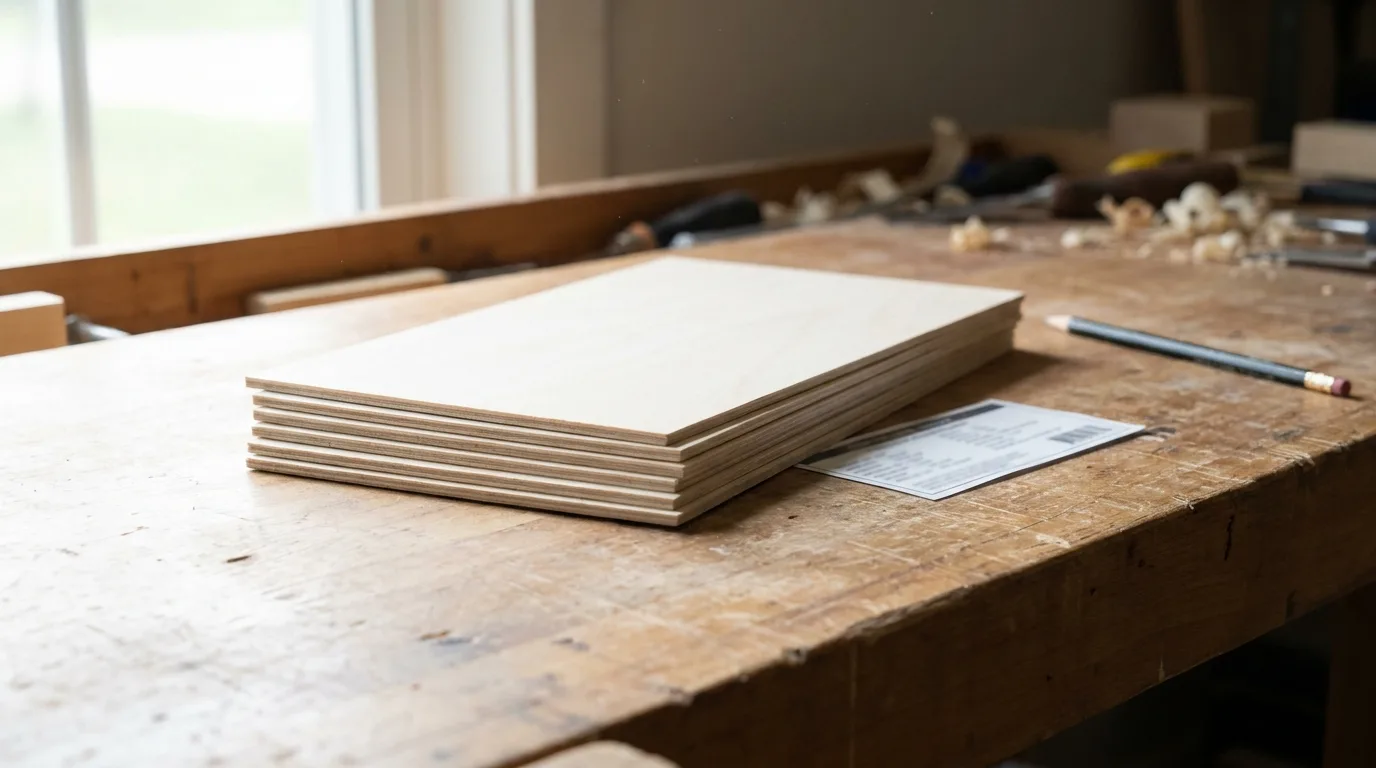
Formaldehyde-free plywood uses an adhesive such as PVA or a soy-based glue, while low-VOC plywood carries a lower-emission claim that still needs reading closely. Cheap craft-store and big-box sheets commonly use urea-formaldehyde glue between their plies, and that glue is often the smelly part once laser heat reaches it.
E0 is the strictest common tier, allowing no more than 0.5 mg/L of formaldehyde emission, but it is not a promise of literal zero. A real buying decision starts with the label: look for E0, CARB Phase 2, or TSCA Title VI rather than trusting a cheerful eco badge and hoping for the best.
According to USDA Forest Products Laboratory data, basswood is a naturally low-resin domestic hardwood. Thin basswood sheets need less glue between plies than thick multi-ply hardware-store plywood, which is a useful material trait for indoor work, not a compliance certification by itself.
I bought cheap eco-labeled plywood from a big-box store, found no formaldehyde rating anywhere on the package, and got a sharp chemical smell the moment the laser hit a glue line. That sheet taught me a simple rule: vague packaging copy does not belong in your material notes.
For more material options, compare the best basswood sheets for laser cutting before ordering. Basswood is a practical low-glue choice, but ask the supplier about adhesive details if the listing skips them. Indoor airflow still matters; natural wood does not make fumes magically vanish.
- Low resin – a basswood trait that can mean less glue is needed between thin plies, not a certification claim.
- Consistent density – predictable material from sheet to sheet, but density alone says nothing about glue emissions.
- Minimal internal voids – a quality signal from a good supplier, separate from formaldehyde content.
- Light, workable surface – easy to sand, paint, or stain for practical craft work, unrelated to VOC claims.
- Low-glue construction – distinct from a compliance rating, so always check the actual label or ask the supplier.
Low-VOC vs Standard Craft-Store Plywood
A little wood smoke is normal; an acrid chemical smell is your cue to check the glue. Low-VOC plywood relies on lower-emission adhesives or minimal glue between plies, while standard craft-store plywood often uses urea-formaldehyde glue that can smell harsh once a laser heats the glue line.
| Factor | Low-VOC / Formaldehyde-Free | Standard Craft-Store Plywood |
|---|---|---|
| Glue type | PVA, soy-based, or minimal glue between plies | Urea-formaldehyde (UF) |
| Emission label | CARB Phase 2 / TSCA Title VI compliant, or E0-rated | Often no formaldehyde label at all |
| Odor when laser cutting | Mild | Strong, acrid smell as the glue line burns |
A real low-VOC claim points to a checkable standard: CARB Phase 2, TSCA Title VI, or E0. A leaf icon, brown packaging, and a cheerful “eco” label are not paperwork. For a material-focused comparison, see our best basswood sheets for laser cutting guide.
I cut the same small test square from two sheets side by side, and one smelled noticeably sharper and more chemical before the cut was even finished. That quick comparison taught me not to judge a sheet by its pale face veneer alone; the glue hiding inside tells the real story.
Odor is not a lab report, but it is useful feedback. If one sheet produces a sharp, lingering smell while another reads more like heated wood, pause before loading a larger project. Your workspace, your ventilation, and your nose will all appreciate the extra caution.
How to Verify a Plywood Supplier’s Formaldehyde Claims
Verify a supplier’s claim by asking whether the sheet is CARB Phase 2 or TSCA Title VI compliant, then ask exactly what glue is used between the plies. A supplier with a solid material spec should answer directly, without sending you on a scavenger hunt through vague product copy.
Words such as “eco” and “safe” mean very little without a named compliance standard attached. Ask for supporting paperwork or a clear written statement tied to the actual sheet you plan to buy. If the response only repeats the label, treat that as a yellow flag, not a green light.
E0 is useful, but read it accurately: it still allows up to 0.5 mg/L of formaldehyde, not zero. That makes it a strict common low-emission tier rather than a magic phrase. The distinction matters most in an indoor shop where glue-line odor has fewer places to disappear.
I emailed a supplier for compliance paperwork and glue details, and that one email separated the sellers with real documentation from the ones repeating vague packaging copy. The good replies named the adhesive or standard plainly. The weak replies sounded polished, but gave me nothing I could actually verify.
Also ask whether the claim applies to the finished panel, not merely the face veneer or a related product line. Thin sheets can look nearly identical on a shelf. The useful difference is hidden in the adhesive, the documentation, and whether the seller will stand behind both.
Does Formaldehyde-Free Plywood Matter More for Indoor Laser Cutting?
Yes – indoor laser work can be comfortable with the right material and basic airflow. Lower-emission glue matters more indoors because the laser heats the glue line directly, and that odor has nowhere pleasant to go in a small apartment or home studio. A garage or well-ventilated shop gives fumes more room to disperse, but formaldehyde-free plywood still benefits from indoor laser ventilation setups.
I cut the same design in a small apartment room with the windows closed and noticed the smell difference between two materials immediately – one smelled like wood, the other like a chemistry lesson nobody asked for. That does not make ventilation optional. It does make the glue choice much easier to appreciate, especially during a long project or a batch of ornaments.
Common Mistakes When Buying ‘Safe’ Plywood
You do not need a lab coat to buy better plywood; you just need to ignore fuzzy claims. I once bought a bulk stack because the package said “safe,” then realized it named neither the glue nor a compliance standard. That stack taught me a label can sound reassuring while telling you almost nothing useful.
- Trusting vague “eco-friendly” or “safe” language on packaging with no compliance standard named.
- Assuming any thin craft plywood automatically has less glue – always check, do not assume.
- Treating an E0 rating as literally zero formaldehyde rather than a strict but nonzero limit of 0.5 mg/L.
- Not asking the supplier directly for CARB Phase 2 or TSCA Title VI documentation before buying in bulk.
Where to Buy Low-Glue Basswood for Indoor Laser Use
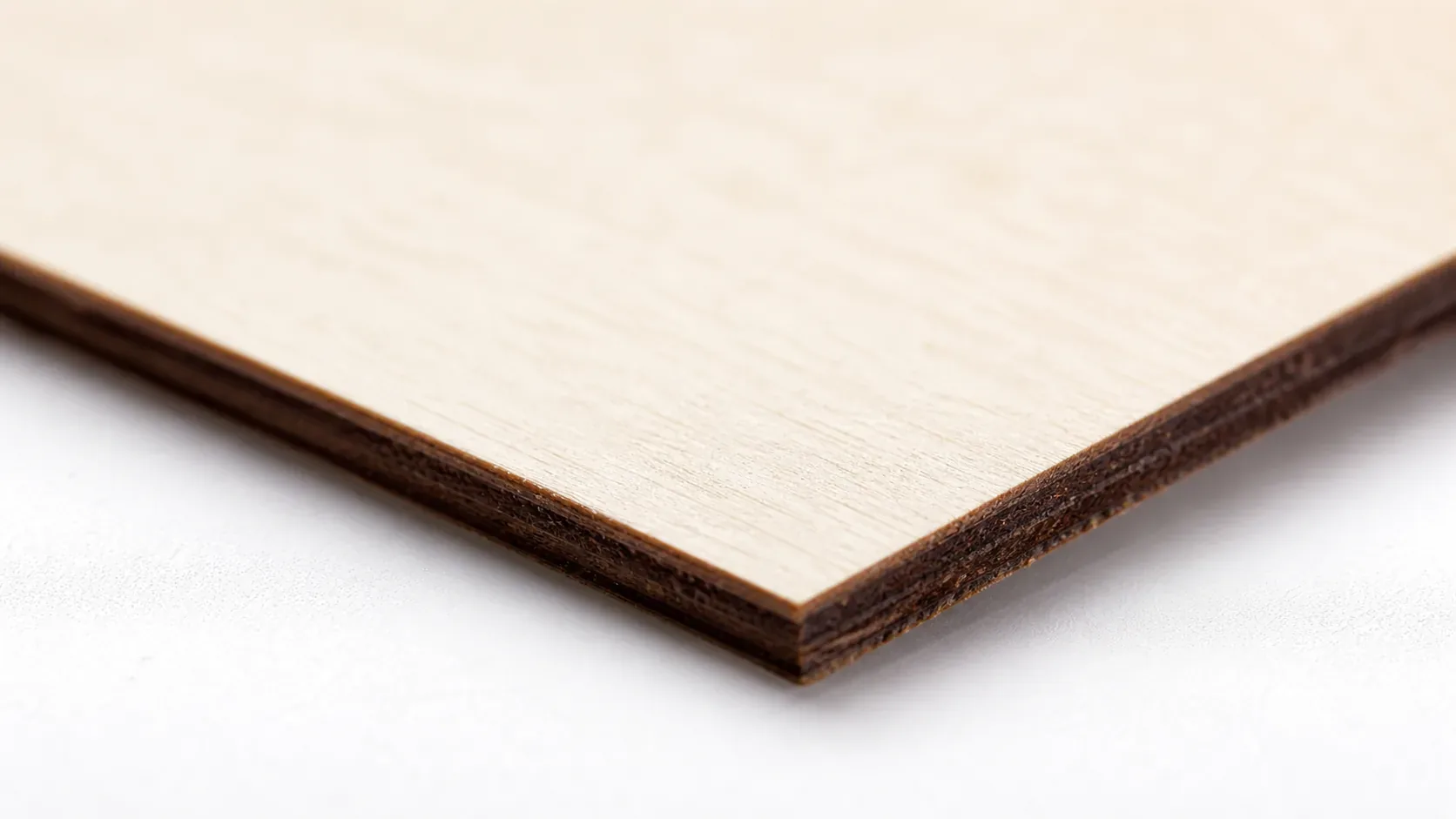
Crafteker basswood suits indoor laser use because it is a natural solid wood with minimal glue between its thin plies, unlike urea-formaldehyde-heavy standard plywood or MDF. Basic ventilation still belongs in your setup. The void-free 12×12 inch, 3mm sheets are clean, consistent, and easier to trust for detailed projects.
I tried a bargain sheet with hidden voids for an indoor project, and the uneven glue pockets made the smell and cut quality far less predictable than a clean, consistent basswood sheet. Crafteker packs include a 3-pack for $12.99, a 5-pack for $15.97, or a 12-pack for $24.99 at $2.08/sheet.
Ready to cut? Get the wood that works with these settings:
→ Buy Crafteker 12-Pack Basswood Sheets on Amazon – $24.99
Clip the 7% coupon on the listing page – buy 2 packs and save 20% automatically.
Also available: 5-pack ($15.97) · 3-pack ($12.99)
Frequently Asked Questions
What is formaldehyde-free or low-VOC plywood?
Standard plywood often uses urea-formaldehyde glue, while formaldehyde-free options may use PVA or soy-based adhesives. E0 is a low-emission rating that allows no more than 0.5 mg/L, so it is not literally zero-formaldehyde.
What do CARB Phase 2 and TSCA Title VI mean for plywood buyers?
CARB Phase 2 and EPA TSCA Title VI are the two named U.S. formaldehyde-emission regulations to look for on sheet-good labels or ask suppliers to document. A named standard beats a vague eco claim every time.
Is basswood a good low-glue option for indoor laser cutting?
Yes, thin basswood is a natural wood with minimal glue between its plies, which can make it a better indoor option than thick multi-ply plywood or MDF. Still, verify the actual supplier claim instead of assuming every basswood sheet uses the same adhesive.
Does formaldehyde-free plywood smell less when laser cutting?
Generally, yes. Heating the glue line is a major source of sharp odor and fumes, so a sheet with formaldehyde-free or lower-emission adhesive usually smells milder than standard UF-glued plywood.
Where can I buy basswood sheets for indoor laser projects?
Crafteker basswood is available on Amazon in a 3-pack for $12.99, a 5-pack for $15.97, and a 12-pack for $24.99. The 12-pack is the best value at $2.08/sheet for repeat indoor projects.
About the author: Mike Dolan is a laser maker and wood materials specialist with 8+ years cutting basswood, birch, and MDF on diode and CO₂ machines. He tests every Crafteker basswood batch before listing.
I switched from a mystery craft plywood to a sheet with actual glue details, and my small studio smelled noticeably less sharp after a batch of ornaments. The basswood was also much more consistent, with none of those surprise voids that ruin a piece at the last second.