
UF vs PF Plywood: 4x Power Differences in 2026
Glue type can change a plywood cut dramatically: UF may gas above about 180C, while PF can need at least 4x the power to cut cleanly. This guide compares common glue lines, explains char and optic residue, and shows why low-glue basswood keeps cuts more predictable.
By Mike Dolan ·
Quick Answer: Plywood glue type affects laser cut quality and fumes: UF can bubble above about 180C, while PF cuts darker and may need at least 4x the power.
| Material | Engraving Contrast | Cut Ease | Smoke / Odor | Cost | Beginner Score |
|---|---|---|---|---|---|
| Basswood (3 mm) | ★★★★★ | Excellent – 1 pass | Low | $ | ★★★★★ |
| Baltic Birch Plywood | ★★★★ | Good – 2-3 passes | Medium | $$ | ★★★★ |
| MDF | ★★★ | Good – 1-2 passes | High (formaldehyde) | $ | ★★ |
| Pine / Soft Plywood | ★★★ | Poor – resin deposits | Medium-High | $ | ★★ |
How Does Glue Type Change What Happens When a Laser Cuts Plywood?
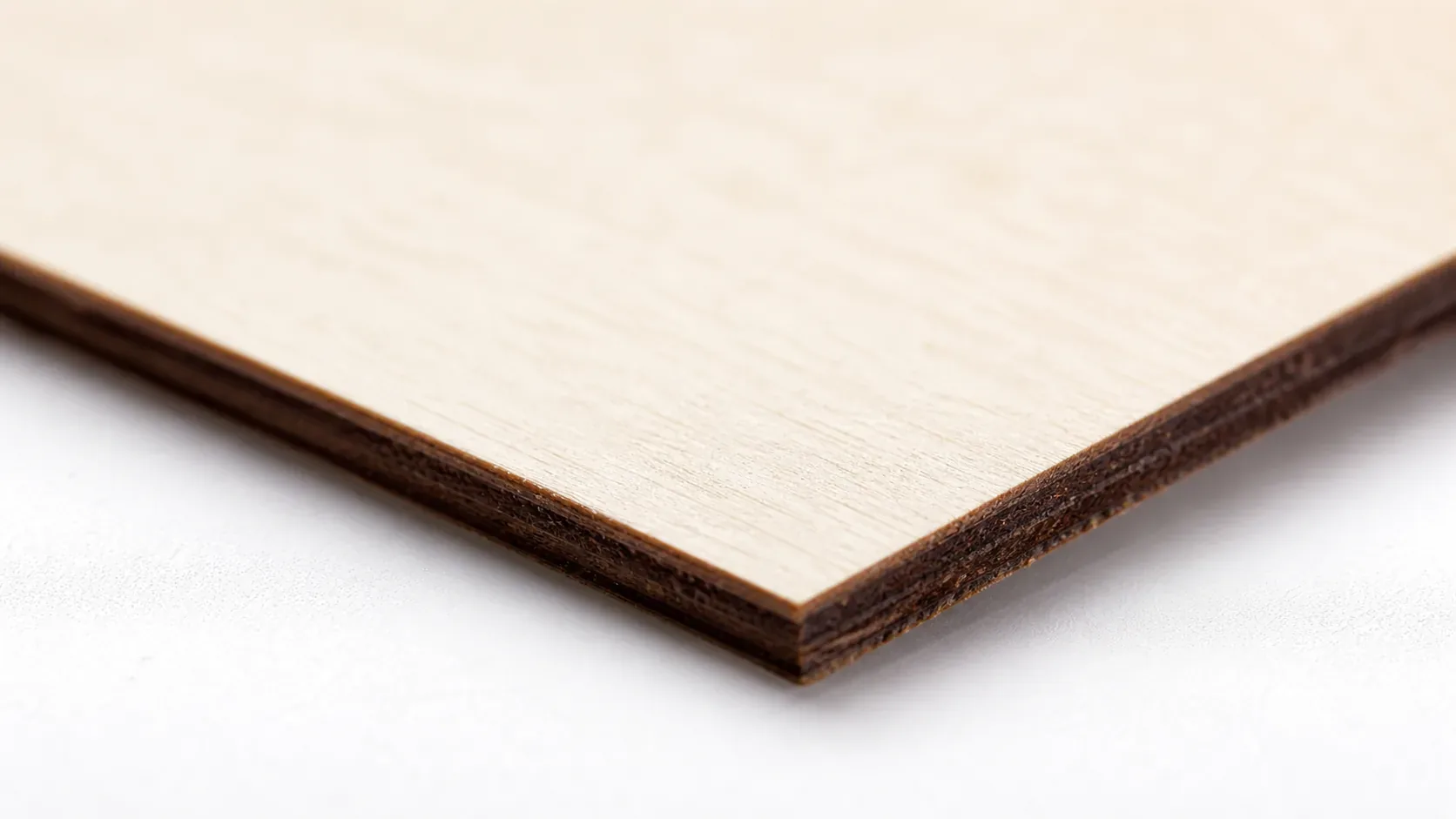
Glue type decides whether a plywood glue line softens, bubbles, chars, or fights the beam. Interior-grade sheets with urea-formaldehyde glue can gas and bubble above about 180C, leaving sticky carbonized residue behind. That residue can land on optics and turn a clean project into a frustrating cleanup job.
Exterior-grade phenol-formaldehyde or WBP glue behaves differently. It stays heat-stable to roughly 220C+, often producing less odor and less optic residue, but the tradeoff is real: the glue line can resist the beam, darken heavily, and demand far more power before it separates cleanly.
I ran identical settings on two sheets sold as the same plywood and got a rough, dark, under-cut result on one. The wood faces looked close enough, but its glue line resisted the beam differently. Same project file, very different ending. Plywood can be sneaky like that.
Those temperature observations come from general maker and technical community reports, not Crafteker’s own glue-chemistry lab testing. The useful takeaway is simple: cleaner-smelling material is not automatically easier material, and a darker glue line does not always mean your wood settings suddenly went bad.
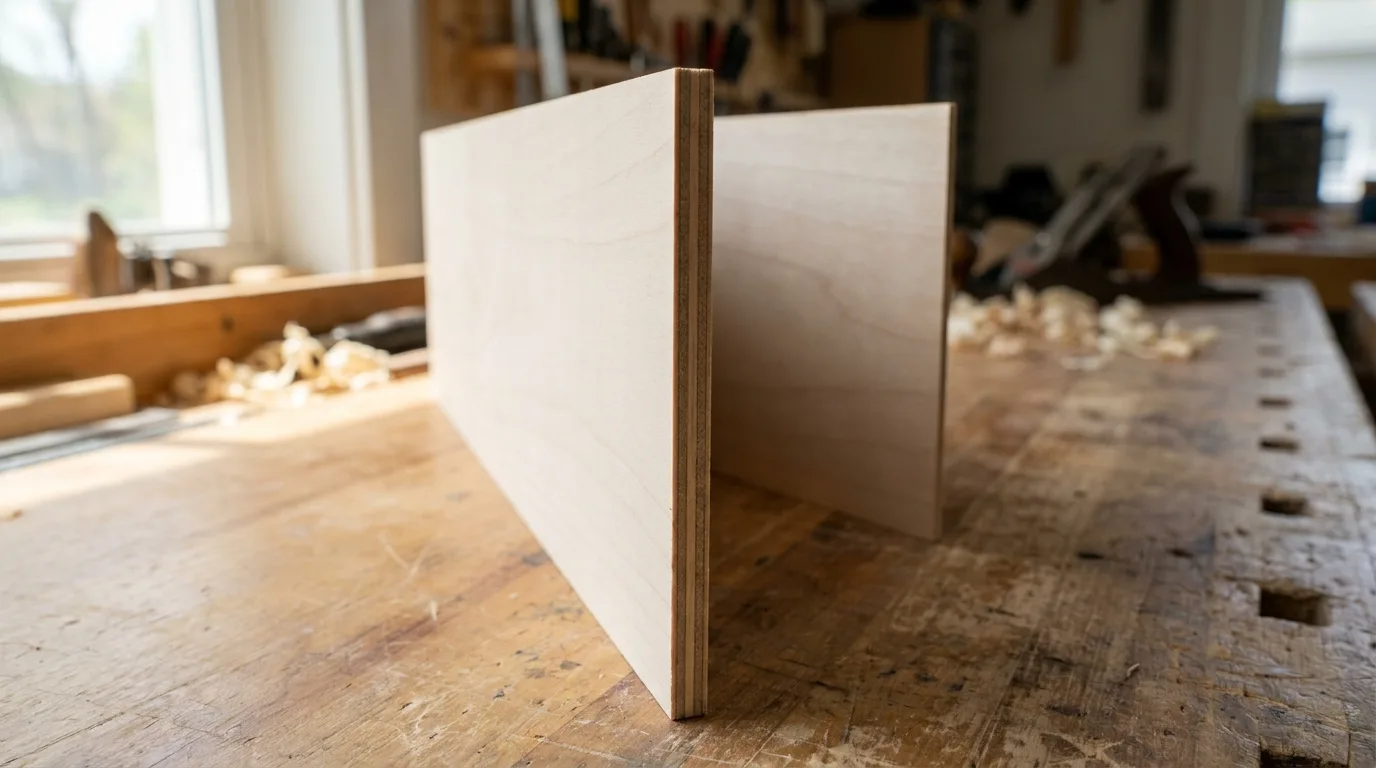
According to USDA Forest Products Laboratory data, basswood is naturally low-resin. Thin basswood sheets also use far less glue between plies than thick multi-ply hardware-store plywood, so they mostly sidestep the glue-chemistry variability that makes plywood cuts feel like a mystery.
That is why makers looking for repeatable pale faces and calmer edges often start with best basswood sheets for laser cutting. For cleanup tips after a smoky plywood attempt, see how to prevent charring when laser cutting.
- Low resin – a basswood trait that means less glue reacting to laser heat, not a promise about any supplier’s glue chemistry.
- Consistent density – supports predictable material behavior, but density alone does not identify the glue type hidden between plies.
- Minimal internal voids – a good-supplier quality signal that remains separate from glue-line char behavior.
- Light, workable surface – easy to sand, paint, or stain after cutting, without making a glue-chemistry claim.
- Low-glue construction – less glue is present to react, but always test a new supplier’s sheet before a full run.
Glue Type vs Cut Quality: What to Expect
Glue type changes the cut line, odor, residue, and how stubbornly plywood resists the beam. UF usually leaves a brighter slice but can bubble and gas, while PF/WBP tends to leave a darker glue line and demand more power. PVA or soy-based lines are generally the most predictable.
| Glue Type | Char at Glue Line | Odor / Optic Residue |
|---|---|---|
| Urea-formaldehyde (UF, interior) | Brighter slice, less charring | Higher odor risk, sticky/bubbling residue above ~180C |
| Phenol-formaldehyde (PF/WBP, exterior) | Darker, more charred glue line | Lower odor, less optic residue, but often needs far more power to cut through |
| PVA / soy-based (formaldehyde-free) | Generally consistent, low charring | Low odor, minimal residue in most reports |
“Cleaner-smelling” and “easier to cut” are not the same claim. PF can be lower-odor and still be the harder material to cut cleanly. I noticed one sheet’s glue line looked almost black beside a barely-visible line on another sheet cut with identical settings. That comparison changed how seriously I treat plywood labels.
For more predictable material, compare the best basswood sheets for laser cutting. Thin, low-glue basswood reduces the amount of adhesive your beam has to fight, which usually means fewer surprises between sheets. The temperature behavior here comes from general maker and technical reports, not Crafteker’s own glue-chemistry lab testing.
Why Do Some Glue Lines Take More Passes or Power to Cut?
Some glue lines take more passes or power because PF or exterior glue is more heat-stable than UF. PF/WBP remains stable to roughly 220C+, while UF is prone to gassing and bubbling above roughly 180C. The beam must keep delivering heat at the glue line instead of quickly breaking it down like a softer adhesive.
One general maker-community report says phenolic glue can need at least 4x the power of urea glue to cut through cleanly. That is a broad observation, not a universal machine setting. Your result still depends on the plywood construction, beam focus, ventilation, and how much adhesive sits between the plies.
Glue can also vary within a sheet or between supposedly identical sheets. That under-discussed mismatch is why yesterday’s successful settings can leave today’s edge ragged. I spent an hour troubleshooting a suddenly rough cut before realizing the new plywood stack used a different glue grade than the last one. The laser had not mysteriously changed its mind; the adhesive had.
Before blaming the machine, inspect the edge and run a small test on each new batch. A darker, glassier line points toward glue behavior, while uneven tearing may suggest voids or poor bonding. Read the prevent charring when laser cutting guide for practical ways to reduce heat buildup without pretending every plywood sheet behaves alike.
Does Glue Type Affect Lens and Mirror Maintenance?
Yes. UF gassing and bubbling byproducts are more likely to leave sticky residue on lenses and mirrors, so you’ll want to clean optics more often than you would after cutting a cleaner sheet.
PF tends to leave less optic residue despite needing more power to cut through. That does not make it maintenance-free, but it can be less likely to coat your beam path with tacky byproducts from the glue line.
I thought my laser power had dropped halfway through a project, then found a thin sticky film on the lens traced back to a batch of cheap interior-grade plywood. Use this lens cleaning and maintenance guide before blaming the machine.
Common Mistakes When Choosing Plywood for Consistent Cuts
The usual mistake is assuming plywood is just plywood. I bought a small stack from a new supplier, skipped the test cut, and had to scrap several pieces after the glue line left dark, rough edges that the previous batch never produced.
- Assuming every plywood sheet cuts alike: Wood faces can look identical while the glue underneath reacts very differently to laser heat.
- Buying before checking the grade: Find out whether a cheap sheet uses interior-grade UF or exterior-grade PF/WBP before committing to a bulk stack.
- Ignoring declining cut quality: Rougher edges, stronger odor, or new staining can signal glue-related residue building on your optics.
- Reusing settings without a test cut: Different suppliers and glue grades need their own small trial. A quick sample also helps you prevent charring when laser cutting.
Where to Buy Low-Glue Basswood for Consistent Laser Cuts
Buy Crafteker basswood if you want to mostly sidestep glue-chemistry variability. It is natural solid wood with minimal glue between thin plies, leaving far less glue to react to laser heat. These void-free, 12×12 inch, 3mm sheets are available in 3-pack $12.99, 5-pack $15.97, and 12-pack $24.99 ($2.08/sheet).
I switched from a bargain plywood stack to Crafteker basswood after losing a batch to unpredictable glue lines, and the next set came out with matching pale faces and repeatable edges. Less mystery material means less time rescuing rough cuts.
Ready to cut? Get the wood that works with these settings:
→ Buy Crafteker 12-Pack Basswood Sheets on Amazon – $24.99
Clip the 7% coupon on the listing page – buy 2 packs and save 20% automatically.
Also available: 5-pack ($15.97) · 3-pack ($12.99)
Frequently Asked Questions
Does glue type affect laser cutting quality?
Yes. UF and PF/WBP glue behave differently under laser heat: UF tends to produce more bubbling and odor above about 180C, while PF often leaves a darker glue-line char and may need at least 4x the power to cut through cleanly.
Why does my plywood glue line look darker than the wood around it?
Heat-stable glue types such as PF/WBP tend to char more visibly at the glue line, even when the surrounding wood plies cut cleanly. The darker line is a glue reaction, not automatically a failed wood cut.
Does glue type affect fumes or smoke when laser cutting?
Yes. UF glue is more prone to gassing and bubbling, with stronger odor risk above about 180C. PF generally produces less odor and optic residue, but it can still create darker char and demand more power.
Which plywood glue is easier to laser cut, UF or PF?
UF generally needs less power to cut through, while PF/WBP tends to produce less odor and optic residue and remains heat-stable to roughly 220C+. Easier cutting and cleaner-smelling cutting are different claims.
Where can I buy basswood sheets for consistent laser cuts?
Crafteker is available on Amazon in a 3-pack for $12.99, a 5-pack for $15.97, and a 12-pack for $24.99 ($2.08/sheet and the best value). Clip the 7% coupon on the listing.
About the author: Mike Dolan is a laser maker and wood materials specialist with 8+ years cutting basswood, birch, and MDF on diode and CO₂ machines. He tests every Crafteker basswood batch before listing.
I cut two plywood batches that looked identical, but one needed at least 4x the power and left a much darker glue line. I switched to Crafteker basswood for the next run and got consistent edges without fighting mystery glue.