
How to Remove Smoke Stains from Laser Cut Wood (2026)
Light smoke stains wipe off with a damp cloth or magic eraser – dark, flaky char requires 320-600 grit sanding, usually 2-3 minutes per sheet. You’ll learn three proven removal methods, when to prevent stains instead of chasing cleanup, and the one mistake that makes stains permanent.
By Mike Dolan ·
Quick Answer: Remove smoke stains from laser cut wood by wiping with a damp cloth, using a magic eraser sponge, or light sanding with 320-600 grit paper – test on scrap first.
| Material | Engraving Contrast | Cut Ease | Smoke / Odor | Cost | Beginner Score |
|---|---|---|---|---|---|
| Basswood (3 mm) | ★★★★★ | Excellent – 1 pass | Low | $ | ★★★★★ |
| Baltic Birch Plywood | ★★★★ | Good – 2-3 passes | Medium | $$ | ★★★★ |
| MDF | ★★★ | Good – 1-2 passes | High (formaldehyde) | $ | ★★ |
| Pine / Soft Plywood | ★★★ | Poor – resin deposits | Medium-High | $ | ★★ |
Why Basswood Stays Cleaner Than Other Woods for Laser Cutting
Basswood produces less smoke buildup than most other woods because it has almost no resin to vaporize. That means fewer sticky deposits on your lens, less soot drifting back onto the surface, and cleaner cuts right out of the gate – before you even think about cleanup.
If you’re dialing in your basswood laser cutting settings for the first time, you’ll notice the difference immediately compared to pine or cheap plywood. And according to USDA Forest Products Laboratory data, basswood ranks among the lowest-resin domestic hardwoods – which is exactly why it behaves so predictably under a beam.
- Low resin – minimal sticky residue means less smoke redeposition on flat surfaces and a cleaner lens after long sessions
- Consistent density – the same settings work batch after batch without retuning
- Minimal char – produces clean cut edges with air assist enabled
- Light, workable surface – easy to sand, paint, or stain after cutting; takes finishes evenly without blotching
- No toxic fumes – unlike MDF or treated plywood, safe for indoor use with basic ventilation; a solid choice if you’re building a laser cutting business from home
How to Prep Basswood Before Cutting to Minimize Smoke Stains
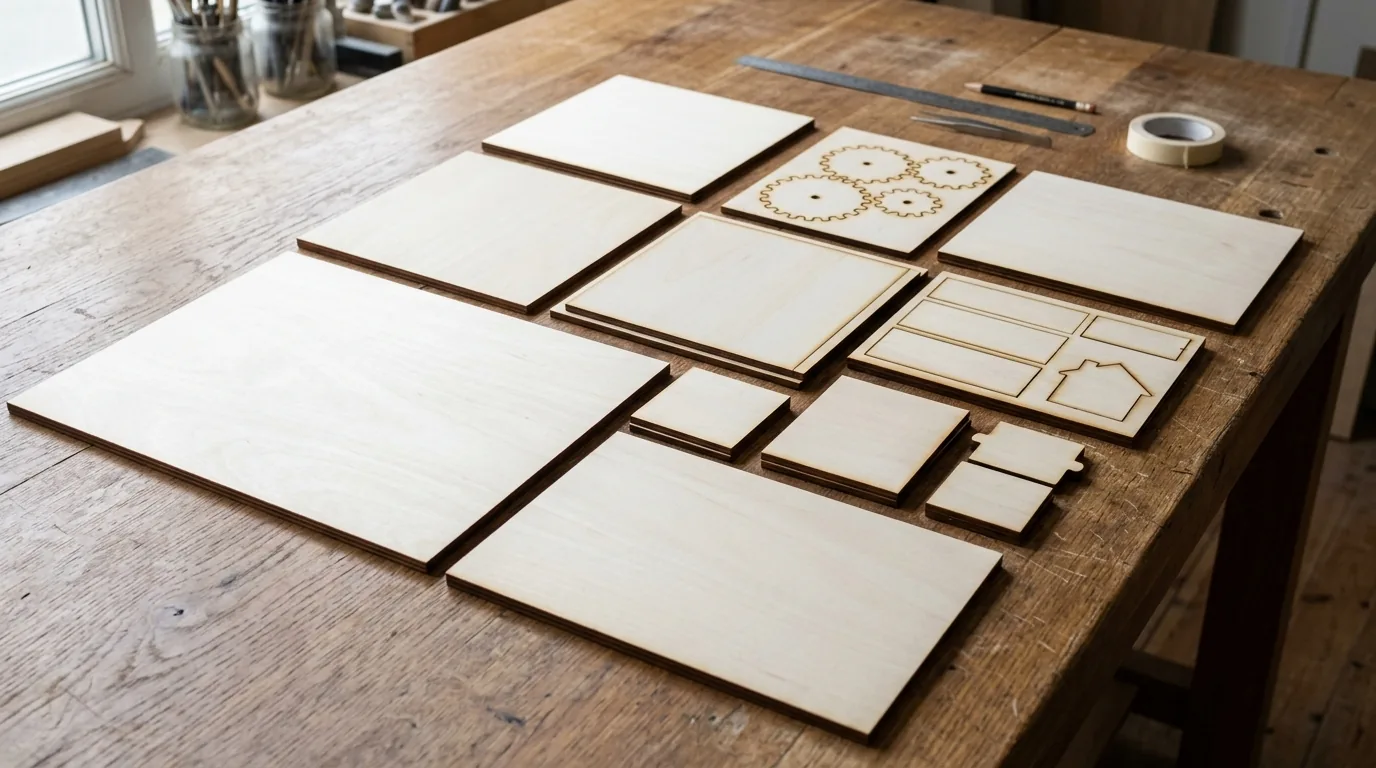
All settings below are for Crafteker 3mm basswood sheets (12×12 inch, laser-grade). Use the Laser Settings Calculator to fine-tune for your specific unit if results differ.
| Machine | Cut Speed | Cut Power | Passes | Engrave Speed | Engrave Power | Air Assist |
|---|---|---|---|---|---|---|
| Glowforge Pro (40W CO2) | 20 mm/s | 100% | 1 | 400 mm/s | 45% | Built-in |
| xTool M1 (10W diode) | 6 mm/s | 100% | 2 | 120 mm/s | 45% | Built-in |
| Omtech 40W CO2 | 25 mm/s | 65% | 1 | 400 mm/s | 50% | Required |
Before you cut a single line, give your sheet a quick once-over. Check for warps, voids, or soft spots – any of those will cause the beam to dwell unevenly and leave dark patches. Flat, consistent material is half the battle.
Apply masking tape along cut lines on the top surface. It won’t stop char on the edges, but it blocks soot from redepositing on the flat face – the part everyone actually sees. Replace it every 10-15 cuts when it starts darkening.
Elevate your material on a honeycomb bed or knife blade platform. I skipped the honeycomb bed once and got dark brown edges on a whole batch – turns out the reflected heat from a solid surface scorches the underside just as badly as a miscalibrated focus. Spacing matters.
Tune your air assist pressure before running a job. Low airflow lets smoke linger over the cut path, and it re-deposits as surface staining. Even a partial blockage in the nozzle makes a visible difference. Check it every session – takes 10 seconds.
Note: Air assist is strongly recommended for all three machines above. On open-frame diodes like the xTool M1, it protects the lens from resin and smoke residue; on enclosed CO2 units like the Omtech, it clears smoke from the cut zone before it can redeposit. Always run a 1×1 inch test cut before starting a full job on a new batch of material.
The Crafteker 12-pack basswood sheets are purpose-built for diode and CO2 lasers alike – 12×12 inch, 3mm, laser-grade, void-free. $24.99 for 12 sheets ($2.08/sheet).
Three Methods to Remove Smoke Stains: Wipe, Erase, Sand
Light brown edges are normal. Jet-black and flaky isn’t – that means air assist was off or focus was too low. But whatever you’re working with, one of these three methods will fix it.
Follow these steps based on how bad the staining actually is:
- Method 1 – Damp cloth or baby wipe (light tan stains). Wet a cloth or grab a baby wipe and wipe the surface in one direction. Takes about 30 seconds per sheet. If the stain lifts on the first pass, you’re done. Don’t overthink it.
- Method 2 – Magic eraser sponge (medium stains). Wet the sponge, wring it out so it’s damp not dripping, and make two to three passes with light pressure. No scrubbing. Test on a scrap edge first – magic erasers are mildly abrasive and can dull a glossy finish if you bear down.
- Method 3 – Sanding (jet-black char or heavy deposits). Start with 320 grit, light circular motion, 2-3 minutes per sheet. Finish with 600 grit if you need a smooth surface. Check your work every 30 seconds – you’re removing a thin surface layer, not reshaping the wood. Read more about preventing charring when laser cutting to reduce how often you reach for sandpaper.
- Do not start with coarse grit. I tried 180 grit on jet-black edges and sanded right through the fine lines on an engraved piece. Gone. 320 is the coarsest you should touch on detailed cuts.
- Always test on scrap first. Cut a small offcut from the same sheet and test your removal method there before touching the finished piece. Thirty seconds of testing beats starting over.
- Check your basswood laser cutting settings if char is consistently heavy. Persistent jet-black edges usually point to a settings problem – power too high, focus too low, or air assist too weak – not a stain problem. Fix the source and cleanup gets much faster.
How Does Your Laser Compare to Others for Smoke-Free Basswood Cuts?
Wattage changes everything for edge color. A 40W CO2 like the Omtech blasts through 3mm basswood at 20-35mm/s in one pass – fast enough that the wood barely has time to char. A diode like the xTool M1 works great, but you’re cutting at 3-5mm/s with 2-3 passes, which means more dwell time and more smoke.
Higher wattage cuts faster but can scorch more if you push power too high. Balance speed and power to minimize char – a slower, lower-power pass often beats a single high-power blast on edge quality. Check your basswood laser cutting settings before swapping machines.
| Machine | Wattage | Cut Speed (mm/s) | 3mm Passes | Typical Edge Color |
|---|---|---|---|---|
| Glowforge Pro | 45W CO2 | 20-30 | 1 | Light tan to pale brown |
| xTool M1 | 10W diode | 6-8 | 2 | Medium brown |
| Omtech 40W CO2 | 40W CO2 | 20-35 | 1 | Light tan |
Why Your Basswood Still Has Dark Edges – and How to Fix It
Light brown edges are normal. Jet-black and flaky isn’t – that’s a setup problem, not a wood problem. Most dark-edge issues trace back to four fixable causes.
- Focus too low: The beam spreads before it hits the surface, creating a wide char ring instead of a clean kerf. Re-measure your focal length and run a focus test on scrap before any production cut.
- Air assist off or weak: Without active airflow, smoke doesn’t clear the cut zone – it redeposits as char right where the laser is working. Check your pump connection and confirm the nozzle is aimed at the cut line, not off to the side.
- Inconsistent material thickness: Craft-store plywood has glue pockets and density swings that cause unpredictable char. Laser-grade basswood eliminates this – consistent density means consistent edges. Here’s how to prevent charring when laser cutting by starting with the right stock.
- Dirty lens: A fouled lens scatters the beam and generates heat spots outside the kerf. Clean with IPA on a cotton swab after every 2-3 hours of cutting – more often if you’re doing production runs.
I ruined 3 sheets before I figured out 90% power was too hot on my machine. Dropped to 70% and the edges came out pale brown instead of jet-black. Sometimes less power, not more passes, is the fix.
Best Basswood Sheets for Smoke-Free Laser Cutting
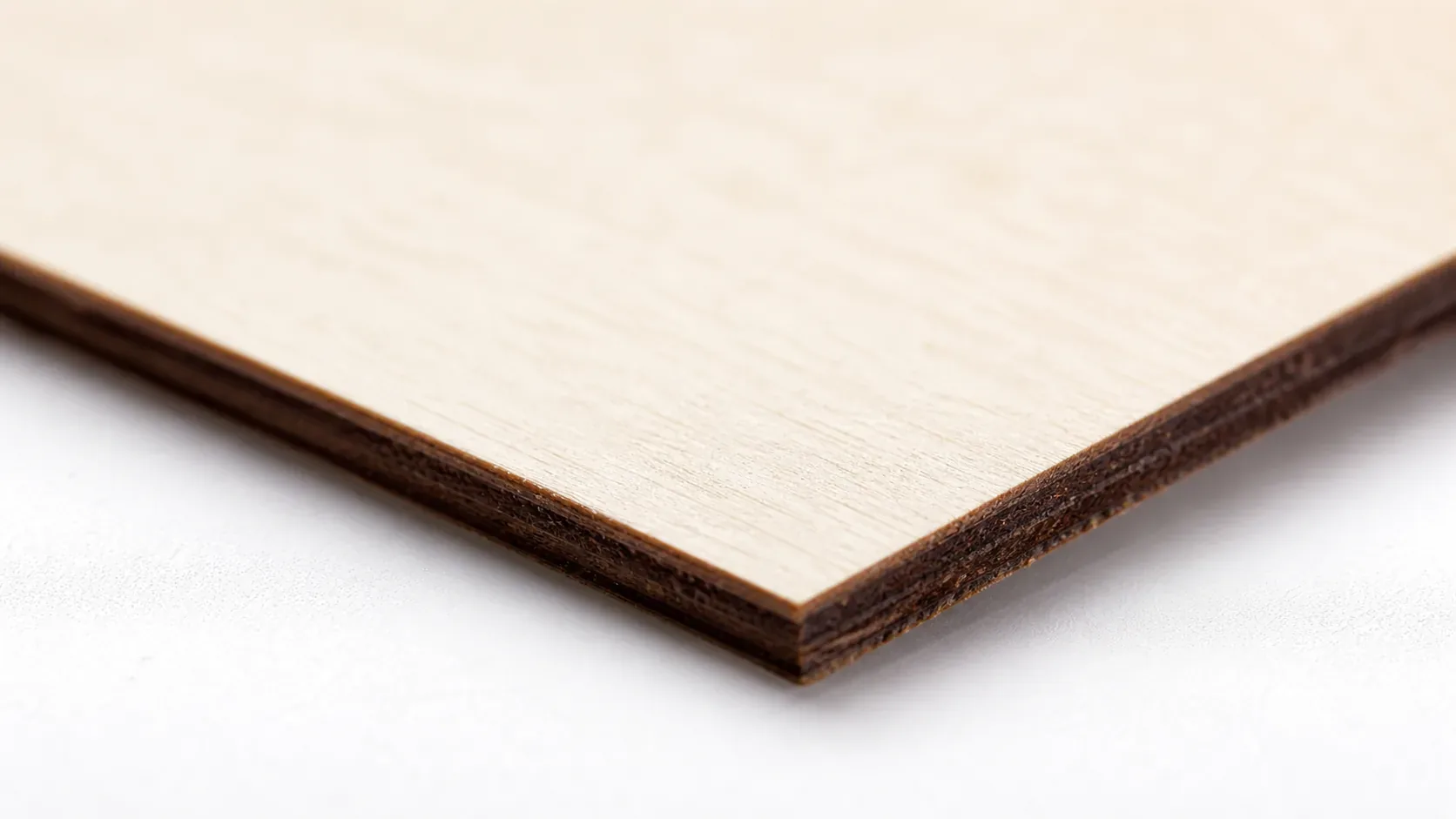
Crafteker 3mm basswood sheets are laser-grade, void-free, and pre-sanded to a consistent thickness. Void-free matters: air pockets char at a different rate than solid wood, which means patchy edges even with perfect settings. No voids, no surprises.
The 12-pack at $24.99 works out to $2.08/sheet – the best per-sheet price if you run regular batches. The 5-pack at $15.97 is solid for smaller projects. All sizes ship FBA, so you’re not waiting two weeks for a production run.
Ready to cut? Get the wood that works with these settings:
→ Buy Crafteker 12-Pack Basswood Sheets on Amazon – $24.99
Clip the 7% coupon on the listing page – buy 2 packs and save 20% automatically.
Also available: 5-pack ($15.97) · 3-pack ($12.99)
Frequently Asked Questions
What’s the best way to remove laser burn marks from basswood?
Wipe light tan stains with a damp cloth – takes about 30 seconds per sheet. For darker marks, use a wet magic eraser sponge with gentle pressure and two-three passes. Jet-black char needs 320-600 grit sanding in light circular motion, 2-3 minutes. Always test on scrap first.
Can I sand laser-cut edges without ruining detail?
Yes, if you use 320-600 grit and light pressure. Start with 320 for heavy char, finish with 600 for a smooth surface. Avoid anything coarser than 220 grit – it removes detail too fast. Sand in one direction rather than circles to avoid catching thin cuts.
Does masking tape really prevent smoke stains on basswood?
Yes – it blocks direct smoke contact with the top surface, especially on engraved areas. Stains still appear on the cut edges (that’s laser char, not smoke), but the flat surface stays clean. Replace tape every 10-15 cuts as it darkens and loses adhesion.
What’s the difference between laser char and smoke stain?
Char is dark brown to jet-black on the cut edge itself – charred wood fiber from laser heat. Smoke stain is tan or light brown on flat surfaces – soot redeposited by weak air assist. Char prevents with good focus and air assist. Smoke wipes off with a damp cloth.
Where can I buy basswood sheets for laser cutting?
Crafteker on Amazon: 3-pack $12.99, 5-pack $15.97, 12-pack $24.99 ($2.08/sheet, best value for repeat cuts). All sheets are 3mm, 12×12 inch, laser-grade, void-free, and ship FBA. Clip the 7% coupon on the listing page to save an extra $1.75 on the 12-pack.
About the author: Mike Dolan is a laser maker and wood materials specialist with 8+ years cutting basswood, birch, and MDF on diode and CO₂ machines. He tests every Crafteker basswood batch before listing.
I was getting jet-black edges on all my Glowforge cuts until I realized my focus was way off. Reset the head height and turned air assist up to 10, and my next batch of Crafteker basswood came out pale brown – wiped clean in 10 seconds per sheet. Magic eraser on the stubborn bits takes another minute if needed. Game changer for production runs.