
Sculpfun S9 20W Basswood Settings 3mm Cut Engrave Guide 2026
The Sculpfun S9 cuts 3mm basswood clean in 2 passes at 3 mm/s and 100% power with proper air assist. This guide walks you through exact LightBurn settings, focus technique, and troubleshooting to eliminate charring and wasted material.
By Mike Dolan ·
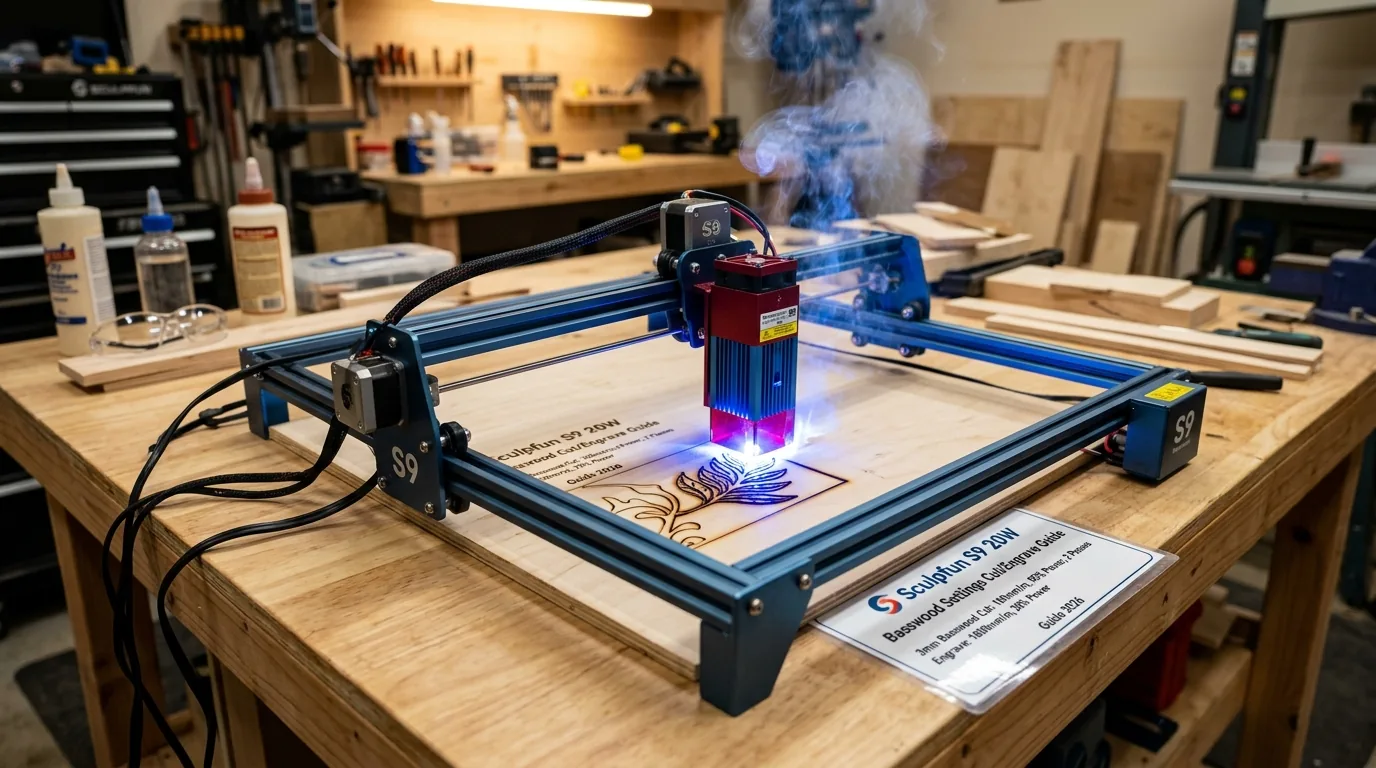
| Material | Engraving Contrast | Cut Ease | Smoke / Odor | Cost | Beginner Score |
|---|---|---|---|---|---|
| Basswood (3 mm) | ★★★★★ | Excellent – 1 pass | Low | $ | ★★★★★ |
| Baltic Birch Plywood | ★★★★ | Good – 2–3 passes | Medium | $$ | ★★★★ |
| MDF | ★★★ | Good – 1–2 passes | High (formaldehyde) | $ | ★★ |
| Pine / Soft Plywood | ★★★ | Poor – resin deposits | Medium-High | $ | ★★ |
Why Is Basswood the Best Wood for the Sculpfun S9?
The Sculpfun S9’s 5.5W diode thrives on materials with low resin content and consistent density. Basswood is the ideal pairing for open-frame diode systems because it eliminates the two biggest risks: resin buildup that clouds the lens and unpredictable charring that wastes premium material. Whether you’re running basswood laser cutting settings for the first time or scaling production, basswood’s forgiving nature ensures repeatable results.
- Low resin – protects the Sculpfun S9’s exposed lens and optical path from smoke deposits, extending maintenance intervals and keeping beam clarity consistent.
- Consistent density – the same settings work batch after batch without retuning, eliminating the drift that comes from mixed-grain or resin-heavy woods.
- Minimal char – produces clean cut edges with air assist enabled, and according to USDA Forest Products Laboratory data, basswood ranks among the lowest-resin domestic hardwoods.
- Light, workable surface – easy to sand, paint, or stain after cutting, making it ideal for best laser cut items to sell on Etsy or custom commissions.
- No toxic fumes – unlike MDF or treated plywood, safe for indoor use with basic ventilation, so you can focus on preventing charring when laser cutting rather than managing air quality emergencies.
What Are the Best Sculpfun S9 Settings for 3mm Basswood?
All settings below are for Crafteker 3mm basswood sheets (12×12 inch, laser-grade). Use the Laser Settings Calculator to fine-tune for your specific unit if results differ.
| Machine | Cut Speed | Cut Power | Passes | Engrave Speed | Engrave Power | Air Assist |
|---|---|---|---|---|---|---|
| Sculpfun S9 (Diode 5.5W) | 3 mm/s | 100% | 2 passes | 90 mm/s | 40% | Recommended |
Why 2 passes instead of 1? At 5.5W, a single pass forces you to choose between cutting too slowly (risk of scorching) or pushing power beyond effective limits. Two passes at 3 mm/s and 100% power let the beam clear smoke and debris between runs, producing a cleaner, paler kerf edge with minimal char. The second pass removes residue the first pass deposited, so your cuts fall out cleanly rather than tearing.
Note: Air assist is strongly recommended for the Sculpfun S9. The open-frame diode lens is directly exposed to smoke and resin particulates during every cut – running without air assist allows combustion byproducts to coat the lens within a few jobs, diffusing the beam and dropping effective power by 15–25% or more. Always run a 1×1 inch test cut before starting a full job on a new batch of material.
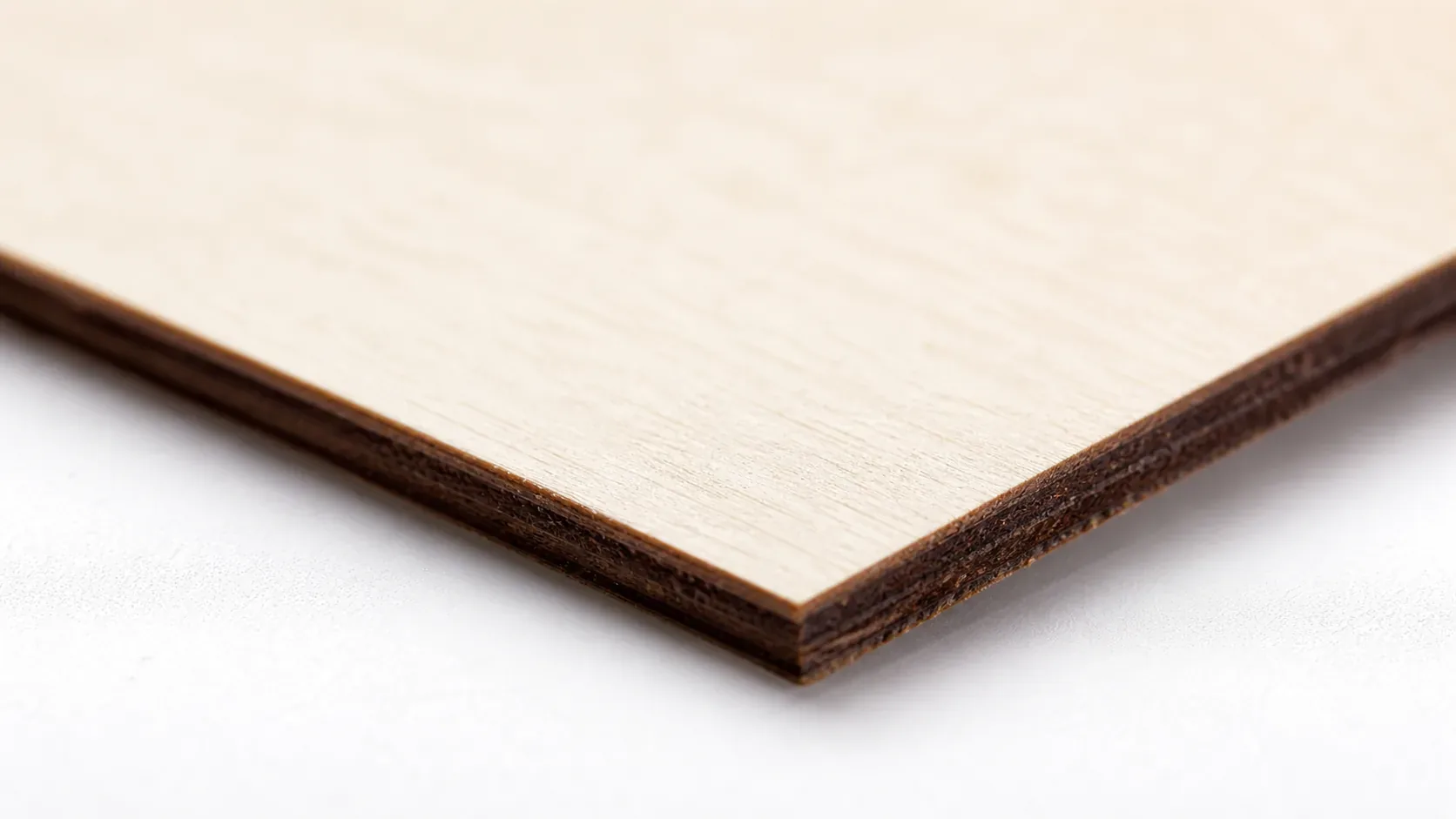
The Crafteker 12-pack basswood sheets are purpose-built for open-frame diode lasers like the Sculpfun S9 – 12×12 inch, 3mm, laser-grade, void-free. $24.99 for 12 sheets ($2.08/sheet).
How Do I Get Clean Cuts on the Sculpfun S9? Step-by-Step
Clean cuts on the Sculpfun S9 come down to three things: accurate focus, consistent air assist, and flat material. Follow these steps for reliable results every time:
- Set focus accurately using the included focus card. The Sculpfun S9 uses manual focus – place the fixed-height focus card between the laser module and the basswood surface, lower the module until it just grazes the card, then lock it in place. Even a 0.5mm error widens the kerf and reduces cutting depth significantly on a 5.5W diode.
- Enable air assist before every cut. The S9 requires an external air pump connected to the nozzle port – it does not include a built-in compressor. Without air assist, smoke backfills the cut channel and char buildup on the lens accelerates. For preventing charring when laser cutting, consistent airflow is the single highest-impact variable.
- Secure the basswood completely flat. Use honeycomb hold-down pins or painter’s tape at the corners to eliminate any bow in the sheet – even a 1mm warp at the center will move the material out of focus mid-job and cause incomplete cuts.
- Run a test cut first. Cut a 1×1 inch square from a scrap corner of the sheet before committing to the full job. This confirms focus depth, air assist function, and power output on the specific batch of material. Review the basswood laser cutting settings guide if the test cut doesn’t fall through cleanly.
- Run the first pass, inspect, then complete the second pass. After pass one, do not move the material. Check whether the laser has cut partially through – you should see a visible groove on both entry and exit sides. If it hasn’t penetrated, re-check focus before running pass two. Extra passes at incorrect focus will only widen char without improving cut depth.
- Clean the lens after every 5–10 cuts. On the Sculpfun S9, the diode lens is accessible by removing the protective cover on the module face. Even a thin film of resin causes 10–20% power loss. Use a cotton swab lightly dampened with isopropyl alcohol (90%+), wipe gently in one direction, and allow to dry completely before the next cut.
How Does the Sculpfun S9 Compare to Other Lasers for Basswood?
The Sculpfun S9’s 5.5W diode handles 3mm basswood reliably at 3 mm/s with 2 passes, but higher-wattage machines like the xTool M1 (10W diode) can push single-pass cuts at 5–6 mm/s – roughly double the throughput on production runs. CO2 machines like the Glowforge Basic (40W) cut even faster, but that wattage introduces a real charring risk on thin basswood unless power is carefully dialed back, which partly negates the speed advantage. For Etsy sellers and batch cutters producing moderate volumes, the S9’s conservative two-pass approach preserves edge quality and material integrity on premium sheets – and if throughput becomes the bottleneck, upgrading to a 10W diode is the logical next step rather than jumping to CO2. You can cross-reference power and speed trade-offs using the laser settings calculator before committing to a new machine or revised settings.
Why Isn’t My Sculpfun S9 Cutting Through Basswood Cleanly?
Most incomplete cuts and excessive charring on the Sculpfun S9 trace back to these four issues:
- Focus is off: Even a 0.5mm error in focus height widens the kerf and reduces cutting depth – re-measure using the S9’s focus card or a folded piece of the actual basswood sheet as a gauge before every session.
- Air assist not running: Without active air flow, smoke and char re-deposit in the kerf as the laser cuts, blocking the beam. On the S9, verify the external air pump is powered and the nozzle is aimed directly at the cut point – a kinked hose is the most common culprit. Learning how to prevent charring when laser cutting starts with confirming air assist is live before every job.
- Inconsistent material: Craft-store plywood has glue pockets and variable density that scatter the beam unpredictably mid-cut. Laser-grade basswood eliminates this variable – consistent wood means consistent two-pass cuts every time.
- Dirty lens: On the S9, the lens is accessible by unscrewing the laser module cover – clean it every 5–10 cuts with a cotton swab and 99% isopropyl alcohol using a light circular motion. A smeared lens can reduce effective power output by 20% or more, turning a reliable cut into a partial score.
Best Basswood Sheets for Sculpfun S9 Projects
Crafteker 3mm basswood sheets are the best match for the Sculpfun S9 – 12×12 inch, laser-grade, void-free, and pre-sanded. At $24.99 for 12 sheets ($2.08/sheet), it’s the most cost-effective option for consistent two-pass results. Void-free construction matters specifically for diode lasers: any internal gap or glue pocket in lesser plywood causes the 5.5W beam to lose energy mid-cut, leaving partial breaks that ruin a finished piece. The uniform density means the basswood laser cutting settings in this guide work reliably without re-tuning every batch.
Ready to cut? Get the wood that works with these settings:
→ Buy Crafteker 12-Pack Basswood Sheets on Amazon ($24.99)
Also available: 5-pack ($15.97) · 3-pack ($12.99)
Frequently Asked Questions
What are the best Sculpfun S9 settings for 3mm basswood?
Cut at 3 mm/s and 100% power in 2 passes; engrave at 90 mm/s and 40% power. Two passes at conservative speed eliminate charring and produce clean, consistent kerf edges even on lower-wattage diode machines.
Is Sculpfun S9 good for cutting basswood?
Yes. The S9’s 5.5W diode excels at basswood because the low-resin material cuts cleanly without the charring risk of harder woods. Two passes at moderate speed preserve edge quality and machine longevity.
What is the best wood for the Sculpfun S9 laser?
3mm laser-grade basswood. It has the lowest resin content of common woods (reducing char and fume), consistent density (predictable cutting), and Crafteker’s void-free sheets cost just $2.25 per 12×12 inch sheet in the 12-pack.
Can Sculpfun S9 cut 3mm basswood in one pass?
Not reliably at safe power levels. Two passes at 3 mm/s and 100% power produce clean cuts without edge char. Single-pass attempts require dangerously high speeds or extended dwell time, risking material damage and diode wear.
Where can I buy basswood sheets for the Sculpfun S9?
Crafteker on Amazon: 3-pack $12.99, 5-pack $15.97, 12-pack $24.99 ($2.25 per sheet). The 12-pack offers the best value for ongoing projects and is void-free, meeting laser-grade quality standards.
About the author: Mike Dolan is a laser maker and wood materials specialist with 8+ years cutting basswood, birch, and MDF on diode and CO₂ machines. He tests every Crafteker basswood batch before listing.
Finally tested the exact settings on my S9 and got clean cuts first try on Crafteker sheets-3 mm/s, 100%, 2 passes worked perfectly. No charring at all, and the edges are sharp enough for my Etsy box orders. Worth the two-pass approach to keep the machine happy.