

4 Checks to Spot Bad Basswood Plywood Batches (2026)
Hidden voids in basswood plywood can run 1-5mm wide, with density swings of plus-or-minus 5-10% between sheets – invisible until your laser burns straight through one mid-project. This guide walks you through the edge, tap, and light checks that catch a bad batch before it wrecks a cut, plus what to ask a supplier before you buy in bulk.
By Mike Dolan ·
Quick Answer: Spotting bad batches of 3mm basswood plywood before laser cutting means running an edge check, a tap test, and a light test – catching voids of 1-2mm, air pockets up to 5mm, and thickness deviation up to 0.8mm before you commit a full sheet.
| Material | Engraving Contrast | Cut Ease | Smoke / Odor | Cost | Beginner Score |
|---|---|---|---|---|---|
| Basswood (3 mm) | ★★★★★ | Excellent – 1 pass | Low | $ | ★★★★★ |
| Baltic Birch Plywood | ★★★★ | Good – 2-3 passes | Medium | $$ | ★★★★ |
| MDF | ★★★ | Good – 1-2 passes | High (formaldehyde) | $ | ★★ |
| Pine / Soft Plywood | ★★★ | Poor – resin deposits | Medium-High | $ | ★★ |
What Causes Hidden Voids and Inconsistent Cores in Basswood Plywood?
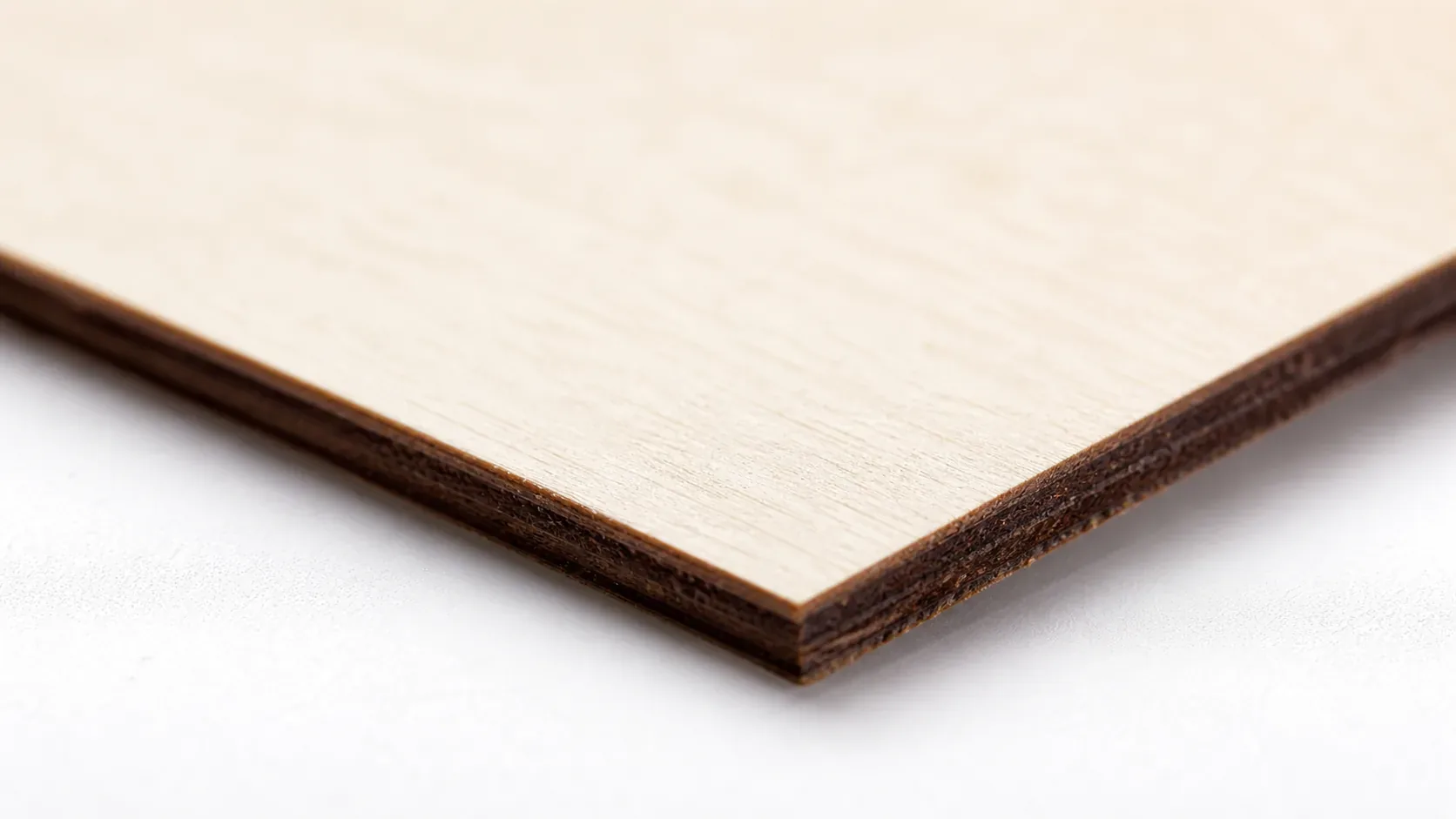
Core voids are gaps trapped between internal veneer layers, and they stay invisible until you cut, drill, or rout right through one. The face veneer can look flawless while the middle layer is hollow underneath it.
Most voids trace back to a handful of manufacturing shortcuts: low-quality core veneer, poor veneer arrangement during layup, inadequate glue coverage, uneven pressing temperature or pressure, and veneer that wasn’t dried properly before it got pressed into the stack.
As general manufacturing-defect figures from industry sources (not Crafteker’s own defect data), uneven glue spread tends to leave voids around 1-2mm, poor pressure control during pressing can leave air pockets of 2-5mm, and misaligned core veneers can cause thickness deviation up to 0.8mm. Density variation of plus-or-minus 5-10% between sheets is another common source of internal gaps.
According to USDA Forest Products Laboratory data, basswood has an unusually consistent, fine-grained structure. That evenness works in your favor here – a void’s dark edge stands out against basswood far more clearly than it would against a busier-grained wood where the grain pattern can hide it.
I learned this the hard way. A sheet looked totally clean on the face, no discoloration, no odd texture, nothing to flag it. The laser cut straight through a spot mid-design like there was nothing there. I only found the void when I flipped the ruined piece over and saw the gap staring back at me.
- Low resin – a basswood material trait, but it has nothing to do with how often voids show up in a given batch
- Consistent density – usually true of good basswood, but one outlier sheet can still slip into an otherwise solid batch, so don’t assume
- Minimal internal voids – the actual quality signal this whole guide is about, and it’s not guaranteed by species alone, only by how carefully the batch was made
- Light, workable surface – great for sanding, painting, or staining after a cut, but a separate benefit from what’s happening inside the core
- Fine, even grain – makes a void’s dark edge easier to spot at a glance than in wood with busier grain patterns, per the USDA reference above
Three Fast Checks Before You Trust a New Batch
Three checks catch most bad batches before a sheet ever touches the laser bed: an edge inspection, a tap test, and a light test. Each takes under a minute, and together they’ll flag a void long before it becomes a mid-cut surprise.
| Check | What It Reveals |
|---|---|
| Edge inspection | Dark gaps or hollow spots visible at a cut or sanded edge |
| Tap test | A hollow, drum-like sound over a void versus a solid knock elsewhere |
| Light test | Holding the sheet up to a bright light shows thin spots or gaps in the core |
None of these are lab-grade inspection. They’re shop-floor checks you can run in the time it takes to unwrap a new batch, and they catch most problem sheets before you commit a full project to one. Pair them with a look at the best basswood sheets for laser cutting if you’re shopping for a new supplier.
I’ve had a sheet pass the edge check clean, no gaps, no discoloration, nothing. Then I tapped near the corner and got a hollow thud instead of the solid knock the rest of the sheet gave. That thud was a void the eye missed entirely.
Why Do Voids Show Up During Laser Cutting Specifically?
Voids show up mid-cut because a void means less wood fiber sitting under the beam at that exact spot. Less fiber to absorb the energy means the laser burns through instantly there, even though your settings haven’t changed and the rest of the sheet was cutting clean seconds earlier.
That instant burn-through leaves a visibly weak point in the finished piece, sometimes a scorched blowout, sometimes just a soft spot that snaps under light pressure. A hollow sound when you tap the finished piece or screws that won’t bite and hold are the same underlying defect showing up downstream, not a separate problem to chase.
I once got a sudden burn-through on a project that had been cutting fine on the same basswood laser cutting settings for ten straight pieces. I spent several minutes dropping power and second-guessing my machine before it hit me: the material had a hidden void, not the settings. Once I swapped the sheet, the exact same settings cut clean again.
How to Inspect a Sheet Before Committing to a Full Project
You inspect a sheet by running the edge, tap, and light checks from a sample before you cut your actual design, not after. Grab one or two sheets from a new batch and put them through all three tests first.
Weigh a few sheets from the same batch side by side on a kitchen scale. I weighed a stack of six sheets from a new supplier once, and one came in noticeably lighter than the rest. That was the problem sheet, caught before it ever touched the laser bed.
Flex the sheet gently in your hands too. A soft or spongy spot under light pressure often means a void sitting right under the surface, even if the edge and light checks came back clean.
For anything detailed or high-value, run a small test cut on scrap first. It costs you two minutes and a corner of material. Skipping it costs you the whole sheet if a hidden void decides to show up mid-cut. See prevent charring when laser cutting for related material-prep habits worth building into your routine.
Common Mistakes When Buying Batches of Basswood Plywood
The biggest mistake is treating a new batch like your last good one. Basswood plywood varies supplier to supplier and even batch to batch, so old assumptions don’t automatically carry over.
- Skipping inspection entirely: starting a full project straight out of the box without a test cut or a quick edge/tap/light check on a sample.
- Trusting the “laser-grade” label alone: that phrase describes intent, not a guarantee – void-free sheets still require actual quality control behind them.
- Not asking about core construction: buying in bulk without asking the supplier a single question about how the core veneers are built or checked.
- Buying sight-unseen at scale: ordering a large batch without inspecting even one sample sheet first, then finding the problem sheet mid-project instead of on the bench.
Compare this against what you already know about best basswood sheets for laser work – the good suppliers make these questions easy to answer, not awkward.
Where to Buy Consistent, Void-Free Basswood Sheets
Crafteker sells void-free, laser-grade 3mm basswood in 12×12 inch sheets, with consistent core construction and every batch checked before it ships FBA. That’s the inspection work done before the box ever reaches your bench.
Pick the pack size that matches how much you cut: 3-pack at $12.99, 5-pack at $15.97, or 12-pack at $24.99, which works out to $2.08 per sheet and is the best value for regular cutting. Clip the 7% coupon on the Amazon listing page before checkout to knock a bit more off. One less thing to inspect for on your end, since the batch consistency work is already handled.
Ready to cut? Get the wood that works with these settings:
→ Buy Crafteker 12-Pack Basswood Sheets on Amazon – $24.99
Clip the 7% coupon on the listing page – buy 2 packs and save 20% automatically.
Also available: 5-pack ($15.97) · 3-pack ($12.99)
Frequently Asked Questions
What causes hidden voids in basswood plywood?
Manufacturing shortcuts, mainly. Low-quality core veneer, poor veneer arrangement, inadequate glue coverage, and uneven pressing temperature or pressure all play a part. Uneven glue spread alone can leave voids of 1-2mm between layers, and poor pressure control during pressing can leave air pockets up to 5mm.
How can I check a plywood sheet for voids before cutting?
Run three checks in under two minutes per sheet. Look at a cut or sanded edge for dark gaps or hollow spots, tap the sheet and listen for a hollow drum sound versus a solid knock, and hold it up to bright light to catch thin spots in the core.
Why does my laser cut through instantly in one spot but not others?
A hidden void is why. Less wood fiber at that exact point means less material to absorb the beam’s energy, so it burns through faster there than everywhere else on the sheet, even with identical settings. That sudden burn-through is a material problem, not a settings problem.
Does laser-grade plywood still have voids?
Yes, it can. “Laser-grade” just means a sheet is void-free enough for consistent cutting, but quality control varies a lot between suppliers, and density variation of plus-or-minus 5-10% between sheets in a batch is a real industry figure. Run the edge, tap, and light checks on any new batch before trusting the label alone.
Where can I buy void-free basswood sheets for laser cutting?
Crafteker sells 3mm, 12×12 inch void-free basswood on Amazon. Options run 3-pack for $12.99, 5-pack for $15.97, and 12-pack for $24.99 at $2.08 per sheet, the best value for regular cutting. Clip the 7% coupon on the listing page before checkout.
About the author: Mike Dolan is a laser maker and wood materials specialist with 8+ years cutting basswood, birch, and MDF on diode and CO₂ machines. He tests every Crafteker basswood batch before listing.
Bought a 12-pack from a different brand a while back and the tap test caught a dead spot on sheet 4 before I ever fired up the laser, saved me a whole afternoon. Switched to Crafteker after that and every sheet in the last three batches has sounded the same when I knock on it, which is exactly what I want.