

Why Transfer Tape Won’t Stick to Basswood: 4 Fixes (2026)
Transfer tape that lifts, bubbles, or won’t stay down on basswood is almost always a surface problem, not a tape problem – sawdust, rough grain, residual moisture, or unpressed edges all break adhesive contact and let smoke sneak underneath mid-engrave. This article covers the 4 fixes that actually solve it, and how to pick the right tape type for your sheet.
By Mike Dolan ·
Quick Answer: Clean the surface of dust and oil, lightly sand rough or textured sheets, make sure the wood is fully dry, and press tape down firmly from one edge with a squeegee or card – especially the edges, where lifted corners let smoke underneath.
| Material | Engraving Contrast | Cut Ease | Smoke / Odor | Cost | Beginner Score |
|---|---|---|---|---|---|
| Basswood (3 mm) | ★★★★★ | Excellent – 1 pass | Low | $ | ★★★★★ |
| Baltic Birch Plywood | ★★★★ | Good – 2-3 passes | Medium | $$ | ★★★★ |
| MDF | ★★★ | Good – 1-2 passes | High (formaldehyde) | $ | ★★ |
| Pine / Soft Plywood | ★★★ | Poor – resin deposits | Medium-High | $ | ★★ |
The Tape Looked Stuck Down, Then Smoke Got Under It Anyway
I’d pressed a sheet of transfer tape down, smoothed it by hand, and started the job thinking it was secure. Partway through, I noticed a faint gray haze creeping in from one corner – the tape had lifted just enough at that edge to let smoke sneak underneath, and the surrounding wood picked up a soft halo I hadn’t planned for.
Tape adhesion problems on basswood almost always trace back to the surface, not the tape itself. This is a different question from which pre-engrave treatment to use in the first place – that’s about choosing between tape, sealer, or nothing at all. This article is about what to do when you’ve already chosen tape and it won’t cooperate.
Basswood’s naturally smooth, consistent surface is actually an advantage here – it gives adhesive more even contact than a rougher or more open-grained wood would, which is part of why tape problems on basswood are usually fixable rather than a fight against the material itself.
- Low resin – no sticky surface residue competing with the tape’s own adhesive
- Consistent density – predictable surface texture sheet after sheet
- Minimal char – less soot overall even if a small amount sneaks under a mask
- Light, workable surface – sanded smooth both sides, good contact for adhesives
- No toxic fumes – unlike MDF or treated plywood, safe for indoor use with basic ventilation
According to USDA Forest Products Laboratory data, basswood’s fine, uniform cellular structure gives it an even surface texture that’s part of why it finishes – and takes adhesives – more predictably than coarser-grained hardwoods.
Fix 1 and 2: Clean the Surface, Then Deal With Rough Grain
Dust, sawdust, and oil from handling are the single most common reason tape won’t grip – any of them sits between the adhesive and the wood and breaks contact before you even notice. Wipe the sheet down and make sure it’s genuinely clean and dry before applying anything.
If the sheet is rough, uneven, or heavily textured, light sanding to a fine final grit gives the adhesive more actual surface area to bond to. This matters less on already-smooth laser-grade sheets, but it’s a cheap, fast troubleshooting step when tape keeps lifting on a specific batch of material.
Fix 3: Let the Wood Dry Before You Mask It
Humidity and residual moisture reduce adhesive performance and can cause tape to buckle or slide out of position before you’ve even started the job. If a sheet has been sitting in a humid space or was recently brought in from outside temperature, give it time to acclimate and fully dry before masking – rushing this step is an easy way to waste both the tape and the sheet.

Fix 4: Apply From One Edge and Press Out Every Air Pocket
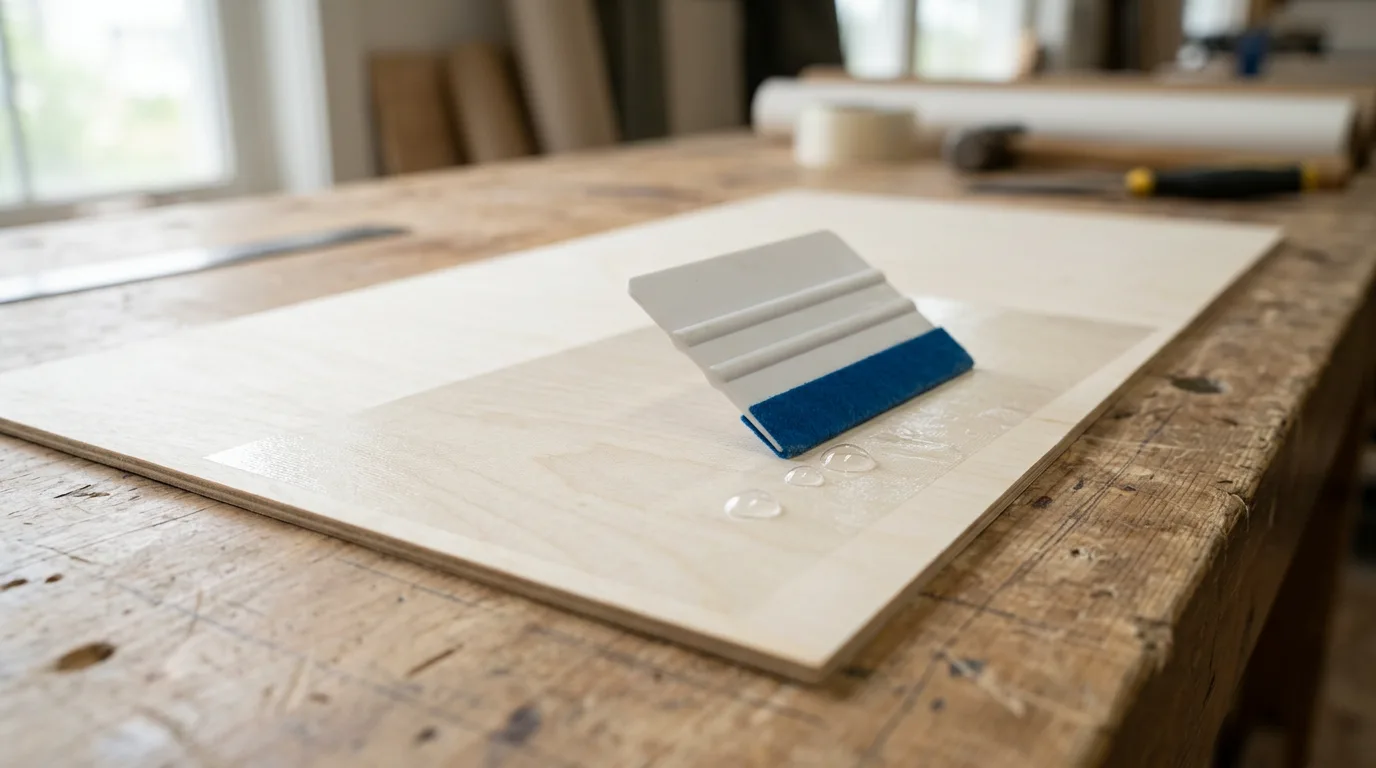
Don’t lay the whole piece of tape down at once and hope for the best. Start from one edge and work across with a squeegee, roller, or stiff plastic card, pressing air pockets out ahead of you as you go. Pay special attention to the final edges and corners – an unsecured edge is the single most common place smoke finds its way underneath a mask that looked fine everywhere else.
Transfer tape works well on smooth, flat basswood and larger sign-style pieces. On grainier or more textured boards, low-tack blue painter’s tape or purpose-made laser masking paper often holds better, since it doesn’t rely on the same level of smooth-surface contact that transfer tape’s adhesive needs. Excessive air assist can also lift or flutter a marginal edge, so if tape keeps failing at the same spot, check your air pressure too.
When the job’s done, peel the mask promptly and pull at a low angle – waiting too long or pulling straight up increases the risk of adhesive residue or lifting fine wood fibers along with the tape.
Where to Buy Basswood That Holds Tape Reliably
Crafteker 3mm basswood sheets are sanded smooth on both sides, which means tape gets even, reliable contact without needing extra prep sanding before you mask a project.
At $24.99 for 12 sheets ($2.08/sheet), it’s the most cost-effective option for basswood sheets with a consistent surface that doesn’t fight your masking tape.
Ready to engrave? Get wood that holds tape properly:
→ Buy Crafteker 12-Pack Basswood Sheets on Amazon – $24.99
Also available: 5-pack ($15.97) · 3-pack ($12.99)
Frequently Asked Questions
Why won’t transfer tape stick to my basswood sheet?
The most common causes are sawdust or oil on the surface, rough or uneven grain reducing adhesive contact, residual moisture from humidity, or edges that were never pressed down firmly after application. Any one of these can let the tape lift, bubble, or let smoke underneath during the cut.
Should I sand basswood before applying masking tape?
Light sanding to a fine final grit helps on rougher or more textured sheets, since a smoother surface gives the adhesive more actual contact area. On already-smooth laser-grade basswood this matters less, but it’s a quick, cheap step if tape keeps lifting.
What’s the best tape for laser engraving basswood – transfer tape or painter’s tape?
Transfer tape works well on smooth, flat basswood and larger signs. Low-tack blue painter’s tape or purpose-made laser masking paper often performs better on grainier or more textured boards where transfer tape’s adhesive doesn’t fully contact the surface.
How do I apply tape without bubbles or air pockets?
Start from one edge and work across with a squeegee, roller, or stiff plastic card, pressing out air as you go rather than laying the whole piece down at once. Press the final edges down firmly – an unsecured edge is the most common place smoke sneaks underneath.
Where can I buy basswood with a consistent surface that holds tape well?
Crafteker on Amazon: 3-pack $12.99, 5-pack $15.97, 12-pack $24.99 ($2.08/sheet best value) – sanded smooth both sides, so tape gets even contact without extra prep.
About the author: Mike Dolan is a laser maker and wood materials specialist with 8+ years cutting basswood, birch, and MDF on diode and CO₂ machines. He tests every Crafteker basswood batch before listing.
Kept getting smoke bleed on a batch of sheets until I realized they’d been sitting in a damp garage for a week – let them acclimate a day indoors before masking and the tape held perfectly after that, same roll of tape and everything.