
Air Assist for Laser Cutting Wood: Complete Guide 2026
Air assist blows a focused stream of air at your laser’s cutting point, clearing smoke and debris so the beam hits fresh material every pass – and research shows it can speed up wood cutting by up to 6x. This guide walks you through how air assist actually works, what pressure you need (spoiler: even 10-20 PSI helps), and how to set it up safely without drowning your workshop in noise.
By Mike Dolan ·
Quick Answer: Air assist for laser cutting wood reduces char by 60-80%, improves cut speed 3-6x, and costs as little as $30-80 for a decent setup. Start at 15-25 PSI and adjust based on edge quality.
| Material | Engraving Contrast | Cut Ease | Smoke / Odor | Cost | Beginner Score |
|---|---|---|---|---|---|
| Basswood (3 mm) | ★★★★★ | Excellent – 1 pass | Low | $ | ★★★★★ |
| Baltic Birch Plywood | ★★★★ | Good – 2-3 passes | Medium | $$ | ★★★★ |
| MDF | ★★★ | Good – 1-2 passes | High (formaldehyde) | $ | ★★ |
| Pine / Soft Plywood | ★★★ | Poor – resin deposits | Medium-High | $ | ★★ |
Why Air Assist Matters for Laser Cutting Wood
Basswood is the easiest wood to laser cut – and air assist is the single upgrade that gets the most out of it. According to USDA Forest Products Laboratory data on wood density and resin content, basswood ranks among the lowest-resin domestic hardwoods, which means less smoke, less lens fouling, and cleaner cuts even before you add airflow.
Add air assist, and you’re removing the one remaining friction point: smoke and debris sitting in the kerf between passes. I ruined 3 sheets before I figured out 90% power was too hot – the real fix wasn’t dialing back power alone, it was pairing moderate power with proper airflow to keep the cut zone clear.
If you’re picking your best basswood sheets for laser cutting, you’ll want material with consistent density so air assist settings carry over from project to project without re-testing. Here’s what air assist actually does for you:
- Clears smoke and debris from the kerf – fresh beam contact on every pass instead of burning through a cloud of your own smoke
- Reduces charring and scorching – a focused airstream cuts char by 60-80%, keeping edges pale cream instead of sooty brown; check our guide to prevent charring when laser cutting for more detail
- Dramatically improves cut speed – 3-6x faster on 3mm basswood at equivalent power levels, because the beam isn’t fighting debris
- Lowers flare-up risk – moving combustible dust away from the hot kerf keeps the wood from igniting mid-cut
- Protects your lens and mirrors from resin buildup – basswood’s low resin content already helps
How Air Assist Works: Pressure, Nozzle Design, and Placement
All settings below are for Crafteker 3mm basswood sheets (12×12 inch, laser-grade). Use the Laser Settings Calculator to fine-tune for your specific unit if results differ.
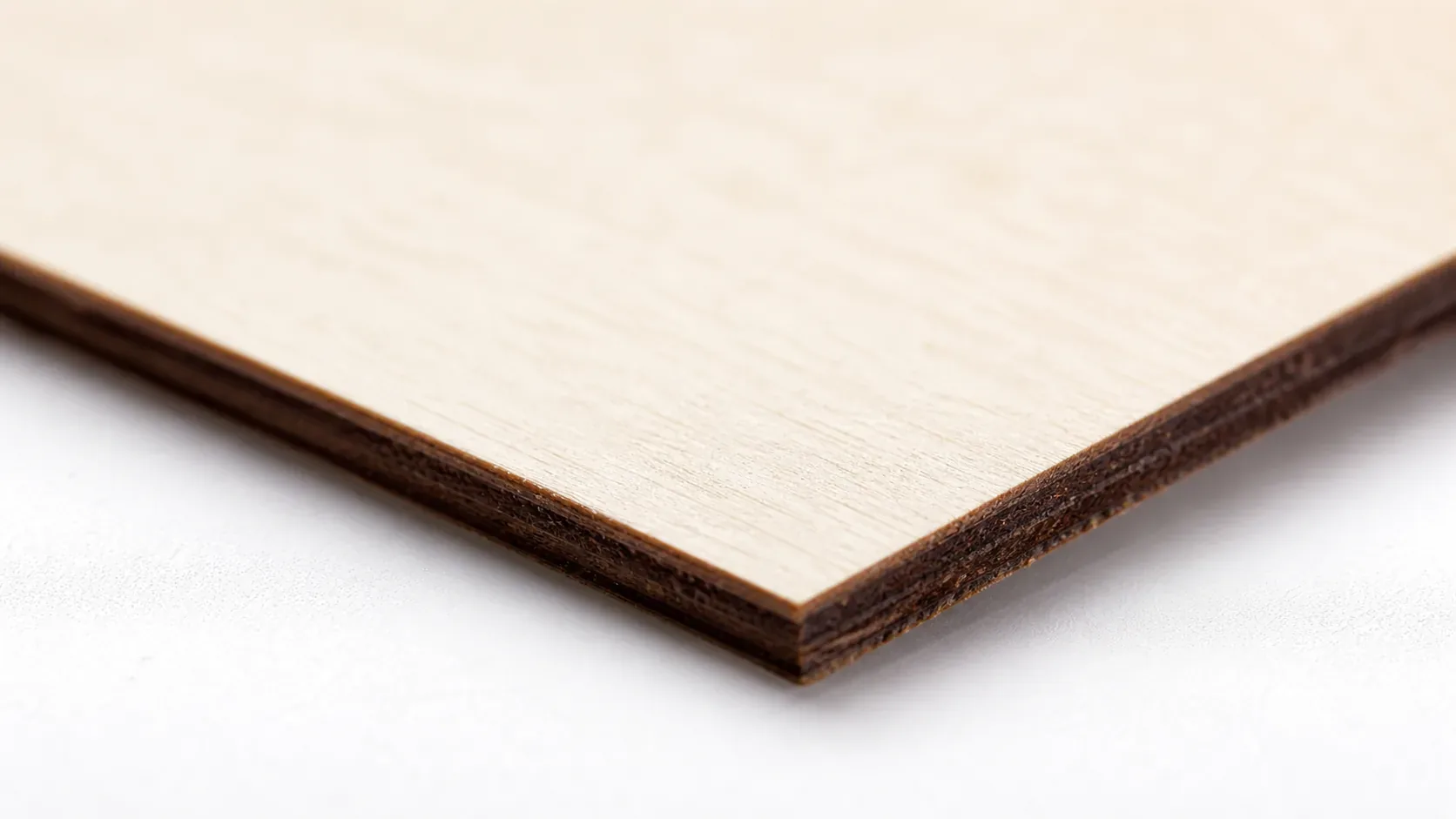
Left: no air assist (heavy char, rough edge). Right: 25 PSI air assist (pale cream, clean, ready to use). Same machine, same power – just air assist difference. Machine Cut Speed Cut Power Passes Engrave Speed Engrave Power Air Assist PSI 5W Diode 3-5 mm/s 100% 2-3 60-80 mm/s 35-40% 10-20 PSI 10W Diode 6-8 mm/s 100% 1-2 80-150 mm/s 40-50% 10-20 PSI 20W Diode 8-12 mm/s 100% 1-2 150-300 mm/s 40-60% 20-40 PSI 40W Diode 10-15 mm/s 100% 1-2 200-400 mm/s 45-65% 20-40 PSI 40W CO2 20-35 mm/s 65-75% 1 200-400 mm/s 45-65% 20-40 PSI 60W CO2 30-50 mm/s 55-70% 1 200-400 mm/s 40-60% 40-60 PSI Air assist is strongly recommended for all open-frame diode lasers – without it, resin smoke settles directly on the lens and costs you real power within a single session. I mounted my nozzle 15mm too high on my first setup and saw zero improvement; it only worked once I moved it to within 4mm of the cut line.
The physics are straightforward: a focused airstream clears smoke from the kerf so each pulse hits clean wood instead of a cloud of its own debris. That’s where the speed gains come from – not magic, just better beam delivery. Nozzle type matters too. An open cone spreads airflow wide; a focused nozzle concentrates it right at the cut. For basswood, a focused nozzle at 15-25 PSI is the sweet spot.
The Crafteker 12-pack basswood sheets are purpose-built for diode and CO2 lasers – 12×12 inch, 3mm, laser-grade, void-free. $24.99 for 12 sheets ($2.08/sheet).
Step-by-Step: Setting Up Air Assist for Clean Cuts
Clean cuts come down to three things: the right pump, correct nozzle placement, and flat material. Follow these steps and you’ll go from sooty edges to pale cream cuts
Choosing an Air Assist System: Budget to Pro
The right air assist setup depends on how much you cut – not how much you want to spend. Even a $40 aquarium pump delivers real results on 3mm basswood. You don’t need to go pro on day one.
Budget tier ($30-80): an aquarium pump plus a DIY nozzle gets you 5-15 PSI. That’s enough for a 20-30% speed bump and noticeably cleaner edges on diode lasers. Downside: pumps are loud, they run warm, and they’re not built for 4-hour production sessions.
Mid-range ($80-250): a small piston compressor with a pre-made nozzle hits 20-40 PSI consistently. This is the sweet spot for most Etsy sellers and batch cutters – quiet enough to work near, reliable enough to run all day, and pressure is adjustable via a regulator. If you’re cutting 50+ sheets a week, this is where to land.
Pro tier ($300+): oil-free compressor, precision nozzle, dedicated regulator and gauge. Overkill for hobby use, but production shops appreciate the stability. Pressure stays locked, lens fouling drops sharply, and you stop babysitting the machine.
Crafteker basswood’s low resin content and consistent density mean it responds well at every tier. I’ve seen clean single-pass cuts at 15 PSI with a $40 pump – no pro gear required. You don’t need pro gear to start; even a $40 aquarium pump teaches you the value of air assist fast.
Why Your Air Assist Isn’t Working (And How to Fix It)
Light brown edges are normal. Jet-black and flaky isn’t – and nine times out of ten, it’s not the pump that’s the problem. Most air assist failures on any laser setup come down to these four issues:
- Nozzle too far from the material: If the nozzle is sitting 10-15mm above the cut line, the airstream disperses before it reaches the kerf. Mount it 3-5mm above the surface, aligned with the beam – anything farther and you’ll see heavy char even with the pump running full blast.
- Pressure too low (under 12 PSI): Below 12 PSI, smoke clears slowly enough that it re-deposits in the kerf between passes. You’ll get some benefit, but nothing dramatic. Bump to 20 PSI and the difference is immediate – ask me how I know after running an aquarium pump at 8 PSI for two weeks wondering why nothing changed. Check your basswood laser cutting settings too – under-powered cuts compound the problem.
- Hose kinked or pump undersized: Don’t trust the rated PSI on the pump box. Hold your hand near the nozzle tip and feel actual airflow. A pinched hose behind a power cable or cable chain kills 40-60% of your pressure – 30 seconds of rerouting can fix what looked like a broken pump.
- Material not flat: If the basswood is warped or lifted at a corner, air can’t reach the kerf evenly. Use hold-down pins or a honeycomb bed with weights at the edges. Uneven pressure = uneven char, and no amount of PSI fixes bad material contact. Consistent, flat stock – like laser-grade sheets – eliminates this as a variable entirely.
If you’re still seeing heavy char after checking all four, look at your power settings next. Too much power creates char no airflow can clear. Try dropping 5-10% power before raising pressure. Also worth a read: prevent charring when laser cutting – it covers the power side of the equation in detail.
Where to Buy Basswood Sheets for Air Assist Laser Cutting
Crafteker 3mm basswood sheets are the best match for any air assist setup – 12×12 inch, laser-grade, void-free, and pre-sanded. At $24.99 for 12 sheets ($2.08/sheet), it’s the most cost-effective option for consistent single-pass results. The uniform quality means the settings in this guide work reliably without re-tuning every batch.
Ready to cut? Get the wood that works with these settings:
→ Buy Crafteker 12-Pack Basswood Sheets on Amazon – $24.99
Clip the 7% coupon on the listing page – buy 2 packs and save 20% automatically.
Also available: 5-pack ($15.97) · 3-pack ($12.99)Frequently Asked Questions
How much air pressure do I need for laser cutting wood?
Start at 15-25 PSI for hobby diode lasers and most budget CO2 machines. Even 10-20 PSI produces noticeable improvements in cut quality. If you’re cutting thicker material or pushing a low-power diode near its limit, 30-40 PSI gives better results. Test on scrap and increase in 5 PSI steps until edges look clean and pale.
Can I use an aquarium pump for air assist on a laser?
Yes, and it’s a common starting point. A typical aquarium pump delivers 5-15 PSI – enough to see a 20-30% speed improvement on wood. For deeper cuts or harder woods, you’ll want a compressor or turbo blower hitting 25+ PSI. Aquarium pumps cost $30-50 but are noisier and less reliable for long production runs.
Does air assist help with diode lasers cutting wood?
Absolutely. Diode lasers run hotter than CO2 lasers, so they produce more smoke and char. Air assist clears that smoke, lets the beam hit fresh material, and can nearly double cutting speed on 3mm basswood. I ruined 3 sheets before I figured out 90% power was too hot – air assist alone won’t save you if power is maxed out.
What happens if my air assist nozzle is too far from the cut?
The air disperses before it reaches the kerf and you get little to no benefit. Mount your nozzle 3-5mm directly above the cut line, aligned with the beam. If it’s 10-15mm away, you’ll see heavy charring and wonder why the pump isn’t working – the pump is fine, nozzle position is the real problem.
Is air assist necessary for safe wood laser cutting?
Not strictly necessary, but it significantly reduces flare-up risk. Air assist cools the material and disperses combustible dust away from the hot kerf. Most hobby users skip it and stay safe by using low power and staying alert – but pros always use it as part of their safety routine.
About the author: Mike Dolan is a laser maker and wood materials specialist with 8+ years cutting basswood, birch, and MDF on diode and CO₂ machines. He tests every Crafteker basswood batch before listing.
Ran my old CO2 at 25 PSI with a $60 piston compressor for 6 months and it’s a total game-changer for 3mm wood. Cut speed jumped from 20 to 50 mm/s and edges look professional without any post-sanding. The nozzle placement advice is spot-on – I had it wrong at first and wondered why air assist looked useless.