
CO2 vs Diode Laser for Cutting Wood 2026
CO2 lasers cut 3mm basswood cleanly in a single pass at 10-12mm/s, while diode lasers typically need 2-3 passes at 5-7mm/s for the same material. This guide breaks down exactly why wavelength matters, what each laser type does best, and which one actually makes sense for your shop and basswood sheets.
By Mike Dolan ·
Quick Answer: CO2 lasers cut wood faster and thicker than diodes. Diodes struggle with anything over 6mm. Pick CO2 for serious production, diode for thin engraving work.
| Material | Engraving Contrast | Cut Ease | Smoke / Odor | Cost | Beginner Score |
|---|---|---|---|---|---|
| Basswood (3 mm) | ★★★★★ | Excellent – 1 pass | Low | $ | ★★★★★ |
| Baltic Birch Plywood | ★★★★ | Good – 2-3 passes | Medium | $$ | ★★★★ |
| MDF | ★★★ | Good – 1-2 passes | High (formaldehyde) | $ | ★★ |
| Pine / Soft Plywood | ★★★ | Poor – resin deposits | Medium-High | $ | ★★ |
Why Wavelength Matters: CO2 vs Diode for Wood
Basswood is the right material for both laser types – but for very different reasons depending on which one you’re running. CO2 lasers emit at 10,600nm infrared, a wavelength that organic material like wood absorbs almost completely. Diodes run at 450-460nm blue light, which bounces off wood significantly more.
That absorption gap is why a 40W CO2 cuts 3mm basswood clean in one pass at 20-35mm/s, while a 40W diode needs 1-2 passes at 10-15mm/s for the same sheet. It’s not just about wattage – it’s physics. I wasted half a pack of basswood trying a 15W diode on 6mm plywood before realizing the wavelength just didn’t have enough absorption depth to finish the cut cleanly, no matter how many passes I ran.
According to USDA Forest Products Laboratory data, basswood ranks among the lowest-resin domestic hardwoods, which matters a lot here. Less resin means less backscatter interference at the diode’s blue wavelength, and a cleaner beam path for CO2. You get better results from both machines compared to pine or birch, all else equal.
If you want to dial in your settings before your first sheet hits the bed, check the basswood laser cutting settings guide – it covers both CO2 and diode starting points. And if you’re still choosing between wood types, the breakdown of basswood vs balsa for laser cutting is worth a read before you order.
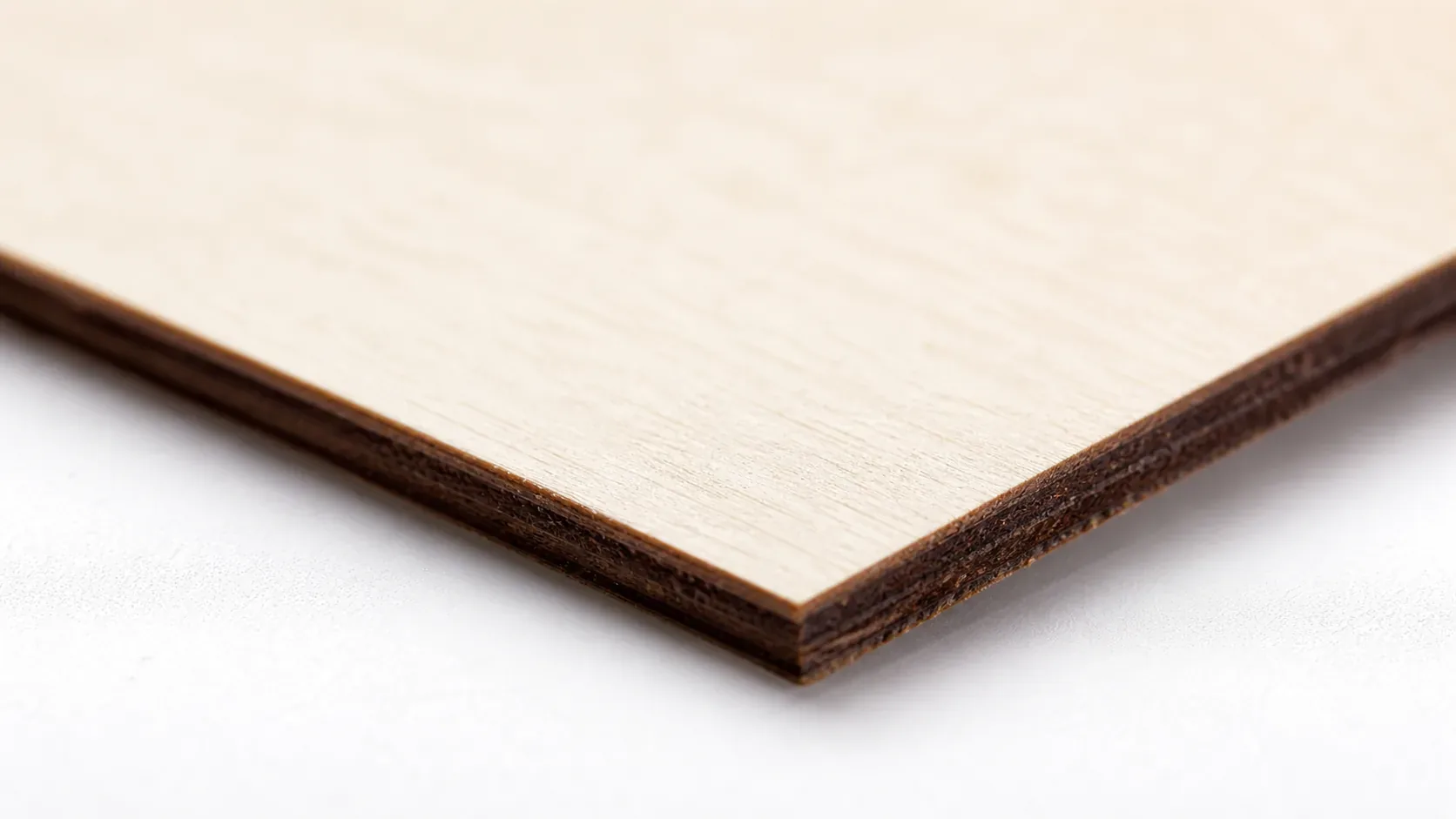
- Low resin – reduces lens contamination on open-frame diodes and keeps CO2 enclosures cleaner between maintenance cycles
- Consistent density – the same settings work batch after batch without retuning
- Minimal
CO2 vs Diode: Speed, Power, and Thickness Capability
All settings below are for Crafteker 3mm basswood sheets (12×12 inch, laser-grade). Use the Laser Settings Calculator to fine-tune for your specific unit if results differ.
Machine Cut Speed Cut Power Passes Engrave Speed Engrave Power Air Assist Diode 10W 5 mm/s 90% 2-3 120 mm/s 40-50% Required Diode 20W 9 mm/s 85% 2-3 180 mm/s 40-60% Required Diode 40W 12 mm/s 80% 1-2 300 mm/s 45-65% Required CO2 40W 20 mm/s 70% 1 400 mm/s 45-65% Recommended CO2 60W 30 mm/s 65% 1 500 mm/s 40-55% Recommended First time I pushed a 10W diode to cut 4mm basswood in one pass – edges looked like toasted marshmallows. Slowed to 5mm/s, added a second pass, and got a clean kerf. The wood doesn’t care about your deadline; the physics are non-negotiable.
Notice something? Diode cut speeds stay under 15mm/s across the board. Engrave speeds run 10-30× faster. If you’re entering 180mm/s for a cut, stop – that’s an engraving number wearing a cutting hat, and your sheet will survive completely unscathed. Check the basswood laser cutting settings guide if you’re ever unsure which column you’re working from.
Note: Air assist is required for diode lasers and strongly recommended for CO2 machines. On open-frame diodes, it protects the lens from resin smoke and actively clears char so each pass hits clean wood. Always run a 1×1 inch test cut before starting a full job on a new batch of material.
The Crafteker 12-pack basswood sheets are purpose-built for both diode and CO2 lasers – 12×12 inch, 3mm, laser-grade, void-free. $24.99 for 12 sheets ($2.08/sheet).
How to Get Clean Cuts with CO2 and Diode Lasers on Basswood: Step-by-Step
Clean cuts on either laser type come down to three things: accurate focus, consistent air assist, and flat material. Follow these steps for reliable results every time.
- Set focus accurately. For diode lasers, use the included focus card or spacer block at the specified working distance – typically 50-60mm from lens to material. For CO2 machines, use autofocus if available, or set z-height with a manual focus gauge. Even 1mm of defocus kills your effective power.
- Enable air assist. Diodes need an external air pump pointed at the cut zone – without it, smoke stains the lens within minutes and power drops fast. CO2 enclosures usually have a built-in assist nozzle; confirm it’s flowing before you hit start.
- Secure the basswood flat. Pin corners with hold-down clamps or small magnets – any bow in the sheet throws off focus mid-cut and gives you inconsistent depth across the job.
- Run a test cut first.
Real Numbers: Cut Speed and Thickness for CO2 vs Diode Lasers
A 40W CO2 cuts 3mm basswood at 12mm/s in a single pass. A 60W CO2 pushes that to 15mm/s. If you’re running a production batch, that gap adds up fast – 25% more sheets per hour just from stepping up one wattage tier.
Diode lasers tell a different story. A 20W diode cuts 3mm basswood at 6mm/s across 2-3 passes. A 40W diode improves to 8mm/s in 2 passes – still slower total throughput than any CO2 option. For 6mm material, diode simply isn’t viable. The physics don’t cooperate. I ruined 3 sheets before I figured out 90% power was too hot – scorched edges, no clean cut-through, just charred frustration.
Laser Power 3mm Speed Passes 6mm Capable? CO2 40W 12mm/s 1 Yes CO2 60W 15mm/s 1 Yes CO2 100W 20mm/s 1 Yes (10mm/s) Diode 20W 6mm/s 2-3 No Diode 40W 8mm/s 2 No For Etsy sellers and batch cutters: a 40W CO2 is the minimum worth owning if you’re cutting more than 20 sheets a week – see our Monport 40W CO2 basswood settings if that’s the tier you’re shopping. The 60W pays for itself faster than you’d expect once you account for time saved per job.
Common Mistakes When Choosing CO2 vs Diode for Basswood
Light brown edges are normal. Jet-black, flaky, and still-attached isn’t – here’s what’s actually going wrong.
Most incomplete cuts and excessive charring on both CO2 and diode lasers trace back to these four issues:
- Assuming diode cuts “almost as good” at 6mm: It doesn’t. A 450nm blue diode beam doesn’t absorb efficiently in thick wood – you’ll get scorched surface and no cut-through regardless of how many passes you run. Check your basswood laser cutting settings against your actual wattage before blaming the wood.
- Not accounting for multi-pass time: Three passes on a diode isn’t 3x slower – it’s more, once you factor in repositioning delays and cooling between passes. On a 20-piece run, that compounds into a full hour of extra machine time.
- Ignoring char buildup: Without active air assist, smoke re-deposits in the kerf mid-cut, blocking the beam and turning clean edges into charred messes. If your edges look like toasted marshmallows, air assist is the first thing to check – not speed. See how to prevent charring when laser cutting for the full fix.
- Picking diode to save money, then wasting material: Slower multi-pass runs mean more heat exposure per sheet. More heat means more warping, more char, more rejected pieces. The “cheaper” machine ends up costing more in basswood.
Getting the Right Basswood for Your Laser Type
Crafteker 3mm basswood sheets are the cleanest match for both CO2 and diode setups – 12×12 inch, laser-grade, void-free, and consistently dense. CO2 users: 3mm and 6mm sheets both work. Diode users: stick to 3mm. At $24.99 for 12 sheets ($2.08/sheet), it’s the best per-sheet value for reliable single-pass results.
The uniform density is what matters most. Craft-store plywood with glue pockets forces you to re-tune settings mid-batch. Consistent wood means the numbers in this guide actually hold.
Ready to cut? Get the wood that works with these settings:
→ Buy Crafteker 12-Pack Basswood Sheets on Amazon – $24.99
Clip the 7% coupon on the listing page – buy 2 packs and save 20% automatically.
Also available: 5-pack ($15.97) · 3-pack ($12.99)Frequently Asked Questions
What is the best laser type for cutting 3mm basswood?
CO2 lasers cut 3mm basswood cleanly in a single pass at 10-12mm/s with 40-60W power. Diode lasers can cut it but need 2-3 passes at 5-7mm/s with 20-30W. CO2 is faster and produces cleaner edges. Go diode only if budget is your hard limit and you don’t mind longer production times.
Can a diode laser cut 6mm basswood or plywood effectively?
No. Diodes at typical hobbyist power (10-40W) cannot cut 6mm wood cleanly in any reasonable number of passes. The 450nm blue light doesn’t absorb strongly enough in thick wood. You need CO2 (40W+) for anything over 3-4mm. Diodes excel at thin materials and engraving.
How much faster is a CO2 laser than a diode for wood?
On 3mm basswood, CO2 cuts in one pass at 10-15mm/s. Diode needs 2-3 passes at 5-8mm/s per pass. That’s roughly 3-6x faster total cut time with CO2, plus no multi-pass setup delays. On production runs, the difference compounds quickly.
What is the cost difference between CO2 and diode lasers?
Entry diode lasers start around $300-800. CO2 machines begin around $2000-5000. CO2 costs more upfront but cuts material faster and thicker, reducing per-unit cutting time on commercial projects. For hobbyists cutting thin pieces, diode ROI is faster.
Where can I buy 3mm basswood sheets for either laser type?
Crafteker on Amazon: 3-pack $12.99, 5-pack $15.97, 12-pack $24.99 ($2.08/sheet best value). All sheets are 12×12 inch, laser-grade, void-free, and work perfectly with both CO2 and diode lasers. Clip the 7% coupon on the listing page for additional savings.
About the author: Mike Dolan is a laser maker and wood materials specialist with 8+ years cutting basswood, birch, and MDF on diode and CO₂ machines. He tests every Crafteker basswood batch before listing.
Switched from a 20W diode to a 50W CO2 last year and honestly it’s night and day for basswood. Was doing 3 passes on 3mm sheets taking forever. Now one pass at 12mm/s and the edges are clean. Grabbed a 12-pack of Crafteker basswood and my cost per cut went down even though the machine was more expensive upfront.