

Basswood Supplier Quality Scorecard for 2026 Buyers
Order modest sample quantities from 2-3 candidate basswood suppliers, run the exact same test cut and engrave on each, then score every sample against the same criteria before you commit to a bulk order. Below is an actual comparison workflow you can run in an afternoon – not just a list of things that might go wrong with basswood.
By Mike Dolan ·
Quick Answer: Basswood supplier quality testing scorecard means ordering small samples from 2-3 suppliers, cutting the same test file on each, and comparing thickness, flatness, voids, edges, tone, and residue before placing a bulk order.
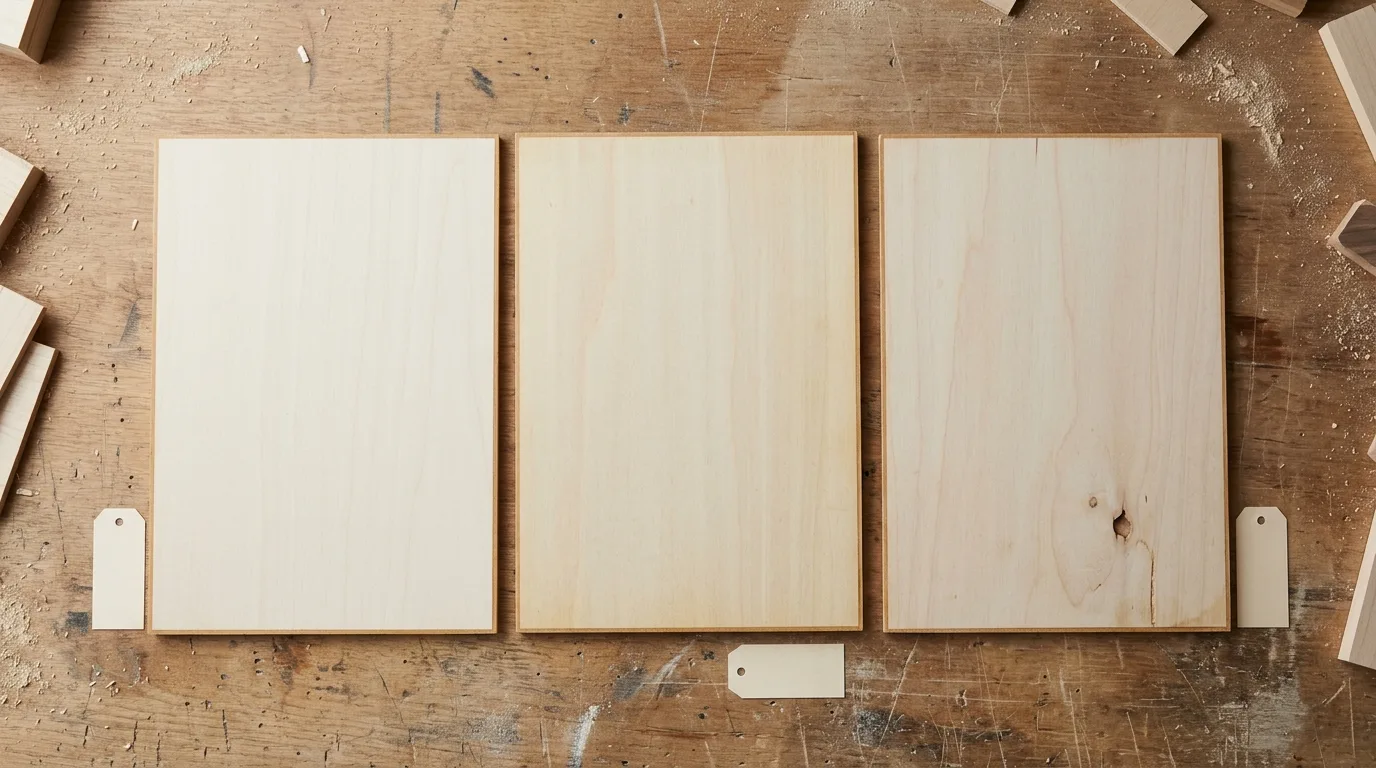
| Material | Engraving Contrast | Cut Ease | Smoke / Odor | Cost | Beginner Score |
|---|---|---|---|---|---|
| Basswood (3 mm) | ★★★★★ | Excellent – 1 pass | Low | $ | ★★★★★ |
| Baltic Birch Plywood | ★★★★ | Good – 2-3 passes | Medium | $$ | ★★★★ |
| MDF | ★★★ | Good – 1-2 passes | High (formaldehyde) | $ | ★★ |
| Pine / Soft Plywood | ★★★ | Poor – resin deposits | Medium-High | $ | ★★ |
‘3mm Basswood’ Isn’t a Standardized Product – Here’s Why That Matters
Two sheets stamped “3mm laser-grade basswood” can cut nothing alike under the exact same settings, and that’s the real problem with trusting a listing over a test cut.
I found this out ordering two 12×12 sheets from different sellers, assuming “3mm laser-grade” meant they’d behave the same. I ran one identical file with the same basswood laser cutting settings dialed in on both.
One sheet cut clean in a single pass, no drama. The other needed a second pass and came back charred along every edge, no matter how far I backed off power. Same file, same day, same machine – different wood entirely.
Actual thickness across suppliers can run anywhere from 2.8mm to 3.2mm, even when both listings say “3mm” on the label. Glue content and moisture level shift just as much batch to batch, and that swing changes how fast a sheet heats up and how easy it is to prevent charring when laser cutting it cleanly.
“No voids” and “laser-ready” are marketing lines, not verified specs. A listing can claim whatever it wants to move product, and there’s no way to check that from a product photo. The only way to know if any of it holds up is to cut a sample yourself – which is exactly what the rest of this scorecard walks you through.
Here’s what actually shifts between suppliers even when two listings read identical on paper:
- Thickness – varies sheet to sheet, which is why calipers beat trusting the label
- Glue content – changes how much heat a cut needs before it chars
- Moisture level – drives warp, cupping, and uneven burn from batch to batch
- Void claims – “no voids” means nothing until you’ve backlit a sample yourself
- “Laser-ready” language – a sales pitch, not a spec you can verify without testing
None of that shows up in a listing photo. It only shows up once you’ve run the same test file across a couple of samples and compared what actually happens under the laser.
6 Criteria Worth Checking Before You Commit to a Supplier
Six checks separate a basswood supplier worth scaling up with from one that’ll ruin a weekend batch of parts. Run all six on every sample side by side – they’re comparisons between samples, better-or-worse, present-or-absent, never a numeric score you add up at the end.
- Thickness consistency. Measure at several points across each sheet with calipers, not just one corner near the edge. The thickness tolerance guide covers the full breakdown of how much this actually varies between suppliers.
- Flatness and warp. Lay a straightedge across the panel, or hold it flat against a table and check for daylight sneaking under the corners.
- Internal voids. Backlight every sheet – a lamp behind the panel in a dim room shows glue pockets and gaps a top-down glance will miss completely.
- Edge fuzziness. After the test cut, run a finger along the kerf. Splinters and fuzz mean the wood fought the laser instead of cutting clean through.
- Color and grain uniformity. Scan the whole panel, not just the corner you happened to test – streaking and blotches show up fast once you’re looking.
- Smell and residue. Check the bed after cutting for sticky resin or a film of melted glue. A clean bed means a cleaner glue system.
I once held a sheet that looked flawless from directly above, then caught a dime-sized glue pocket near one corner the second I tilted it toward a shop light. Same sheet, different angle, completely different story.
The Sample-Then-Compare Workflow (Instead of a Leap of Faith)
Order modest sample quantities from 2-3 candidate suppliers, run the identical test file and settings on every single one, then score each batch against the same six criteria before deciding who earns the bigger repeat order.
The part that trips people up isn’t the ordering – it’s discipline once the samples show up. Change the test file, the power setting, or even the speed between samples and you’re not comparing suppliers anymore, you’re just comparing your own inconsistency on a given afternoon.
Run one design, one power setting, one speed, across every sample sheet without exception. Then work through the criteria list one by one – thickness, flatness, voids, edges, color and grain, smell and residue – and note which sample comes out better on more of them, and by how much it matters for your project.
I learned this the hard way after ordering a bulk batch from a listing that looked identical on paper to a supplier I already trusted. Once cutting started, the void frequency was noticeably worse than I expected – gaps I would have caught if I’d sampled first. I sample every single supplier now, no exceptions, no matter how similar the listing looks.

Do I Need to Re-Test a Supplier I Already Trust Every Time I Reorder?
No. If a supplier has been consistent across several orders, running the full scorecard on every reorder is overkill. Save that effort for suppliers you haven’t vetted yet or ones showing warning signs.
A fresh comparison is worth running when the listing mentions a new grade or glue system, after a long gap between orders where production batches may have shifted, or when new issues start showing up like warping or heavier edge fuzz. Otherwise, keep a small reference sample from a known-good batch and spot-check new deliveries against it – flatness and color are the fastest tells.
I skipped retesting a supplier I’d used for a year and got a batch that warped right out of the shipping tube. Turned out they’d quietly switched glue systems without touching the listing. Cost me a weekend and a stack of sheets.
Moisture Content: The One Criterion This Scorecard Doesn’t Cover Alone
This scorecard checks what you can see and feel – it doesn’t measure what’s happening inside the wood. The six criteria here are complementary to testing basswood moisture content, not a substitute for it, and that gap matters most on fine detail work where cupping ruins a cut halfway through.
The void check in section 2 is the surface-level version of a deeper problem. For a full single-batch breakdown, spotting bad basswood batches covers what backlighting alone can miss.
A sheet once passed every visual check on this list and still cupped mid-cut. Traced it back to moisture content – nothing a straightedge or backlight would have flagged.
Crafteker Basswood: Already Vetted Against Every Criterion Here
Crafteker basswood already clears every check in this scorecard, batch after batch – 3mm, 12×12 inch, laser-grade, void-free, with consistent thickness, color, and moisture. No sampling round needed before you commit.
Pick the size that fits your workload: 3-pack at $12.99, 5-pack at $15.97, or the 12-pack at $24.99 (about $2.08/sheet, the best value per sheet). Less time spent sampling and scoring, more time cutting.
Ready to cut? Get the wood that works with these settings:
→ Buy Crafteker 12-Pack Basswood Sheets on Amazon – $24.99
Also available: 5-pack ($15.97) · 3-pack ($12.99)
Frequently Asked Questions
Why do two basswood sheets advertised as ‘3mm’ cut differently?
Because “3mm basswood” isn’t a locked spec – it’s a label. Actual thickness runs anywhere from about 2.8mm to 3.2mm depending on the mill, and glue content and moisture level shift too. Same file, same power, different results. That’s not you doing something wrong.
What should I check before switching to a new basswood supplier?
Six things: thickness consistency at multiple points, flatness and warp, internal voids under a backlight, edge fuzziness after a test cut, color and grain uniformity, and any smell or resin residue on the bed. Run a sample from each candidate through the same test cut and compare side by side – none of this needs a lab, just a straightedge and a light.
How many sample sheets should I order to compare suppliers?
There’s no magic number here – a modest sample from each candidate supplier is enough to run one identical test cut and judge the results. How many you grab depends on your budget and how far apart the listings already look on paper. The point is comparing, not stockpiling.
Do I need to re-test a basswood supplier every time I reorder?
No, not if they’ve been consistent across several orders already. Re-run the comparison when the listing mentions a new grade or glue system, after a long gap between orders, or if you start seeing warping or extra edge fuzz. Otherwise, keep a reference sample and spot-check new deliveries against it.
Where can I buy basswood that’s already consistent batch after batch?
Crafteker, on Amazon – 3-pack at $12.99, 5-pack at $15.97, or the 12-pack at $24.99, which works out to $2.08 per sheet and is the best value. Every batch is laser-grade and void-free, vetted against these same six criteria before it ever ships to you.
I’ll admit the backlight check humbled me once. A sheet looked flawless from the front, then I held it up to a shop light and found a dime-sized glue pocket tucked near one corner – completely invisible until it wasn’t. Now I never skip that step, no matter how good a sheet looks on top.
About the author: Mike Dolan is a laser maker and wood materials specialist with 8+ years cutting basswood, birch, and MDF on diode and CO₂ machines. He tests every Crafteker basswood batch before listing.
Got burned pretty bad last year when I ordered 100 sheets from a new seller without testing first – warped like crazy in my dry basement and had glue gaps I could see with a flashlight. Now I always grab small sample packs from a couple sellers, run the same cut file on each, and compare before reordering big, and Crafteker’s the one supplier where I’ve stopped worrying about that step because every batch has been the same.